eISSN: 2377-4304


Opinion Volume 8 Issue 1
1Department of Basic Sciences, Faculty of Veterinary Medicine, Urmia University, Iran
2Department of Biology, Faculty of Sciences, MohagheghArdabili University, Iran
Correspondence: Ali ShalizarJalali, Histology and Embryology Research Laboratories, Department of Basic Sciences, Faculty of Veterinary Medicine, Urmia University, Urmia, Iran, Tel 00984431942593, Fax 00984432771926
Received: September 13, 2017 | Published: October 25, 2017
Citation: Jalali AS, Karvansara PR (2017) Endoplasmic Reticulum Stress and Ovarian Failure. JObstet Gynecol Int J 8(1): 00279. DOI: 10.15406/ogij.2017.08.00279
The endoplasmic reticulum (ER) as a unique highly well-structured organelle within eukaryotic cells plays important roles in several specific cellular functions including protein synthesis, folding and transport, lipid trafficking and metabolism and Ca2+ storage.1-3 Accumulation of unfolded or misfolded proteins in the ER lumen due to several physiological or pathological conditions including hypoxia, ischemia/reperfusion injuries, neurodegeneration, viral infections, glucose deprivation and abnormal Ca2+ regulation as well as inflammation and oxidative stress can lead to induction of ER stress.4-7 Additionally, a series of cytoprotective intracellular signaling pathways known as unfolded protein response (UPR) will be activated by cells to combat with ER stress and reorganize ER homeostasis which can also cause cellular dysfunctions and trigger cell death.8
The ER homeostasis plays vital roles in ovarian folliculogenesis, cumulus cells survival, cumulus-oocyte complex interactions and oocyte quality as well as pre-implantation embryo development and implantation and ER stress-induced disruptions in ER homeostasis can lead to several pathologies that negatively impact on female fertility.9
It is well documented that oocyte growth and granulosa cells proliferation in the ovarian tissue bring about hypoxic conditions resulting in ER dysfunctions and eventually ER stress and UPR.10 Accordingly, it has been shown that ovarian granulosa cell apoptosis during early follicular atresia is associated with ER stress.11 Further, previous reports have indicated that ER stress and UPR are critical causative factors of pro-fibrotic remodeling in tissue fibrosis.12-14 and ER stress in granulosa cells of patients with polycystic ovary syndrome contributes to the induction of pro-fibrotic growth factors during ovarian fibrosis.14
Taken together, it seems that ER stress can cause ovarian failure and subsequent fertility impairments.15 probably through induction of tissue fibrosis, oxidative stress and inflammation (Figure 1). Thus, safe ER stress inhibitors should be considered in the therapeutic strategies for ovarian disorders treatment to promote female reproductive health.
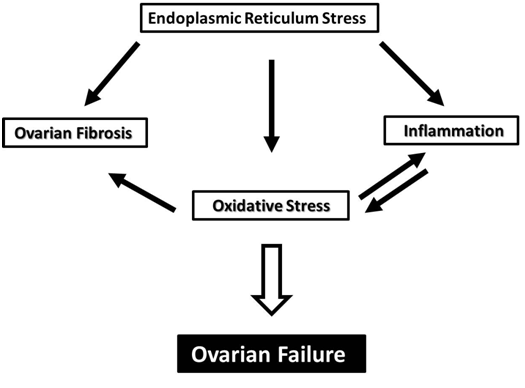
Figure 1 Possible mechanisms of endoplasmic reticulum stress-induced ovarian failure.
None.
None.

©2017 Jalali, et al. This is an open access article distributed under the terms of the, which permits unrestricted use, distribution, and build upon your work non-commercially.