MOJ
eISSN: 2574-8130


Clinical Paper Volume 10 Issue 3
1Department of Geriatric Medicine, Ysbyty Ystrad Fawr, Aneurin Bevan University Health Board, Wales CF82 7EP, UK
2Consultant Clinical Scientist, Department of Dermatology, St Wollas Hospital, Aneurin Bevan University Health Board, Newport, NP20 4SZ, UK
Correspondence: Inderpal Singh, Consultant Geriatrician, Department of Geriatric Medicine, Ysbyty Ystrad Fawr, Aneurin Bevan University Health Board, Wales CF82 7EP, UK
Received: August 12, 2025 | Published: August 28, 2025
Citation: Jayaram S, Hlaing N, Muthukrishnan SK, et al. Mortality outcomes among patients admitted to an acute medical assessment unit with or without delirium. MOJ Gerontol Ger. 2025;10(3):84‒87 DOI: 10.15406/mojgg.2025.10.00345
Introduction: Delirium is a common acute neuropsychiatric syndrome in older adults and is associated with poor outcomes. There is limited evidence on outcomes among older patients admitted to medical assessment units (MAUs) compared to those without delirium.
Objective: To examine the association between delirium and mortality, hospital length of stay, and readmission rates in patients aged ≥65 years admitted to an MAU.
Methods: A retrospective observational cohort study was conducted at Ysbyty Ystrad Fawr Hospital, Wales. Hospital records for patients aged ≥65 years admitted to the MAU during 2023 were reviewed. The primary outcomes were length of stay (LOS), inpatient mortality, 30-day mortality, 90-day mortality, and 30-day readmission. Patients were categorised into delirium and non-delirium groups based on documented 4AT screening results and clinical notes.
Results: Of 200 patients included, 100 had delirium and 100 did not. The delirium group had a significantly longer LOS (26.3 vs 10.7 days, p=0.007) and higher inpatient mortality (18% vs 2%, p=0.002). Thirty-day mortality (23.0% vs 7.0%, p=0.0015) and 90-day mortality (35.0% vs 11.0%, p<0.0001) were also significantly higher in the delirium group. No significant difference was observed in 30-day readmissions (15.0% vs 20.0%, p=NS). Sub-analysis showed 32% patients were living with companion. It was observed those living with a companion had a lower rate of delirium (23%) as compared to those living alone (41%, p<0.0015).
Conclusion: Delirium was associated with poorer clinical outcomes among older patients acutely admitted to the MAU. The observed association between companionship and lower rate of delirium warrants further investigation in larger, prospective studies.
Keywords: dementia, clinical outcomes, mortality, hospital, older people
Delirium is an acute confusional state characterised by sudden onset and fluctuating disturbances in attention, awareness, and cognition.1 It can often be reversed by addressing the underlying medical or surgical cause. Unlike dementia, delirium develops over hours to days, fluctuates in severity, and typically resolves with treatment of the precipitating condition.2
Delirium may be the first manifestation of serious acute illness in older adults, including infections, metabolic disturbances, and cardiovascular events.3 Prevalence varies substantially by clinical setting, systematic reviews report rates of approximately 10–20% among general medical inpatients, rising to over 50% in intensive care units, palliative care, or post-operative high-risk groups such as those with hip fracture or undergoing cardiac surgery.4–6
Delirium has been consistently associated with adverse outcomes, including increased mortality, prolonged hospitalisation, and functional and cognitive decline.7–9 It also imposes a substantial burden on families, carers, and healthcare systems.10 While much of the literature focuses on intensive care or specialist units,11–13 there are fewer studies examining outcomes in older patients with acute illness admitted to MAUs, a key point of entry for acute care in the UK.
This study aimed to measure the clinical outcomes (mortality, LOS, readmissions) for older people ≥65 years admitted to an MAU with an acute illness and diagnosed with delirium as compared to those without diagnosis of delirium.
Study design: A retrospective observational cohort study was conducted using hospital records of patients aged ≥65 years admitted to the MAU at Ysbyty Ystrad Fawr (YYF) Hospital, Wales, during 2023. Outcomes assessed were LOS, inpatient mortality, 30-day mortality, 90-day mortality, and 30-day readmission. Data were obtained from the Clinical Workstation (CWS), which provides access to scanned hospital notes and clinical information.
Setting: The MAU at YYF Hospital provides rapid assessment, diagnosis, and management for acute medical presentations. Patients are referred from primary care, ambulance services, and other healthcare providers.
Patient selection: From coded admission data for 2023, all patients aged ≥65 years were screened. Patients with missing identifiers or incomplete records were excluded. We included 100 consecutive patients with delirium and 100 without delirium.
Definitions: Delirium was defined by documented new confusion, altered consciousness, or agitation, and a 4AT score ≥4. The 4AT is a validated screening tool for delirium and cognitive impairment, requiring <2 minutes to complete and not requiring special training.14 Non-delirium patients had a 4AT <4 and no documentation of acute confusional state.
Data and analysis: Baseline variables included age, sex, comorbidities, dementia status, Clinical Frailty Scale (CFS), number of prescribed medications, and living arrangements. The index admission was defined as the hospital stay from admission to discharge or death. Descriptive statistics compared outcomes between groups. Statistical analysis was performed using STATISTICA version 9.1 (Statistica Inc., 2010).
Ethics: This service evaluation was reviewed and approved by the Aneurin Bevan University Health Board Research and Development Department (Ref: SE/1584/23). No formal ethics committee approval was required
A total of 8206 patients were assessed in the MAU during 2023, with 82.1% discharged without hospital admission. Two hundred patients met inclusion criteria: 100 with delirium and 100 without delirium.
The mean age was 82 years, with no significant sex difference between groups. The average number of prescribed medications was 9.8, with no significant group difference. The mean CFS was higher in the delirium group (6.2±1.2) than in the non-delirium group (5.7±1.2, p=0.008). Dementia prevalence was significantly higher in the delirium group (43%) than in the non-delirium group (7%, p<0.001).
Most patients (86.%) were admitted from their own home. Admission from a care home was more common in the delirium group (14% vs 1%, p<0.001). Patients living with a companion were less likely to have delirium (23%) as compared to those living alone (41%, p<0.0015). The baseline characteristics are shown in the Table 1.
|
Characteristic |
All patients (n=200) |
Non-delirium (n=100) |
Delirium (n=100) |
p-value |
|
Age, mean ± SD (years) |
83.0 ± 8.0 |
81.1 ± 8.0 |
83.3 ± 7.8 |
0.042 |
|
Female, n (%) |
107 (53.5) |
51 (51.0) |
56 (56.0) |
0.51 |
|
Admitted from own home, n (%) |
172 (86.0) |
92 (92.0) |
80 (80.0) |
0.21 |
|
Admitted from care home, n (%) |
15 (7.5) |
1 (1.0) |
14 (14.0) |
<0.001 |
|
Living with spouse/partner, n (%) |
64 (32.0) |
41 (41.0) |
23 (23.0) |
<0.0015 |
|
Average number of drugs ± SD |
9.8 ± 4.3 |
9.5 ± 4.4 |
10.2 ± 4.2 |
0.27 |
|
Average CCI ± SD |
5.2 ± 1.9 |
5.0 ± 1.7 |
5.5 ± 2.1 |
0.07 |
|
Average CFS ± SD |
5.9 ± 1.2 |
5.7 ± 1.15 |
6.2 ± 1.2 |
0.008 |
|
Average 4AT score ± SD |
3.3 ± 3.6 |
0.07 ± 0.4 |
6.6 ± 2.1 |
<0.001 |
|
Diagnosed dementia, n (%) |
50 (25.0) |
7 (7.0) |
43 (43.0) |
<0.001 |
Table 1 Baseline characteristics
Patients with delirium had a significantly longer LOS as compared to those without delirium. The mean LOS for the total sample was 18.5±31.3 days. Patients with delirium had a longer LOS (26.4±33.9days) as compared to patients without delirium (10.7±26.3days). The hospital stay was significantly higher in patients with delirium (p<0.001) as shown in the Box & Whisker plot (Figure 1).
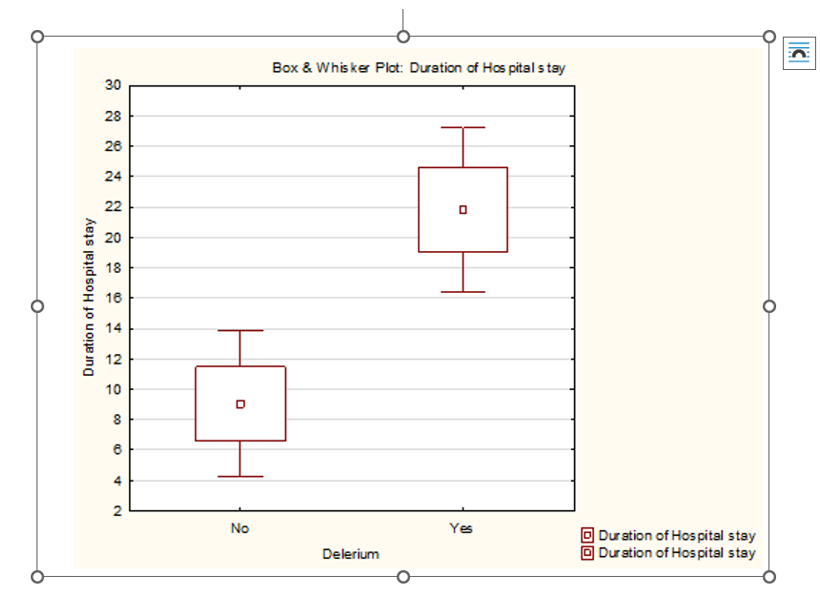
Figure 1 Box & Whisker plot: duration of hospital stay in patients with and without delirium .
Overall, the inpatient mortality was 10% and majority (90%) who died during hospital stay had delirium, which was significantly higher (p<0.001) as compared to those without delirium. Similarly, patients with delirium also had a significantly higher 30-day mortality (23/100, 23%) as compared to patients without delirium (7/100, 7%) p=0.0015. The mortality in patients with delirium (35/100, 35%,) remained significantly higher at 90-day mortality as compared to patients without delirium (11/100, 11%), p=0.0001.
No significant difference was observed in 30-day readmission rates. The detailed clinical outcomes are shown in the Table 2.
|
Outcome |
All patients (n=200) |
Non-delirium (n=100) |
Delirium (n=100) |
p-value |
|
LOS, mean ± SD (days) |
18.5±31.3 |
10.7±26.3 |
26.3 ± 33.9 |
0.007 |
|
Inpatient mortality, n (%) |
20 (10.0) |
2 (2%) |
18 (18%) |
0.0002 |
|
30-day mortality, n (%) |
30 (15.0) |
7 (7%) |
23 (23%) |
0.0015 |
|
90-day mortality, n (%) |
46 (23.0) |
11 (11%) |
35 (35%) |
0.0001 |
|
Days to death, mean ± SD |
67.5 ±54.3 |
75.0±65.2 |
61.9±45.7 |
0.102 ns |
|
30-day readmission, n (%) |
35 (17.5) |
20 (20%) |
15 (15%) |
NS |
Table 2 Clinical outcomes
The patients with delirium have a significantly lower (p=0.0062) survival over time as demonstrated in the KM survival graphs (Figure 2).
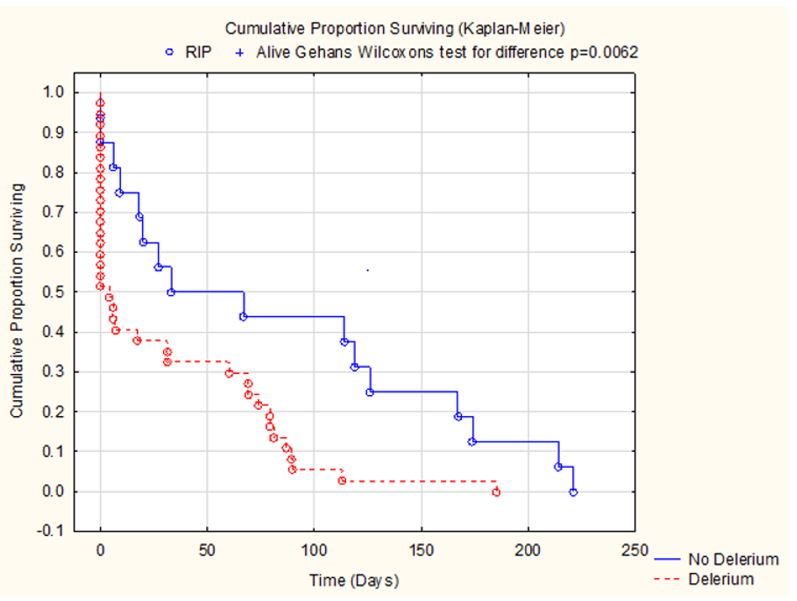
Figure 2 KM survival graph for patients with delirium as compared to non-delirium .
This study found that delirium in older adults admitted with an acute illness to an MAU was associated with a significantly higher mortality and longer hospital stays, with no significant difference in short-term readmissions. These findings align with prior research linking delirium to poorer clinical outcomes.7,8 The overall in-patient mortality rate of patients selected for this study was 20%, which is likely related to the fact that a very high proportion of patients (over 80%) were discharged with care plan to be continued in the community and only acute unwell patients requiring inpatient care were admitted to the hospital. However, among those admitted, delirium was associated with a very high in-patient mortality (18%) as compared to those without delirium (2%).
We also found in this study that patients with delirium were more likely to have a significantly higher CFS (6.2) compared to patients without delirium (5.7). A higher CFS in patients with delirium have been reported to be associated with higher mortality.15
On sub-analysis of this retrospective study, we noted that a higher proportion who were living with a spouse (n=41, 41.0%) did not develop delirium. In contrast, companionship was observed in only one-quarter patients who developed delirium. (n=23, 23.0%) and this was significantly different (p<0.0015). There have been studies in the past looking into the impact of delirium on family caregivers16 but, we were unable to find any studies which looked at the impact of companionship on incidence of delirium. This novel observation requires confirmation in larger, prospective studies, as the present study cannot determine causality.
The strengths of this study include the use of a validated delirium screening tool (4AT) and focus on an under-studied setting (MAU). This study has several limitations. It is a retrospective study, single-centre observational study, where only a small and selected proportion of acutely unwell patients admitted to hospital were included. In addition, absence of adjustment for confounders such as illness severity, and unmatched groups with higher dementia and frailty in the delirium cohort was not analysed. These factors may partly explain the observed higher mortality rates in both the groups. We also lacked data on baseline physical performance and functional status, limiting our ability to perform multivariable analyses.
Given these limitations, our findings should be interpreted as associations, not proof of causality. Future research should use prospective, multicentre designs with matched cohorts or regression modelling to adjust for key confounders and should explore psychosocial factors such as companionship in more depth.
In this study, delirium was associated with higher mortality and longer hospital stays in older patients admitted with acute illness to an MAU. Companionship was associated with lower delirium prevalence. These findings highlight the need for routine delirium screening and management in acute care settings, while underscoring the importance of prospective research to clarify causality and explore potential protective factors.
Author Contributions: S Jayaram was responsible for the study concept; I Singh designed the methodology for the service evaluation, provided overall supervision and administration for the project. N Hlaing, S K Muthukrishnan and A Anwar collected all patient related data. I Singh completed data review for all corrections. C Edwards completed all data analysis and prepared graphs and tables. S Jayaram wrote the first draft and I Singh completed the critical appraisal for the manuscript. All authors contributed towards drafting and revising the paper and agree to be accountable for all aspects of the work.
The authors are grateful to all members of the Department of Geriatric Medicine, Ysbyty Ystrad Fawr for their continued support for research activities. The authors would especially like to thank all staff and therapists working in ABUHB. The authors would like to thank Jane Power for her administrative support. Authors are very grateful to Research and Development, Aneurin Bevan University Health Board for their support and guidance.
The Aneurin Bevan University Health Board’s Research and Development (ABUHB R & D) Department have reviewed this service evaluation application and it was agreed that your study does not pose any risk to the Health Board. Therefore, your service evaluation has been given a favourable opinion without need for any further ethical review was waived for this study. ABUHB R&D Reference Number: SE/1584/23
The authors report no other conflicts in this work. No external funding was applied.

©2025 Jayaram, et al. This is an open access article distributed under the terms of the, which permits unrestricted use, distribution, and build upon your work non-commercially.