The parameters of the step piezoengine are obtained by method mathematical physics with using the equation the inverse piezoeffect and the ordinary second-order differential equation.
The transverse inverse piezoeffect1–12 is written as
,
and longitudinal inverse piezoeffect - as
,
where
are the relative deformation along axes 1 and 3, the transverse and longitudinal piezomodules, the electric field strength along axes 3, the elastic compliances at the transverse and longitudinal piezoeffect and the mechanical stress along axes 1 and 3, then the equation for the inverse piezoeffect has the general form1–12
,
where
,
,
,
,
are the relative deformation, the piezomodule, the electric field strength, the elastic compliance at
, the mechanical stress, and the indexes i, j = 1, 2, … , 6; m = 1, 2, 3, … ,.6.
The ordinary second-order differential equation for central piezoengine and the piezolock has the form12−15
,
where
,
,
,
are the Laplace transform of the displacement, the coordinate, the transformation operator, the propagation coefficient.
Parameters of central piezoengine and piezolock
The expression for the Laplace transform of the relative deformation under the elastic inertial load has the form
at
,
and at
,
, we have at the one fixed end the solution of the ordinary differential equation of the piezoengine in the form
,
where
is the length of the piezoengine.
The expression for the Laplace transform of the relative deformation under the elastic inertial load at
has the form
where
are the mass and the stiffness of the load, the cross-sectional area of the piezoengine.
Therefore, we have the expression in the form
Then the transfer function of the piezoengine with distributed parameters has the form
,
where
,
,
,
are the stiffness of the piezoengine, the thickness of the piezolayer, the length of the piezoengine and the number of the piezolayers in the piezoengine.
The transfer function on the electric field strength for the multilayer longitudinal piezoengne for the central piezoengne or the piezolock of the step piezoengne in Figure 1 has the form
Then the transfer functionon the voltage for the multilayer longitudinal piezoengine with distributed parameters has the form
The transfer function on the electric field strength for the multilayer longitudinal piezoengne for the central piezoengne or the piezolock of the step piezoengne in Figure 1 has the form.
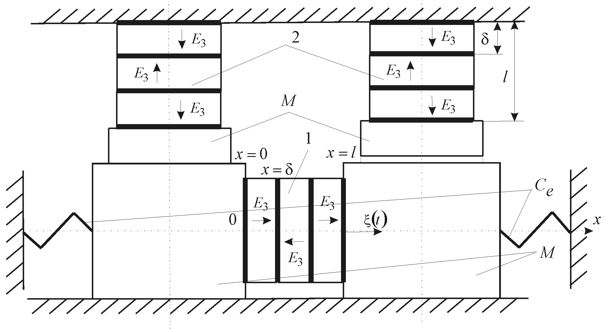
Figure 1 Step piezoengine: 1 – central piezoengine; 2 – piezolock.
Therefore, we obtain the steady state displacement of the free end of the multilayer central piezoengne in the form
,
where
is the transmission coefficient on the voltage,
is the time, and
is the voltage amplitude.
For the piezoelectric actuator made of PZT ceramics with the elastic inertial load at
;= 0.4 nm/V,
= 8,
= 2×10⁷ N/m,
= 0.5×10⁷ N/m,
= 100 V we obtain the transfer coefficient
= 2.56 nm/V and the steady state value
= 256 nm with the error 10 %.
Then, the transfer function
of the multilayer central piezoengne with the lumped parameters at the low matching circuit resistance
and the elastic inertial load has the form
,
,
where
is the time constant for the oscillatory link.
For the PZT ceramic multilayer central piezoengne with the lumped parameters at the elastic inertial load
= 2×10⁷ N/m,
= 0.5×10⁷ N/m and
= 1 kg we have the const time
= 0.2×10⁻³ s with the error 10 %.
Taking into account the capacitance of the multilayer central piezoengne and the high resistance
of the matching circuit we have the time constant for the aperiodic link
,
where
,
at
.
For the PZT ceramic multilayer longitudinal central piezoengne at
= 20 kΩ,
= 1 μF we have the const time for the aperiodic link
= 20×10-3 s with the error 10 % and
.
Displacement for step piezoengine
The amplitude step
of the step piezoengine is written as
.
Let us consider the time diagrams of the operation of the step piezoengne on Figure 2 and Figure 3, where
,
,
,
are the period of the clocking pulses, the duration of the pulse, the time from the start of the movement and the time in the current step.
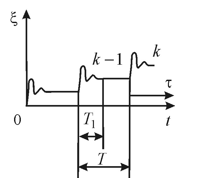
Figure 2 Time diagram step piezoengine in oscillatory mode.
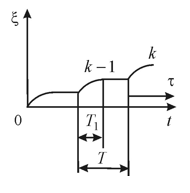
Figure 3 Time diagram step piezoengine in aperiodic mode.
For the central piezoengine in the oscillatory link mode at
the displacement of the step piezoengine on k step Figure 2 is given as
For the central piezoengine in the oscillatory link mode at
the displacement of the step piezoengine on k step Figure 3 is written as
.
Therefore, we have the parameters of the step piezoengine for nano and micro bionics.