Journal of
eISSN: 2574-8114


Research Article Volume 12 Issue 3
 Raihan Mia, Rafin Mia
Department of Fashion Design & Technology (FDT), Sonargaon University (SU), Dhaka, Bangladesh
Correspondence: Md Ahshan Habib, Department of Fashion Design & Technology (FDT), Sonargaon University (SU), Dhaka, Bangladesh
Received: May 02, 2026 | Published: May 20, 2026
Citation: Habib A, Mia R, Mia R. The impact of fabric shrinkage percentage on marker efficiency for long- sleeve women’s shirts: a comparative study of Lectra, Gerber, Gemini, and CLO 3D. J Textile Eng Fashion Technol. 2026;12(3):181-189. DOI: 10.15406/jteft.2026.12.00464
This study investigates the impact of fabric shrinkage on marker efficiency for long-sleeve women’s shirts and compares the performance of four CAD systems: Gerber, Lectra, Gemini, and CLO 3D. An experimental and comparative research design was adopted, applying a controlled shrinkage value of 3% (2% lengthwise and 1% widthwise) to garment patterns. Marker layouts were developed under identical conditions across all systems, and efficiency values were analyzed. The results show that marker efficiency improved in all systems when shrinkage was applied. Gemini achieved the highest efficiency (89.83%), followed by Lectra (89.03%), Gerber (89.00%), and CLO 3D (88.48%). Although the improvements were marginal, they were consistent across all platforms. The findings highlight the importance of incorporating shrinkage in marker planning to enhance fabric utilization and support sustainable apparel manufacturing. The study employed descriptive and comparative statistical analysis to evaluate software performance under controlled shrinkage conditions.
Keywords: fabric shrinkage, marker efficiency, CAD systems, Gerber, Lectra, Gemini, CLO 3D
Background of the study
The garment manufacturing industry operates through a sequence of well-defined processes, beginning with design development and progressing through pattern making, marker planning, fabric spreading, cutting, sewing, and finishing. Among these stages, the cutting section plays a crucial role, as it directly influences material consumption and overall production cost. In a typical apparel production system, cut order planning and marker making are essential steps that determine how fabric is utilized before cutting, ensuring that garment components are arranged efficiently on the fabric surface.1
Fabric utilization is one of the most critical factors in garment manufacturing because fabric constitutes a significant portion of total production cost often exceeding 50–65% of the total garment cost.2,1 Efficient use of fabric not only reduces material waste but also enhances profitability and supports sustainable production practices. Poor fabric utilization leads to increased wastage, higher production costs, and reduced competitiveness in the global apparel market. Therefore, optimizing fabric consumption has become a primary concern for manufacturers and researchers alike. Marker making plays a vital role in controlling fabric consumption. It is the process of arranging pattern pieces of a garment on a marker plan to achieve maximum fabric utilization. A well-prepared marker directly increases marker efficiency, which is defined as the ratio of the area occupied by pattern pieces to the total marker area. Higher marker efficiency indicates better fabric utilization and lower wastage.3 Studies have shown that factors such as marker width, garment size ratio, and pattern arrangement significantly influence marker efficiency and overall production efficiency.3,4 However, one of the most challenging factors affecting marker efficiency is fabric shrinkage. Fabric shrinkage refers to the dimensional reduction of textile materials due to processes such as washing, drying, or heat exposure. This dimensional change requires adjustments in pattern dimensions before cutting, which directly impacts marker layout and efficiency. Fabric shrinkage has a significant influence on marker efficiency and fabric consumption rate, with varying shrinkage percentages leading to noticeable differences in material utilization.2,1 Additionally, shrinkage behavior can vary depending on fabric type, processing conditions, and environmental factors, making it a complex variable in garment production.5 Given the importance of marker efficiency and the variability introduced by fabric shrinkage, it is essential to analyze how shrinkage percentages affect marker planning, particularly when using different computer-aided design (CAD) systems. Understanding this relationship can help manufacturers optimize fabric usage, reduce waste, and improve overall production efficiency. Despite the increasing use of CAD systems in apparel manufacturing, limited research has systematically examined how fabric shrinkage affects marker efficiency across different platforms. Most existing studies focus on either fabric behavior or marker optimization separately, without integrating both aspects. Therefore, this study aims to bridge this gap by providing a comparative analysis of shrinkage effects on marker efficiency using multiple CAD systems.
Despite significant advancements in CAD-based marker making, several challenges remain in achieving optimal fabric utilization. Existing studies often examine fabric shrinkage or marker efficiency independently, without integrating both factors within a unified analytical framework. Moreover, limited comparative research has evaluated the performance of multiple CAD systems under controlled shrinkage conditions. This gap necessitates a systematic investigation to understand how shrinkage influences marker efficiency across different software platforms, which this study aims to address.
Problem statement
Fabric shrinkage is a critical factor in garment manufacturing that significantly affects pattern accuracy and marker planning. When fabrics are subjected to washing, heat, or finishing processes, their dimensions change, requiring pattern pieces to be adjusted prior to cutting. These dimensional adjustments influence how efficiently pattern components can be arranged within a marker. Consequently, the impact of shrinkage on marker efficiency remains uncertain, as such adjustments may either reduce or improve fabric utilization depending on marker optimization strategies. Despite its importance, many manufacturers continue to rely on generalized shrinkage assumptions rather than precise, data-driven adjustments during marker development. Furthermore, different computer-aided design (CAD) systems employ varying algorithms for pattern nesting and marker generation, leading to potential differences in efficiency outcomes. However, there is a lack of comprehensive comparative research evaluating the performance of multiple CAD systems under controlled shrinkage conditions. This limitation restricts the ability to identify the most effective system for optimizing fabric utilization.
Research questions
Fabric shrinkage
Fabric shrinkage refers to the reduction in the dimensions of a textile material when subjected to external conditions such as moisture, heat, or mechanical action. This dimensional instability is primarily caused by the release of internal stresses that are introduced during fiber processing, spinning, weaving, and finishing stages.6 Understanding shrinkage behavior is essential in garment manufacturing, as it directly influences pattern accuracy, fit, and fabric utilization.
Fabric shrinkage can be broadly classified into three main types: relaxation shrinkage, residual shrinkage, and thermal shrinkage. Relaxation shrinkage occurs when the tension applied during manufacturing is released, allowing the fabric to return to its natural state. This type of shrinkage is often triggered by moisture and occurs rapidly when fabrics are washed or exposed to water.7 Residual shrinkage refers to the remaining dimensional change after finishing processes such as sulfurization, where fabrics are pre-shrunk but may still undergo slight shrinkage during subsequent washing and usage cycles.6 Thermal shrinkage, on the other hand, occurs due to exposure to heat, which alters the molecular structure or internal stresses within fibers, leading to dimensional reduction.8
Several factors contribute to fabric shrinkage, including washing, heat, and fiber structure. Washing introduces moisture and mechanical agitation, which relaxes internal stresses and causes fibers to rearrange. Heat accelerates this process by increasing molecular mobility, especially in synthetic and blended fabrics. Additionally, the inherent structure of fibers, such as the presence of scales in wool or the hygroscopic nature of cotton, plays a significant role in determining shrinkage behavior.9 To ensure quality control, fabric shrinkage is measured using standardized testing methods. One of the most common approaches is the dimensional change test, where fabric samples are measured before and after washing or treatment under controlled conditions. International standards such as ISO and AATCC testing methods are widely used to ensure consistency and accuracy in shrinkage evaluation. These methods enable manufacturers to predict fabric behavior and make necessary adjustments during pattern making and marker planning. Understanding the types, causes, and measurement of fabric shrinkage is crucial for optimizing garment production and minimizing material waste.
Marker making and marker efficiency
Marker making is a critical pre-production process in garment manufacturing where all pattern pieces of a garment are arranged on a marker plan in a way that maximizes fabric utilization and minimizes wastage. A marker is essentially a layout diagram that shows the precise placement of pattern pieces for different sizes of a garment on a specific fabric length and width. Marker making is the process of determining the most efficient arrangement of pattern pieces for a specific style, fabric, and size ratio to achieve optimal fabric usage and cutting accuracy.10 Marker efficiency refers to the percentage of fabric area occupied by pattern pieces compared to the total marker area. It is a key performance indicator in apparel production because higher efficiency directly reduces fabric wastage and production cost.
The standard formula used is:
Marker Efficiency (%) = (Area of pattern pieces in marker ÷ Total marker area) × 100
The importance of marker efficiency lies in its direct impact on garment cost, as fabric typically accounts for 50–70% of total production cost. Even a small improvement in efficiency can significantly increase profit margins and reduce material waste in mass production.11 Several factors influence marker efficiency. These include the skill of the marker planner, garment size ratio, marker length and width, fabric characteristics, pattern shapes, and garment style. Additionally, the marker-making method (manual or CAD-based) also plays a major role, where CAD systems generally provide higher efficiency due to optimized nesting algorithms and automated placement strategies.12 Fabric properties such as symmetry, grain line restrictions, and print direction further affect how tightly patterns can be arranged within a marker plan.
CAD systems in the apparel industry
Computer-Aided Design (CAD) systems now function as a core infrastructure within contemporary apparel manufacturing, integrating pattern construction, grading, marker planning, and 3D simulation into a unified digital workflow. This integration not only accelerates production cycles but also enhances precision and optimizes fabric utilization. Across the global apparel sector, platforms such as Lectra, Gerber AccuMark, Gemini CAD, and CLO 3D are extensively implemented in both industrial manufacturing and digital garment development.
Lectra remains a dominant solution in large-scale production contexts, offering a comprehensive suite for pattern engineering, grading, marker optimization, and production coordination. Its Modaris module supports highly accurate pattern development, while automated nesting functions improve material efficiency. Empirical studies indicate that such systems contribute to reduced fabric waste and facilitate mass customization.13 Consequently, Lectra is widely adopted by major fashion enterprises due to its precision and seamless integration with manufacturing operations.
Similarly, Gerber AccuMark is recognized as an industry-standard platform, particularly valued for its robust CAD/CAM integration. It enables efficient 2D pattern drafting, grading, and marker generation, while supporting automated cutting processes. Its compatibility with production machinery and reliability in industrial settings have driven widespread adoption. Research demonstrates that systems like Gerber enhance production efficiency and minimize material waste through optimized marker strategies.13
In contrast, Gemini CAD is more prevalent among small- to medium-scale manufacturers, particularly in European and Asian markets. It offers essential functionalities, pattern creation, grading, and marker planning within a comparatively accessible cost structure. Its intuitive interface and operational efficiency make it suitable for companies seeking balanced performance without substantial capital investment.
Meanwhile, CLO 3D represents a shift toward advanced digital prototyping. This platform enables realistic garment visualization, fabric behavior simulation, and fit evaluation within a virtual environment. Reducing dependence on physical sampling, it supports sustainable production practices and lowers material waste. Recent literature highlights its growing use among high-end fashion brands for virtual design and fitting applications, as well as its integration into academic and innovation-driven design processes.14
Features and industry usage
Overall, CAD systems in the apparel industry provide several key features:
In industrial practice, Lectra and Gerber dominate large-scale manufacturing, Gemini serves mid-level production needs, and CLO 3D is primarily used for design visualization and virtual prototyping. Together, these systems form a complete digital ecosystem that enhances efficiency, reduces cost, and supports sustainable apparel production.
Previous research studies
Several studies have examined the relationship between marker efficiency and fabric consumption. For example, research using Gerber CAD/CAM software demonstrated that adjusting pattern size according to garment tolerance can reduce cutting waste and improve efficiency by up to 9.25% in bulk production systems.15 Similarly, other studies found that marker efficiency is strongly influenced by pattern arrangement, size ratio, and fabric width, where optimized marker planning leads to measurable reductions in fabric consumption.16 In terms of CAD systems, literature shows that advanced software such as Lectra, Gerber, CLO 3D, and other digital platforms play a key role in improving production efficiency by automating pattern making, grading, and marker planning processes. CAD systems are proven to reduce human error, shorten production time, and optimize material usage through intelligent nesting algorithms.17 Recent studies also highlight that 3D CAD technologies, such as CLO 3D, enhance sustainability by reducing the need for physical sampling and minimizing fabric wastage in the development stage.18
Regarding fabric shrinkage, research indicates that shrinkage significantly affects fabric consumption and marker layout. Studies on denim and woven fabrics show that different shrinkage percentages lead to variations in fabric requirements during marker planning, directly influencing production efficiency.5 Additionally, shrinkage is identified as a critical factor that must be considered during pattern preparation to avoid size distortion and inefficient fabric utilization. Based on the reviewed literature and identified research gap, an experimental methodology was developed to evaluate the impact of fabric shrinkage on marker efficiency.
This study adopts an experimental and comparative research design to analyze the effect of fabric shrinkage on marker efficiency for women’s long-sleeve shirts. The experimental approach involves applying controlled shrinkage values to a base garment pattern consisting of 19 individual pattern pieces. A combined shrinkage level of 3% is used, including 2% lengthwise and 1% widthwise, and the pattern dimensions are adjusted accordingly before marker development. The selection of a 3% shrinkage value (2% lengthwise and 1% widthwise) was based on commonly observed shrinkage ranges in woven cotton and blended fabrics used in apparel manufacturing, ensuring realistic industrial simulation.
The comparative aspect evaluates the performance of four CAD systems, Lectra, Gerber, Gemini, and CLO 3D, under identical conditions. The same garment pattern, fabric width, and layout parameters are maintained across all software platforms to ensure consistency. Marker layouts are generated in each system, and efficiency values are calculated and compared. This approach ensures reliable, measurable, and objective results for assessing software performance.
Marker Efficiency (%) = (Total Pattern Area / Total Marker Area) × 100
Since the study utilized single marker efficiency values generated under controlled conditions for each CAD system, inferential statistical analyses such as One-Way ANOVA or t-tests were not applied. The dataset did not include repeated experimental observations required for variance estimation and significance testing. Therefore, descriptive and comparative statistical analyses were considered more appropriate for evaluating efficiency differences among the software systems (Figure 1) (Table 1) (Table 2).
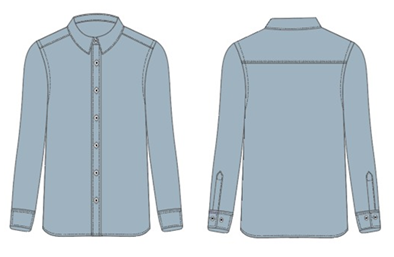
Figure 1 Technical drawing of long sleeve women’s shirts.
|
Sample No. |
Fiber content |
GSM |
Shrinkage value, % |
Woven fabrics specifications |
||||
|
Length wise |
Widthwise |
Warp yarn count (ne) |
Weft yarn count (ne) |
Warp density (ends/cm) |
Weft density (picks/cm) |
|||
|
1 |
Cotton 79%, Polyester 21% fleece |
390 |
2% |
1% |
30 |
30 |
30 |
28 |
|
2 |
Cotton 96%, Lycra 4% Elastane woven |
335 |
2% |
1% |
40/1 |
40/1 |
32 |
30 |
Table 1 Specifications of the fabrics with shrinkage ratios used in this study
|
Measurements in centimeters |
Garment size -M |
|
Back Length CB Neck seam |
70.8cm |
|
Shoulder to Shoulder |
48cm |
|
Across Back (14cm from HPS) |
43.8cm |
|
Across Front (15.24 cm from HPS) |
38.9cm |
|
Back Yoke Height from CB |
10.8cm |
|
Chest (2.54 cm Below Armhole) |
50.8cm |
|
Hem width |
52cm |
|
Bottom Hem length |
0.7cm |
|
Armhole Straight length |
43.7cm |
|
Long Sleeve Length CB |
82 cm |
|
Below Armhole(2.54cm) |
16.5cm |
|
Elbow from Cuff (40 cm) |
13cm |
|
Front length HPS |
74cm |
|
Cuff length |
10.16cm |
|
Cuff Depth long sleeve |
6.8 cm |
|
Sleeve Placket Length |
11.5cm |
|
Sleeve Placket Width |
2cm |
|
Collar Stand Height at CB |
2.8 cm |
|
Collar Length Outer Edge |
41.8cm |
|
Collar Point Length |
6cm |
|
Neck Front Drop HPS |
8.5cm |
|
Sleeve Placket Width |
3 cm |
|
First Button Position from CF |
7cm |
|
Last Button Position from hem |
13cm |
Table 2 Women’s long-sleeve shirts key measurements
Gerber
The pattern development and marker planning processes were executed using Gerber AccuMark, based on the measurement specifications provided in the technical package. Initially, garment patterns were constructed in Version 12, ensuring dimensional accuracy in alignment with the prescribed design parameters. The shirt pattern comprised multiple components, and size variations were systematically generated through the application of the grading module to accommodate the required range of garment sizes (Figure 2).
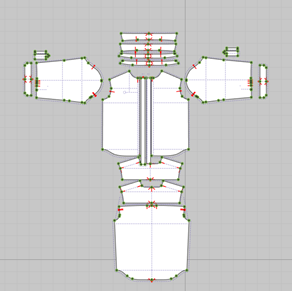
Figure 2 Pattern making in Gerber software.
After pattern development, markers were created using Gerber AccuMark. The marker width was set to 58 inches, following standard fabric width specifications. Two types of markers were prepared for comparison: one with shrinkage applied and another without shrinkage.
This approach facilitated a systematic evaluation of the effect of shrinkage on marker efficiency. As illustrated in Figure 3. The marker developed with shrinkage consideration achieved an efficiency of 89.00%, whereas the marker without shrinkage, presented in Figure 4, demonstrated a slightly lower efficiency of 88.75%. During the marker development process, multiple tools within Gerber AccuMark were employed: the Marker module was utilized for layout creation, the Auto Marker function enabled automated optimization of marker arrangements, and the Piece Placement tool ensured precise positioning of individual pattern components.
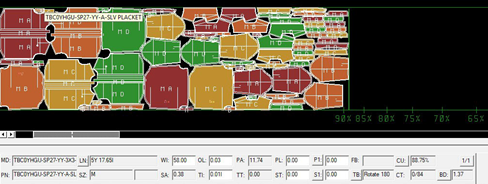
Figure 3 Marker making without shrinkage percentage in Gerber AccuMark software.
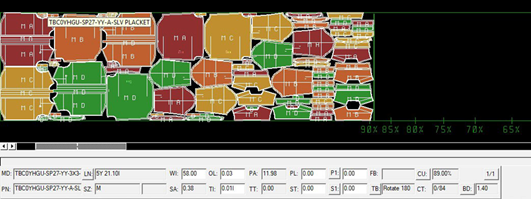
Figure 4 Marker making with 3% shrinkage in Gerber AccuMark software.
Lectra
Following pattern development in Gerber AccuMark, the pattern files were exported in DXF format to ensure interoperability with other CAD platforms. These files were subsequently imported into Lectra (Version 7) for marker development, enabling a consistent and controlled comparison across different software environments using identical base patterns.
Within Lectra, two marker variants were systematically developed: one incorporating shrinkage parameters and another without shrinkage consideration. As presented in Figure 5. The marker with shrinkage achieved an efficiency of 89.03%, whereas the marker without shrinkage, shown in Figure 6. Recorded an efficiency of 88.36%, indicating a marginal improvement in fabric utilization when shrinkage factors were integrated. During the marker development process, multiple tools within the Lectra system were employed. The Diamino module was utilized for marker layout creation, while the Automatic Nesting function facilitated the generation of optimized pattern arrangements. The Manual Placement tool enabled precise adjustment of individual pattern components when required. Furthermore, the Efficiency Tool was applied to calculate marker efficiency and assess fabric utilization across both marker configurations.
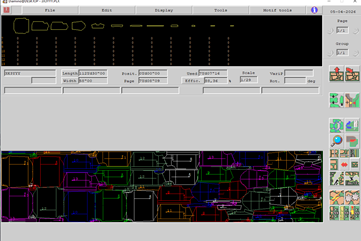
Figure 5 Marker making without shrinkage percentage Lectra software.
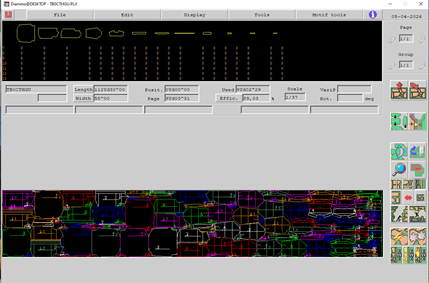
Figure 6 Marker making with 3% shrinkage in the Lectra software.
CLO 3D
The garment patterns were initially developed using Gerber AccuMark in accordance with the specified design and measurement requirements. Upon completion, the pattern files were exported in DXF format to ensure interoperability with other CAD platforms. These files were subsequently imported into CLO 3D (Version 2025.2.368) for marker development, where the marker width was set to 58 inches in alignment with standard fabric width specifications.
Two marker configurations were systematically developed for comparative analysis: one incorporating shrinkage parameters and another without shrinkage consideration. As illustrated in Figure 7. The marker with shrinkage achieved an efficiency of 88.48%, whereas the marker without shrinkage, presented in Figure 8, recorded an efficiency of 87.07%, indicating a measurable improvement in fabric utilization when shrinkage factors were integrated. During this process, multiple tools within CLO 3D were employed. The Pattern Arrangement tool facilitated the placement of pattern components within the fabric layout, while the 3D Simulation module was used to validate garment fit and design accuracy. The Pattern Editing function enabled necessary dimensional adjustments, and the Fabric Property tool was applied to define material characteristics, ensuring realistic simulation and reliable analytical outcomes.
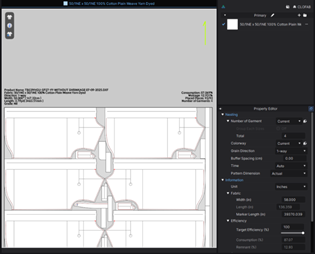
Figure 7 Marker making without shrinkage in CLO 3D software.
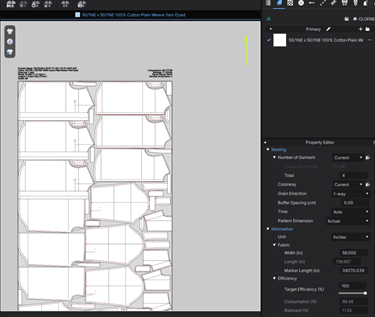
Figure 8 Marker making with 3% shrinkage in CLO 3D software.
Gemini
The garment patterns were developed in Gerber according to the specifications provided in the technical package. After finalization, the pattern files were exported in DXF format to ensure compatibility with other CAD systems. These files were then imported into Gemini CAD Software (Version 14) for marker development. The marker width was set to 58 inches, following standard fabric width specifications.
Two marker configurations were developed for comparative evaluation: one incorporating shrinkage parameters and another without shrinkage consideration. As shown in Figure 9. The marker with shrinkage achieved an efficiency of 89.83%, whereas the marker without shrinkage, presented in Figure 10, recorded an efficiency of 89.29%, indicating a marginal improvement in fabric utilization when shrinkage was included in the marker planning process.
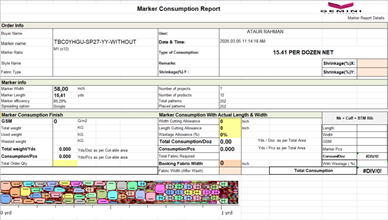
Figure 9 Marker consumption report without shrinkage in Gemini software.
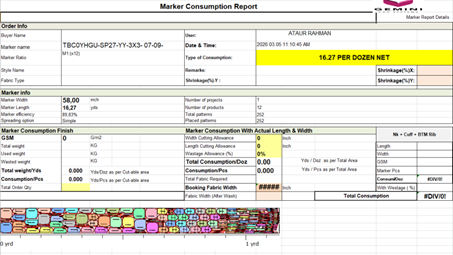
Figure 10 Marker consumption report with 3% shrinkage in Gemini software.
During marker development, several tools within Gemini CAD were utilized. The Marker tool was employed as the primary interface for creating marker layouts, while the Automatic Nesting function generated optimized arrangements of pattern pieces. The Manual Nesting tool was applied for fine adjustments in pattern placement where required. In addition, the Fabric Width tool was used to define and regulate fabric width during marker planning. The results obtained from the experimental procedures are presented and analyzed in the subsequent section.
Results and analysis
The results of this study present a comparative evaluation of marker efficiency across four CAD systems Gerber, Lectra, CLO 3D, and Gemini under two conditions: without shrinkage and with 3% shrinkage (2% lengthwise and 1% widthwise). All markers were developed using identical pattern specifications and a fabric width of 58 inches to ensure consistency and reliability of the analysis. The findings indicate that marker efficiency improved in all software systems when shrinkage was applied, demonstrating the positive impact of shrinkage adjustment on fabric utilization.
As shown in Figure 11, a consistent increase in marker efficiency was observed across all CAD systems when shrinkage was incorporated, indicating the importance of accurate shrinkage adjustment in marker planning. Table 3 summarizes the marker efficiency values, and a percentage improvement analysis was conducted to evaluate the impact of shrinkage adjustment across different CAD systems. Percentage improvement analysis was conducted to evaluate the relative impact of shrinkage adjustment on marker efficiency across different CAD systems using the following formula:
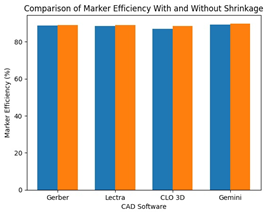
Figure 11 Grouped bar chart comparing marker efficiency (%) of Gerber, Lectra, CLO 3D, and Gemini under shrinkage and non-shrinkage conditions. The side-by-side comparison clearly shows that shrinkage-adjusted patterns consistently yield higher marker efficiency across all CAD systems.
|
Software |
Marker efficiency |
|
|
Without shrinkage |
With shrinkage |
|
|
Gerber |
88.75% |
89.00% |
|
Lectra |
88.36% |
89.03% |
|
CLO 3D |
87.07% |
88.48% |
|
Gemini |
89.29% |
89.83% |
Table 3 Results of marker efficiency
Percentage Improvement (%) = (Efficiency with Shrinkage − Efficiency without Shrinkage)/ Efficiency without Shrinkage×100
The results show that Gerber improved by 0.25%, Lectra by 0.67%, CLO 3D by 1.41%, and Gemini by 0.54%. Among all systems, CLO 3D demonstrated the highest relative improvement, although its overall efficiency remained lower compared to other systems.
Among the four systems, Gemini CAD achieved the highest efficiency, with 89.83% (with shrinkage) and 89.29% (without shrinkage), indicating superior optimization capability. Lectra showed a notable improvement, increasing from 88.36% to 89.03%, reflecting a significant response to shrinkage adjustment. Gerber also demonstrated consistent performance, with efficiency improving from 88.75% to 89.00%. In contrast, CLO 3D recorded the lowest efficiency values, though it showed a considerable increase from 87.07% to 88.48%, indicating that shrinkage still positively influenced its marker planning. The findings are further interpreted and discussed in relation to existing literature in the following section.
The results of this study clearly demonstrate that fabric shrinkage has a measurable impact on marker efficiency across all evaluated CAD systems. In each case, the application of a 3% shrinkage allowance (2% lengthwise and 1% widthwise) resulted in improved marker efficiency compared to markers developed without shrinkage. This consistent trend indicates that incorporating shrinkage during pattern development leads to more accurate pattern dimensions and better utilization of fabric during marker planning. Although the numerical differences in marker efficiency were relatively small, even marginal improvements may contribute to substantial fabric savings in large-scale apparel production. Therefore, the observed efficiency variations remain industrially relevant, particularly in mass manufacturing environments where fabric consumption directly affects production cost and sustainability performance.
Among the four systems, Gemini and Lectra showed comparatively higher improvements, suggesting that their nesting algorithms respond more effectively to pattern adjustments. Gerber also performed reliably, maintaining high efficiency under both conditions. CLO 3D, while primarily designed for 3D visualization and simulation, showed lower efficiency values but still demonstrated noticeable improvement with shrinkage inclusion. These differences highlight that software capabilities and optimization methods play an important role in marker performance (Table 4).
|
CAD system |
Industrial usage |
Automation capability |
3D Visualization |
Ease of use |
Relative cost |
|
Gerber |
Large-scale production |
High |
Limited |
Moderate |
High |
|
Lectra |
Industrial manufacturing |
Very High |
Limited |
Moderate |
High |
|
CLO 3D |
Virtual prototyping |
Moderate |
Excellent |
High |
Moderate |
|
Gemini |
Mid-scale manufacturing |
High |
Limited |
High |
Moderate |
Table 4 Operational comparison of CAD systems
In addition to marker efficiency, operational characteristics such as automation capability, industrial application, software accessibility, and visualization functions also influence software selection in apparel manufacturing environments. While Lectra and Gerber are widely used in large-scale industrial production, CLO 3D provides advanced 3D simulation capabilities, and Gemini offers a comparatively accessible and efficient solution for medium-scale manufacturers.
Overall, the findings emphasize that both shrinkage consideration and CAD system selection are critical for achieving optimal marker efficiency. Proper integration of shrinkage values can reduce fabric waste, improve cost efficiency, and enhance production accuracy in the apparel industry. These findings are consistent with previous studies,2,5 which emphasize that incorporating shrinkage adjustments during pattern development improves marker accuracy and fabric utilization. The results further confirm that CAD-based marker optimization enhances efficiency when compared to traditional assumptions.
Limitations of the study
This study is limited to a single garment type (women’s long-sleeve shirt) and a fixed shrinkage value of 3%. Variations in garment style, fabric composition, marker ratio, and industrial production conditions were not considered. In addition, operational factors such as processing time, software usability, automation capability, software cost, and industrial compatibility were beyond the scope of this research. The study also relied on single marker outputs generated under controlled conditions; therefore, inferential statistical analyses and margin of error calculations were not applicable. Future studies should incorporate repeated trials, multiple garment categories, varying shrinkage levels, and broader operational parameters to improve generalizability and statistical robustness.
This study investigated the effect of fabric shrinkage on marker efficiency for women’s long sleeve shirts using four CAD systems: Gerber, Lectra, CLO 3D, and Gemini. The results show that applying a controlled shrinkage value of 3% (2% lengthwise and 1% widthwise) improves marker efficiency in all systems. Although the increase in efficiency is relatively small, the improvement is consistent across all software, confirming that shrinkage adjustment contributes to better fabric utilization and more accurate marker planning. The study further demonstrates that software-specific optimization capabilities influence marker efficiency outcomes under controlled shrinkage conditions. Despite the relatively small numerical differences, the observed improvements remain industrially meaningful due to the large-scale fabric consumption involved in apparel manufacturing. Among the evaluated systems, Gemini achieved the highest efficiency, followed by Lectra and Gerber, while CLO 3D showed comparatively lower performance. Overall, the findings confirm that fabric shrinkage is an important factor in marker making and should be considered during pattern development to achieve more efficient and reliable production outcomes.
Recommendations
Based on the findings of this study, it is recommended that apparel manufacturers and pattern makers incorporate fabric shrinkage values during pattern development and marker making to ensure accurate fabric consumption and improved efficiency. Shrinkage adjustments should be applied before marker generation rather than after production. Additionally, companies should select CAD systems based on their efficiency performance and optimization capabilities, giving preference to systems that provide better nesting results, such as Gemini and Lectra in this study. Future research is recommended to include different garment types, fabric compositions, and varying shrinkage levels to further validate the results. Integrating real fabric testing data with CAD simulations can also improve accuracy and enhance decision-making in garment production.None.
None.
The authors declare no conflict of interest.

©2026 Habib, et al. This is an open access article distributed under the terms of the, which permits unrestricted use, distribution, and build upon your work non-commercially.