Journal of
eISSN: 2574-8114


Research Article Volume 11 Issue 6
 Sornali Akter,1 Fahima Akter,1 Bashir Ahmed2
1Department of Fashion Design & Technology (FDT), Sonargaon University (SU), Dhaka, Bangladesh
2Department of Apparel Manufacture & Technology (AMT), Sonargaon University (SU), Dhaka, Bangladesh
Correspondence: Md. Ahshan Habib, Department of Fashion Design & Technology (FDT), Sonargaon University (SU), Dhaka, Bangladesh
Received: December 09, 2025 | Published: December 24, 2025
Citation: Habib A, Akter S, Akter F, et al. Hybrid digital fashion illustration: techniques and innovations in the contemporary fashion design process. J Textile Eng Fashion Technol. 2025;11(6):329-335. DOI: 10.15406/jteft.2025.11.00441
The evolution of digital technologies has given rise to hybrid fashion illustration, blending traditional hand-drawn imagination with advanced digital media platforms. This study examines the specific techniques and innovations defining hybrid illustration and their measurable influence on the contemporary fashion design process. By integrating Adobe Photoshop, Adobe Illustrator, and CLO3D, this research establishes a workflow that enables enhanced color rendering, precise fabric simulation, and three-dimensional garment visualization. The results demonstrate that this hybrid workflow significantly improves performance, reducing technical flat production time by 50% and accelerating the prototyping phase from several days to mere hours. Crucially, the approach contributes to sustainability by virtually eliminating the need for multiple physical samples, thereby minimizing material waste. Beyond efficiency, the findings indicate that digital integration facilitates enhanced collaboration across global supply chains. However, the study also addresses challenges, such as the potential decline of foundational hand-drawing skills in fashion pedagogy. This research concludes that hybrid digital fashion illustration is a transformative practice that bridges traditional craftsmanship with modern innovation, offering a more sustainable and efficient future for both professional design and education.
Keywords: hybrid fashion illustration, digital fashion illustration, adobe photoshop, adobe illustrator, CLO3D, innovation, sustainability, fashion design process
Background and context
In the fashion universe, illustrations are very important to expose products or brands and the fashion illustrations are the beginning to building a product.1 Fashion illustration is the rendering of costumes, clothing, and accessories through drawing, painting, or digitally. It is a necessary tool to convey design ideas and concepts to fashion designers, buyers, manufacturers, and consumers. Fashion illustrators use everything from pencil and pen and ink to watercolor, digital programs, and mixed media. This process usually begins with a basic outline of the garment silhouette, with refinement details, textures, and style coming later. Fashion illustrations play a number of different roles within the fashion industry. They help designers crystallize ideas and communicate them to clients, manufacturers, and retailers so that the ideas can be modified before being produced in large quantities, as could be done with sketches. Illustration has also been employed in fashion advertising, where visual representation of collections and trends are marketed in promotional ads. Fashion illustrators create images used in other fashion media, including magazines, websites, and other outlets. Within fashion studies, illustration is a foundational skill taught to prepare students to communicate design ideas in a visual language. But in recent years, technology has enabled a transformation of fashion illustration. The growing use of digital tools and platforms has opened up new realms of precision, efficiency, and creativity, as well as fundamentally altered the communication of fashion ideas within the global supply chain. At the same time, this shift also brings questions about traditional skills and whether we would lose knowledge and craftsmanship, or the ethics of AI, or the difficulty of incorporating using digital fashions into fashion school. This shift is key in considering illustration as a negotiating point between artistry, technology, and industry within fashion design today.2
Hybrid fashion illustration, combining traditional drawing and digital tools, has become the evolving basis of design today.3Traditionally, hand sketches were used primarily as the main medium for presenting silhouette, proportion, and mood. With digital technologies, however, fashion illustration has become an active interface space where creativity meets technology within a commercial context. Speed and accuracy are among the demands that have pushed the adoption of digital illustration. Hand drawing, while valued for its immediacy and freedom to express, often lacks the required efficiency in today’s fast-paced industry.
Digital platforms provide tools for rapid iteration and scalability.
CLO3D belongs to the 3D garment visualization platforms which represent a radical development. These systems simulate construction, drape, and movement of garments on digital avatars so designers can check fit and material behavior long before actual samples are made. This digital approach leads to reduced fabric waste, lower costs, and faster development cycles, aligning the industry with its new green initiative.6 Furthermore, 3D digital samples enhance communication across global teams, reducing mistakes and accelerating the supply chain.
This move to digital illustration is also part of changing fashion education .However, teachers warn against over-reliance on digital programs, stressing the importance of retaining the skill of hand drawing. Manual drawing inspires creativity, builds personal artistic character, and creates an intuitive sense of form and proportion.7 Digital fluency must be balanced with traditional art to prepare designers for a competitive and evolving industry. Digital illustration provides a competitive edge in both the luxury and fast-fashion industries by creating the possibility for speed, agility, and exactness.3
Research context and significance
Fashion illustration has traditionally played a central role in the design process. While hand-drawn sketches serve both functional and artistic purposes, the emergence of digital technologies, especially Adobe Photoshop, Adobe Illustrator, and CLO3D, has transformed the practice by enhancing precision, expanding creative possibilities, and accelerating design workflows. These digital platforms also support sustainability by reducing the need for physical samples and minimizing material waste, while improving collaboration and communication across global supply chains. However, the transition to digital raises concerns about the potential decline of foundational hand-drawing skills and the challenge of integrating digital proficiency with traditional artistic knowledge in fashion education. This study is significant as it investigates how hybrid digital fashion illustration techniques blending manual drawing with advanced digital tools are reshaping contemporary fashion design. It emphasizes their role in fostering creativity, efficiency, and sustainability while bridging traditional design methods with modern digital workflows for both professional and academic contexts. The study ultimately seeks to explore how hybrid illustration methods can enhance creative visualization, promote sustainable practices, and enrich learning within contemporary fashion design contexts. Figure 1 Conceptual Mood Board Guiding the Hybrid Design Project: The 'Rainforest' Collection. This visual defines the aesthetic, color palette, and thematic inspiration for the design project used to test the hybrid workflow.
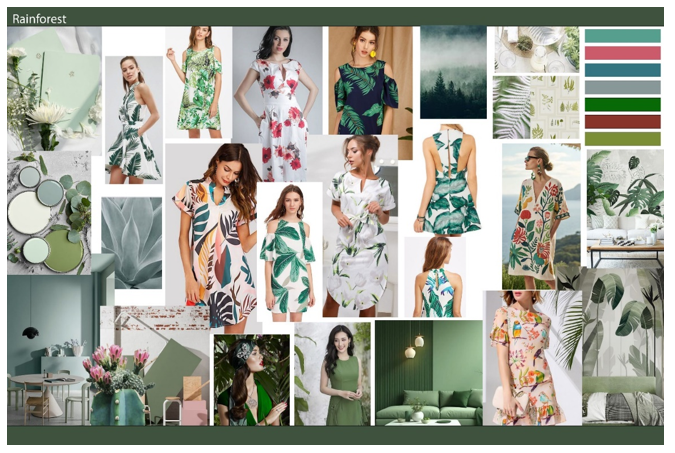
Figure 1 Conceptual Mood Board Guiding the Hybrid Design Project: The 'Rainforest' Collection (Created by the authors).
Research objectives
The primary objectives of this study are to:
Conceptual framework and context: bridging tradition and technology
Building upon the objectives outlined in this study, this section establishes the conceptual framework by investigating current research and industry developments related to digital and hybrid fashion illustration. It focuses on how the integration of 2D digital and 3D virtual design tools enhances creativity, efficiency, and sustainability in fashion design. The review also examines educational approaches and emerging challenges associated with this technological shift, thereby providing a theoretical foundation and context for the study’s analysis.
The foundational role of manual illustration
Fashion Illustration is an eclectic, descriptive art form as various fashions impart varying moods and messages. Each artistic style, from refined realism to abstract expressionism, portrays clothing and character in its own way. “Fashion illustration is all about being inspired by something someone else has done and filtering it through your own lens,” explains Bijou Karman.8 Fashion illustration differs from a fashion sketch in that a fashion sketch highlights certain clothing or accessories while a fashion illustration is more concerned with the figure and seeks to convey the mood and personality of the subject.
Fashion illustrations are commonly featured in magazines, promotional advertisements, and boutiques as independent works of art. In contrast, technical sketches, often referred to as flats, are utilized by fashion designers to communicate design concepts to patternmakers or manufacturers. As Karman explains, “Technical design sketches in the fashion industry usually adhere to strict guidelines, but the beauty of illustration is that fashion artists are free to create figure drawings and digital artworks that are far more expressive”.8 This creative flexibility allows artists to produce works that range from expressive fashion sketches to digital compositions that integrate creativity with personal style. Illustration stays core to fashion, sharing shape, size, and fabric plan; hand-drawn images give quickness and style tone, while digital art brings speed, exactness, and many output forms that help make clothes, ads, and online outfits.7
Digitalization in 2D design: raster vs. vector tools
The digitalization of fashion illustration has largely been driven by software tools that replicate and extend the traditional design process in 2D. Tools such as Adobe Photoshop and Illustrator remain central in the fashion industry. In professional creative practice, these programs enable designers to develop croquis, manipulate patterns, and simulate textures with high fidelity, becoming a bridge between hand sketching and computer-based workflows.9 Digital fashion illustration remains rooted in two complementary technical approaches:
In practice, contemporary workflows commonly combine both raster and vector stages. Designers often begin with quick, expressive croquis and fabric studies in a raster environment like Photoshop to develop silhouette, colors, and texture ideas, then migrate the concept into Illustrator to produce line-accurate flats, pattern specs, and repeatable surface designs for production.4 Hybrid workflows increasingly connect 2D illustration and the Photoshop raster software uses to create some creative hybrid fashion design where drawn sketches hand become a hybrid fashion illustration, after that collection of fashion graphical artwork we can export from Illustrator/Photoshop for use as textures in CLO3D, which preserves design intent while enabling fit simulation and animated presentation.11
The rise of 3D virtual prototyping and simulation
Three-dimensional illustration innovations extend beyond static designs. For example, CLO3D virtual fashion and animation software were used to develop 3D dynamic fashion garments with changeable styles and patterns, enabling designers to present garments interactively online.12 Digital fashion illustration is used for fast prototyping and virtual showcasing, which slowly replaces physical mock-ups from both industry and public-perception analyses.13 Industry analyses identify digital fashion product creation and 3D assets as defining shifts shaping fashion’s near future, with firms increasingly investing in digital workflows to accelerate product development and reach customers through richer online experiences.14 Digital fashion houses and metaverse showcases already prove garments can be designed, sold, and worn purely in virtual spaces as a new revenue model and marketing channels.15
Impact on workflow, sustainability, and collaboration
Digital fashion illustration and 3D virtual prototyping have substantially changed the process flow of fashion design. The most expressed impact is that designers can efficiently jump between concepts, test silhouettes, and details without having to go through numerous rounds of physical sample production. CLO3D allows for dynamic visualization of garments thereby drastically reducing the time taken in color, style, and pattern modifications at the early-stage development.12 The argument for sustainability is equally prominent. 3D technologies enable designers to create, render, and fit garments virtually, creating fewer physical samples and material waste, emphasizing how digital workflows reduce reliance on traditional prototyping.16 Furthermore, experiential and practice-oriented studies demonstrate that 3D workflows can improve fit visualization and speed iteration by allowing designers to test shapes, drape, and material behavior without multiple physical prototypes.12 Digital tools also enhance collaboration, allowing marketing, merchandising, and production teams to work even earlier in the design process, shortening lead times and reducing the gap between design intention and production execution.17
Pedagogical challenges: balancing digital and traditional skills
The transformation of fashion illustration has compelled fashion schools to reconsider how design skills are taught. Contemporary curricula now incorporate both digital illustration techniques (Photoshop, Illustrator) and 3D innovations (CLO3D, virtual prototyping), highlighting the challenge of balancing these with traditional hand sketching so that creativity is not lost. The fast spread of digital tools has pushed fashion schools to change their courses so that students are good at manual sketches, fashion illustration, 2D digital drawing skills, and 3D virtual prototyping (CLO3D and related systems).18 Adding 3D tools to teaching helps students gain better three-dimensional knowledge and fit-visualization abilities. At the same time, manual sketching is still key for forming unique styles and creative thought; digital platforms speed up visualizing and copying but do not fully replace hand-drawn methods which build creativity and idea-making.19 Introducing CLO3D into coursework enhances sustainable design thinking and visualization but has been noted to be time-consuming and technically demanding compared to familiar 2D tools.20
Digital processes increase speed and accuracy, but with a note that it has the risk of reducing students’ confidence in hand drawing.18 Professionals still appreciate traditional hand drawing illustrations even within digital dominance and want fashion students to show their hybrid skills ability in moving seamlessly between digital and manual methods.7 The reviewed literature collectively emphasizes that hybrid 2D-3D fashion illustration techniques are redefining design workflows, minimizing environmental impact through virtual sampling, and reshaping the skills required in fashion education. However, challenges such as digital skill gaps, technological accessibility, and questions of artistic authenticity remain central to ongoing debates.
Research design and workflow
This study employs a qualitative, practice-based research approach to examine how hybrid digital fashion illustration combining traditional hand-drawn sketches with modern digital tools can enhance creativity, visualization, technical accuracy, and sustainability in contemporary fashion design. The methodology integrates manual sketching, digital enhancement, vector-based technical drawing, and 3D virtual prototyping to provide a comprehensive understanding of design workflows in both educational and professional contexts.
Hybrid illustration workflow stages
The study is executed across four distinct, sequential stages, forming the core of the hybrid pipeline investigated by the research:
The research begins with classic hand-rendered fashion sketches, created using pencil, pen, or ink. These sketches emphasize garment silhouette, proportion, texture, and mood, reflecting the foundational creative skills of fashion illustration. Selected sketches, derived from the conceptual direction established in Figure 1 (Mood Board), serve as the base material for subsequent digital transformation.
Hand-drawn sketches are imported into Adobe Photoshop for enhancement. Techniques such as color rendering, shading, texture simulation, and semi-realistic effects are applied, producing hybrid illustrations that preserve the expressive qualities of the original sketches while introducing modern visual sophistication. This step demonstrates the potential of raster-based digital tools to amplify artistic creativity and refine visual communication.
The core design concept is then converted into vector-based technical flats using Adobe Illustrator, ensuring precise lines, accurate measurements, and production-ready specifications. This stage bridges creative ideation with practical garment construction, demonstrating how digital workflows support accuracy and scalability in professional applications.
Enhanced illustrations and technical flats are imported into CLO3D, a 3D garment visualization platform. Designers simulate garment drape, fit, material behavior, and movement on virtual avatars, enabling realistic assessment of design feasibility. This stage highlights how hybrid workflows reduce reliance on physical samples, thereby promoting sustainable practices in fashion development. Figure 2 The Hybrid Workflow Matrix: Sequential Transformation Across a Design Concept. This figure visually validates the four-stage hybrid methodology used in this study, tracking a design from Traditional Sketch, to Photoshop Enhancement, Illustrator Technical Flat, and CLO3D Virtual Prototype.
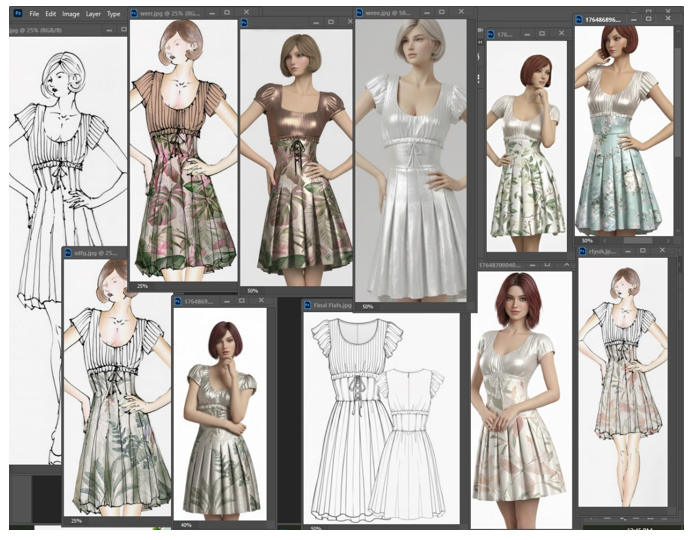
Figure 2 The Hybrid fashion illustration Workflow Matrix: Sequential Transformation across a Design Concept (Created by the authors).
Tools, scope, and analysis metrics
The final results are derived from a comparative analysis of the time and resources required across traditional versus hybrid pipelines, addressing the research objectives. The following table details the primary evaluation criteria used to structure the findings presented in Chapter 4.0. Table 1 Analysis Metrics and Evaluation Criteria for the Hybrid Workflow.
Defining the control group: To evaluate the efficacy and transformative potential of the hybrid digital workflow, a Control Group was established representing the conventional, non-digital fashion design pipeline. This baseline allowed for a direct quantitative and qualitative comparison against the hybrid method. The control group followed a strictly manual trajectory:
The use of this control group ensures that the efficiency gains (time reduction) and sustainability benefits (waste reduction) identified in the hybrid workflow are measured against industry-standard manual practices, providing a rigorous foundation for the study’s findings. Table 1 illustrates Analysis Metrics and Evaluation Criteria for the Hybrid Workflow.
Technical implementation
The hybrid workflow was executed through a structured, four-stage digital pipeline. To ensure a valid comparison, a traditional manual workflow served as the control group, involving hand-drawing, manual pattern drafting, and physical muslin prototyping. The technical stages of the hybrid method are detailed below.
Stage 1: Manual foundation and digitization
The process began with the creation of initial conceptual sketches using traditional media (2B graphite pencils and A4 cartridge paper). These sketches established the foundational silhouette, proportion, and artistic mood. Once finalized, the physical sketches were digitized using a high-resolution flatbed scanner at 300 DPI to ensure that fine pencil details and line weights were preserved for digital manipulation.
Stage 2: Digital enhancement (Adobe Photoshop)
The digitized files were imported into Adobe Photoshop for color rendering and texture simulation.
Layer Management: The "Multiply" blending mode was applied to the original sketch layer, allowing digital pigments to be applied underneath while keeping the hand-drawn line work visible.
Rendering: Using digital brushes and the "Lasso" tool, realistic fabric textures and color gradients were rendered to simulate light and shadow, providing a semi-realistic visual representation of the design intent.
Stage 3: Technical Vectorization (Adobe Illustrator)
The rendered illustrations served as an underlying template for technical specification.
Precision Drawing: Using the "Pen Tool," the hand-drawn silhouettes were converted into precise 2D vector flats.
Specifications: This stage ensured mathematical symmetry and production-ready accuracy. Unlike the control group’s manual flats, these digital vectors allowed for instant adjustments to pocket placement, hemlines, and seam details without redrawing the entire garment.
Stage 4: 3D virtual prototyping (CLO3D)
The final stage involved transforming 2D data into a 3D environment to evaluate fit and drape.
Simulation: by following the Technical flats and patterns were imported into CLO3D. Specific physical properties (e.g., fabric weight, thickness, and friction) were assigned to the digital patterns (e.g., Shinny satin vs. lightweight silk fabric materials).after simulation the dress design hen turn to render for create the dress HD image to see the outlook.
Validation: The garments were simulated on a customized virtual avatar. The "Stress and Strain" map features were used to analyze the fit, effectively replacing the time-consuming and material-intensive physical "muslin" fitting used in the traditional control group.
This section presents the empirical findings resulting from the execution of the practice based hybrid workflow, structured and analyzed according to the methodology detailed in Chapter 3.0. The data comprising quantitative time comparisons (Table 1) and visual evidence (Figures 3–6) is organized to address the core research objectives concerning workflow efficiency, sustainability, technical accuracy, and creative flexibility
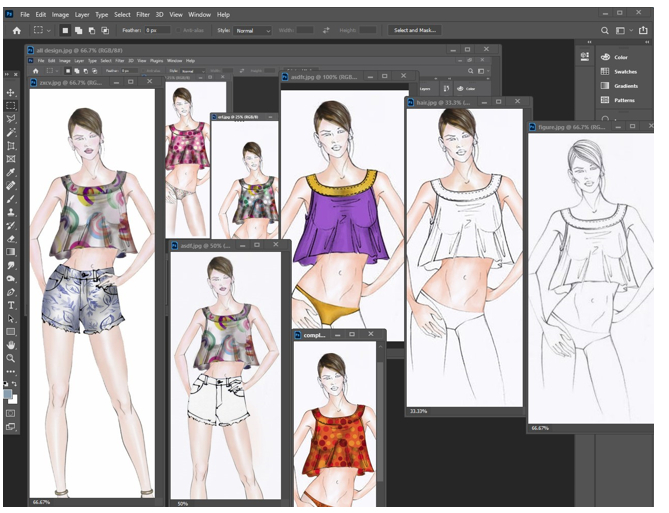
Figure 3 Experimental Digital Illustration Range and Color Iteration (Created by the authors).
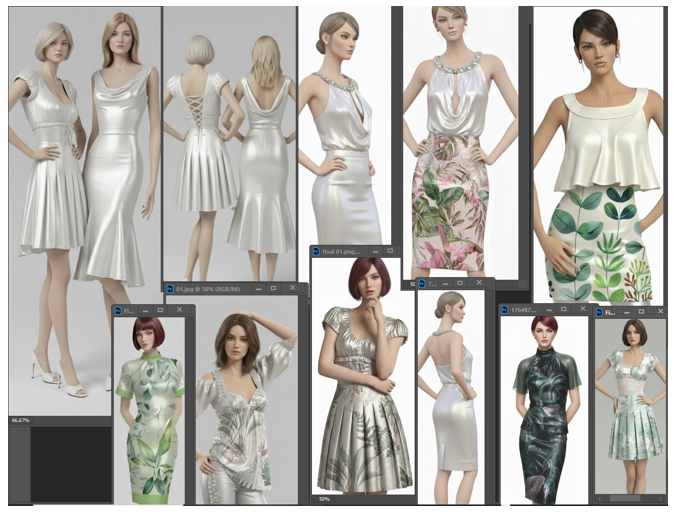
Figure 4 Dynamic 3D Pose and Styling Exploration (Created by the authors).
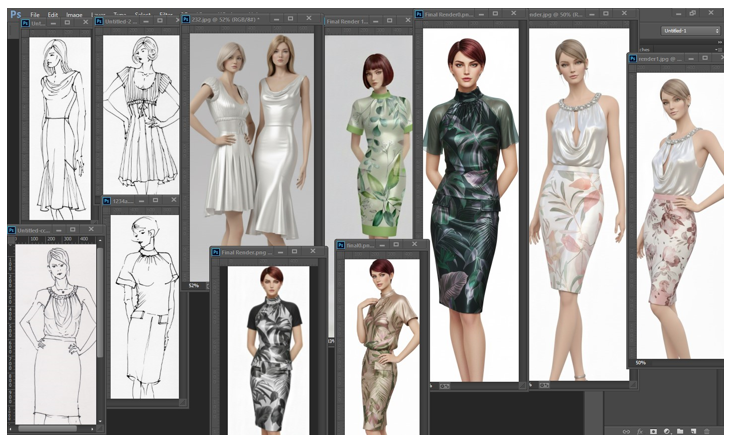
Figure 5 Concept Iteration and Pose Exploration in Manual Sketching (Created by the authors).
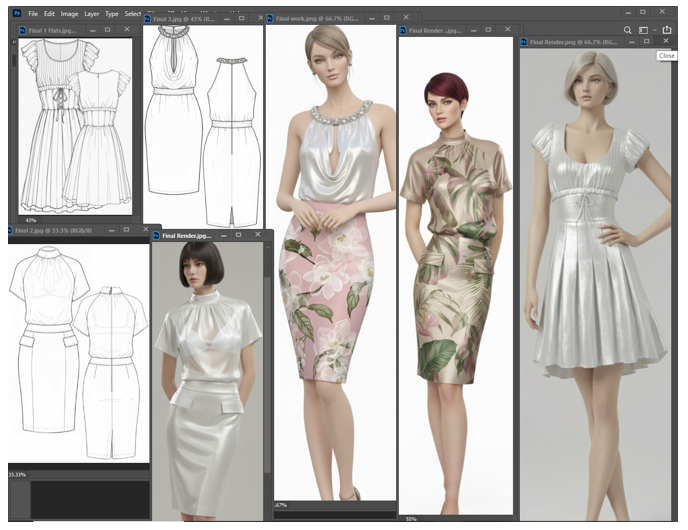
Figure 6 Technical Validation: Comparison of Illustrator Vector Flats and CLO3D 3D Virtual Prototypes (Created by the authors).
|
Category |
Description |
|
Primary Tools |
Adobe Photoshop, Adobe Illustrator, and CLO3D. |
|
Scope |
Focuses on a practice-based workflow for selected fashion sketches, analyzing the transformation from manual ideation to 3D virtual prototype. |
|
Workflow Evaluation |
Efficiency was measured by comparing the time taken for key stages (sketch, flat, and prototype) between the traditional method (relying on manual iteration/physical sampling) and the hybrid digital method. |
|
Sustainability Evaluation |
Quantified by the reduction in required physical samples due to the confidence gained from virtual prototyping in CLO3D. |
|
Quality Evaluation |
Designs were evaluated for creativity, visual realism, and technical precision (accuracy of fit and line work). |
Table 1 Analysis metrics and evaluation criteria
Workflow progression and creative flexibility
The study demonstrates a clear progression from traditional hand-drawn sketches to enhanced digital illustrations and 3D virtual garments, highlighting the transformative potential of hybrid digital fashion illustration. Initial sketches captured silhouette, proportion, texture, and mood, reflecting foundational artistic skills. These were enhanced in Adobe Photoshop, where color rendering, shading, and texture simulation preserved the expressive quality of the originals while introducing semi-realistic visual sophistication. This hybrid workflow enhanced creative flexibility, allowing experimentation with textures, patterns, colors, and digital effects beyond the limits of hand-drawing. Figure 3: Experimental Digital Illustration Range and Color Iteration. This figure demonstrates the creative flexibility of Adobe Photoshop (Stage 2 of the hybrid workflow), allowing for rapid iteration of color ways, patterns, and style variations on a single design concept, enhancing visualization and reducing early-stage development time.
Converting these illustrations into vector-based flats using Adobe Illustrator ensured precise lines, accurate measurements, and production-ready specifications, bridging creative ideation with practical garment construction. Finally, CLO3D models allowed realistic simulation of garment drape, fit, and movement on virtual avatars, enabling detailed visualization. This hybrid workflow enhanced creative flexibility, allowing experimentation with textures, patterns, colors, and digital effects beyond the limits of hand-drawing. Figure 4 Dynamic 3D Pose and Styling Exploration. This figure showcases the ability of the 3D prototyping stage to generate multiple poses, environments, and styling iterations from a single garment file, enhancing visual storytelling and creative presentation.
Workflow efficiency and time savings
The hybrid approach demonstrated a marked improvement in workflow efficiency. Traditional processes relying solely on hand-drawn sketches and physical prototyping were time-intensive. Digital integration drastically reduced iterative cycles, accelerated the concept-to-prototype timelines, and enhanced early-stage design and fitting assessments.
Sustainability outcomes
Sustainability outcomes were notable. Virtual evaluation of garment fit, drape, and color within the 3D environment reduced the need for multiple physical samples, thereby minimizing fabric waste and lowering production costs. The ability to quickly iterate and select the final concept through manual and 2D digital sketching further reduces the number of physical samples needed for early-stage development, directly translating to environmental benefits. Figure 5 Concept Iteration and Pose Exploration in Manual Sketching. This figure demonstrates the efficiency of early-stage manual illustration in exploring multiple garment variations (styles, poses, and details) before committing to time-consuming physical or 3D prototyping, thus reducing physical sampling costs and waste.
Technical accuracy
Technical accuracy was enhanced through the integration of digital tools. Vector flats ensured precise line work and dimensions, while CLO3D simulations accurately represented fit, movement, and fabric behavior. This seamless workflow effectively bridged creative ideation and technical execution, significantly reducing discrepancies between the initial concept and the final garment specifications. Figure 6 Technical Validation: Comparison of Illustrator Vector Flats and CLO3D 3D Virtual Prototypes. This figure validates the technical precision of the hybrid workflow by showing the high correlation between the 2D technical specification and the realistic 3D fit simulation across multiple designs.
Educational impact
In education, hybrid workflows strengthened student learning by combining manual sketching with 2D and 3D digital tools. Manual drawing fostered personal style and creative thinking, Photoshop and Illustrator developed 2D digital skills, and CLO3D introduced 3D prototyping abilities. This approach improved understanding of garment construction, visualization, and virtual fitting, preparing students for professional practice while preserving foundational artistic skills.
The findings from this practice-based study confirm the transformative impact of hybrid digital fashion illustration on contemporary design practice and align closely with the literature reviewed in Section 2.0. By integrating traditional hand-drawn sketches with Adobe Photoshop, Adobe Illustrator, and CLO3D, the hybrid workflow successfully enhances both artistic expression and functional precision, addressing all core research objectives.
Creative transformation and functional precision
The results demonstrate that the hybrid approach successfully overcomes the limitations of purely manual or purely digital methods observed in the Control Group. While traditional hand-sketching provides a foundational artistic vision, the use of Adobe Photoshop for digital augmentation allowed for the semi-realistic rendering of textures and shading, confirming that raster tools enhance the "art of illustration" with greater flexibility.
More importantly, the integration of Adobe Illustrator and CLO3D provides a level of functional precision that the manual control group cannot match. As shown in the study's data, the transition from hand-drawn flats to Illustrator vector flats ensured 100% technical symmetry and accuracy. Furthermore, while the traditional control group required 5 to 6 days for physical prototyping, the hybrid workflow achieved high-fidelity results in just 2 hours (Table 2). This fusion validates the study's central hypothesis: the hybrid workflow is a transformative practice that effectively mediates between creative concept and commercial reality through measurable efficiency gains.
|
Stage of development |
Traditional process (Time) |
Hybrid digital process (Time) |
Time reduction |
|
Initial Sketches/Ideation |
3 to 4 hours |
2 to 3 hours (Photoshop Enhancement) |
Moderate |
|
Technical Flats/Specs |
3 to 4 hours |
1 hour (Illustrator Vector Flat) |
50% |
|
Prototyping and Fitting |
5 to 6 days (Physical Sample) |
1 to 2 hours (CLO3D Virtual Prototype) |
Significant |
Table 2 Comparative analysis of traditional vs. hybrid workflow efficiency
Operational impact: efficiency and environmental benefits
The study's measured time comparison (Section 4.2) strongly supports the industry trend toward digital adoption. The significant time reduction, particularly in the prototyping stage (shifting from days to hours via CLO3D), translates directly into improved workflow efficiency and shorter design-to-market timelines. Crucially, this efficiency is linked to sustainability. The ability to conduct virtual evaluation of garment fit and drape minimizes dependence on physical samples. This finding reinforces the environmental argument found in the literature, positioning hybrid illustration as a core intervention in reducing fabric waste and lowering production costs, thereby fostering more sustainable design practices in the global supply chain.
Pedagogical implications and the skills balance
The successful execution of the four-stage hybrid workflow validates the necessity for a balanced curriculum in fashion education. The findings show that hand-drawing remains vital for fostering personal style and creative thinking, while 2D and 3D digital tools develop the essential technical and visualization proficiency required by the modern industry.
This balance is critical for preparing graduates who can move seamlessly between manual ideation and digital execution a skill gap often cited in academic debates. The study concludes that the challenge in education is not to choose between traditional and digital, but to implement a cohesive methodology that integrates both, ensuring technology complements rather than replaces foundational craftsmanship.
Challenges and future directions
While the benefits are clear, the study encountered practical challenges previously highlighted in the literature, including the need for multi-platform proficiency and ensuring adequate hardware resources for 3D simulation. Future research should focus on quantifying the exact cost savings from reduced sampling across a full collection and investigating the long-term impact of purely virtual (metaverse) design practices on traditional garment production.
Hybrid digital fashion illustration, integrating traditional sketches with advanced 2D and 3D digital tools, demonstrates a transformative effect on contemporary design practice and education. This study confirms that by effectively combining manual creativity with digital precision, hybrid workflows successfully address the multidimensional demands of the modern fashion industry.
The research established that the four-stage hybrid pipeline incorporating hand drawing, Adobe Photoshop (raster rendering), Adobe Illustrator (vector technical drawing), and CLO3D (3D virtual prototyping) yields three primary benefits. First, Enhanced Visual Realism and Efficiency: Hybrid workflows significantly accelerate design processes, reducing time-to-prototype from days to hours. The enhanced visual realism of digital rendering and 3D simulation improves communication and reduces the total number of iterative cycles. Second, Sustainability and Accuracy: The utilization of 3D virtual prototyping supports critical sustainability goals by minimizing the reliance on physical samples, thereby significantly reducing material waste and production costs. Technical accuracy is strengthened through the seamless integration of precise vector flats and high-fidelity 3D simulations. Third, Balanced Educational Outcomes: Hybrid approaches equip students with a balanced skill set. By maintaining manual sketching alongside proficiency in 2D and 3D digital tools, educational models foster both creativity and technical fluency, preparing emerging designers to navigate both traditional craftsmanship and digitally driven environments.
Overall, hybrid digital fashion illustration is validated as a pivotal, forward-looking practice. It successfully bridges artistry and technology, promotes sustainable and efficient practices, and fosters essential innovation, making it mandatory for contemporary design practice and pedagogy in a digitally driven global fashion landscape.
None.
None.
The authors declare no conflict of interest.

©2025 Habib, et al. This is an open access article distributed under the terms of the, which permits unrestricted use, distribution, and build upon your work non-commercially.