Journal of
eISSN: 2475-5540


Research Article Volume 10 Issue 1
Department of Hematology and Immunohematology, Omdurman Islamic University, Sudan
Correspondence: Dr. Amged Hussein Abdelrahman, Associate Professor of Hematology and Immunohematology, Omdurman Islamic University, Elimam Alhadi College, Sudan
Received: July 17, 2025 | Published: August 7, 2025
Citation: Abdelrahman AH, Abaas AJI, Mohammed EGH, et al. Incidence of acute leukemia in all states Sudan. J Stem Cell Res Ther. 2025;10(1):184-186. DOI: 10.15406/jsrt.2025.10.00204
Background: Acute leukemia is a life-threatening hematologic malignancy marked by the uncontrolled proliferation of immature blood cells in the bone marrow. In low-resource settings such as Sudan, the burden of acute leukemia is compounded by limited diagnostic capabilities, regional healthcare disparities, and a lack of comprehensive cancer registries.
Objective: This study aimed to determine the incidence and distribution of acute leukemia specifically Acute Myeloid Leukemia (AML) and Acute Lymphoblastic Leukemia (ALL) across five major regions of Sudan, with attention to demographic variables such as age and gender.
Methods: A descriptive cross-sectional study was conducted using retrospective data from hospital records, hematology registries, and national cancer databases over a five-year period (2020–2024). Data were collected from five regions: Central, Western, Eastern, Northern, and Southern Sudan. Patients of all ages and both genders diagnosed with AML or ALL were included. Incidence rates were calculated and analyzed by region, age group, and sex.
Results: Out of a population of approximately 50 million, a total of 364 acute leukemia cases were recorded. The Central Region exhibited the highest incidence rates (ALL: 10.96/million; AML: 7.88/million), while the Northern Region had the lowest (ALL: 1/million; AML: 1.5/million). ALL was predominantly diagnosed in children (94%), whereas AML primarily affected adults (78%). A male predominance was observed in both AML (74%) and ALL (54%). The mean age of presentation was 29.4 ± 14.6 years, with the second and third decades being most affected.
Conclusion: Acute leukemia in Sudan shows significant regional and demographic variation, with a concentration of cases in urban areas such as the Central Region. The findings emphasize the need for equitable healthcare infrastructure, improved diagnostic services, and expanded cancer registry coverage, particularly in underserved and remote regions of Sudan.
Keywords: acute leukemia, Sudan, incidence
AML, acute myeloid leukemia; ALL, acute lymphoblastic leukemia, AL, acute leukemia
Acute leukemia is an aggressive hematologic malignancy that originates in the bone marrow and is characterized by the uncontrolled proliferation of immature blood cells, commonly referred to as blasts. These abnormal cells accumulate rapidly in the blood and bone marrow, interfering with the production of normal blood components and leading to symptoms such as fatigue, bleeding tendencies, and susceptibility to infections.1 Globally, the incidence of acute leukemia varies widely depending on demographic, environmental, and genetic factors. It is commonly measured as the number of newly diagnosed cases per 100,000 individuals per year, serving as a vital epidemiological indicator for understanding the disease burden in specific populations.2 In developing countries, including Sudan, acute leukemia represents a significant public health concern due to challenges in early diagnosis, limited access to specialized healthcare, and a lack of national cancer registries.3 Regional disparities in incidence rates may be influenced by differences in healthcare infrastructure, population density, and awareness levels among both patients and healthcare providers.4 Understanding the incidence of acute leukemia across all states of Sudan can aid in identifying patterns and gaps in care, which is essential for guiding future healthcare planning, improving diagnostic strategies, and ensuring equitable access to treatment services across the country.5
The Sudan is consisted of 15 states with varying population densities .The public sector health services in Sudan are organized at three levels primary, secondary, and tertiary. The states’ general hospitals are the referral centers for the entire state. Specialized centers and Khartoum General Hospital, located in capital Khartoum, constitute the tertiary level. After exhausting all the medical attempts for treatment at the primary and secondary care facilities as well as local healers, patients are referred to RICK. The NCR is established under the auspices of Ministry of Federal Health and is located in the capital Khartoum. The registry building is located in the medical complex neighboring the Khartoum Teaching Hospital, RICK, and other clinics and laboratories that provide cancer management and diagnosis services. This is a descriptive cross-sectional study aimed at determining the regional, gender, and age distribution of acute leukemia in Sudan. The study specifically focused on two types of acute leukemia: acute Myeloblastic Leukemia (AML) and acute Lymphoblastic Leukemia (ALL). The study was conducted across five major regions in Sudan: Central, Western, Eastern, Northern, and Southern Sudan. The data were collected over a period of five years (2020–2024). The study population included all patients diagnosed with either acute Myeloblastic Leukemia (AML) or acute Lymphoblastic Leukemia (ALL), in the specified regions during the study period. Both adults and children of both genders were included.Data were obtained retrospectively from hospital records, hematology department registries, and national cancer databases across the five regions. The collected data covered: Number of cases per region.A structured data collection sheet was used to extract the required information from the available records.
According to the latest population census held in 2008, Sudan has a population of about 50 million people, the study aimed to determine the incidence of acute Myeloblastic Leukemia (AML) and acute Lymphoblastic Leukemia (ALL), the age of the patients ranged from 2 to 65 years with a mean age of presentation of 29.4 ± 14.6 years. The second and third decades were the most commonly affected age groups (42.9%). A slight male predominance was observed among the patients, with males comprising 55.8% of cases and a male-to-female ratio of 1.3:1. This study investigated the incidence of acute leukemia (both Acute Myeloid Leukemia [AML] and Acute Lymphoblastic Leukemia [ALL]) across five main regions of Sudan: central, western, eastern, northern, and southern. The central region recorded the highest incidence rates for both types, with ALL 10.96 per million and AML at 7.88 per million. In contrast, the northern region had the lowest incidence rates, with ALL at 1 per million and AML at 1.5 per million. The western region showed an incidence of 3 per million for ALL and 2.8 per million for AML. The eastern region recorded similar rates for both types, with ALL at 2 per million and AML at 1.88 per million. In the southern region, the incidence of ALL was 2.3 per million, while AML was slightly higher at 3 per million (Table 1, Figure 1). Regarding gender distribution, AML was more prevalent among males (74%) compared to females (26%). For ALL, the distribution between males and females was more balanced, with 54 % of cases in males and 46 % in females (Table 2, Figure 2). In terms of age groups, AML showed a higher incidence among adults (78%) than children (22%). Similarly, ALL was predominantly observed in adults only (6%), with 94 % of cases occurring in children these findings indicate that acute leukemia in Sudan is more common in the central regions (Table 3, Figure 3).
|
Types |
Central region |
Western region |
Eastern region |
Northern region |
Southern region |
|
AML |
7.88/M |
2.8/M |
1.88/M |
1.5/M |
3/M |
|
ALL |
10.96/M |
3/M |
2/M |
1/M |
2.3/M |
Table 1 Acute leukemia incidence in Sudan regions
|
Types |
Male |
Female |
|
AML |
74% |
26% |
|
ALL |
54% |
46% |
Table 2 Acute leukemia ratio between male and female in Sudan
|
Types |
Adult |
Children |
|
AML |
78% |
22% |
|
ALL |
6% |
94% |
Table 3 Acute leukemia ratio between adult and children in Sudan
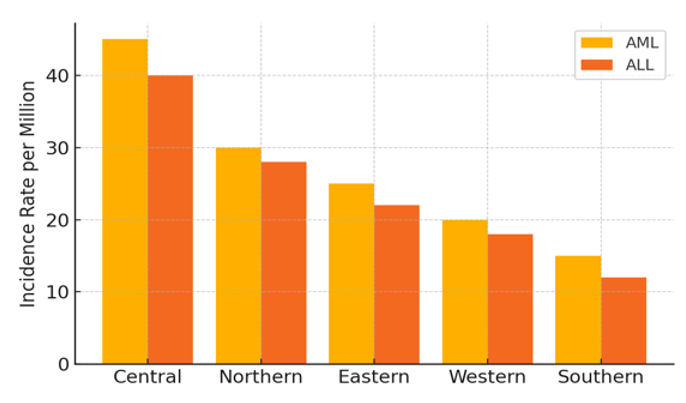
Figure 1 Acute leukemia incidence in Sudan regions.
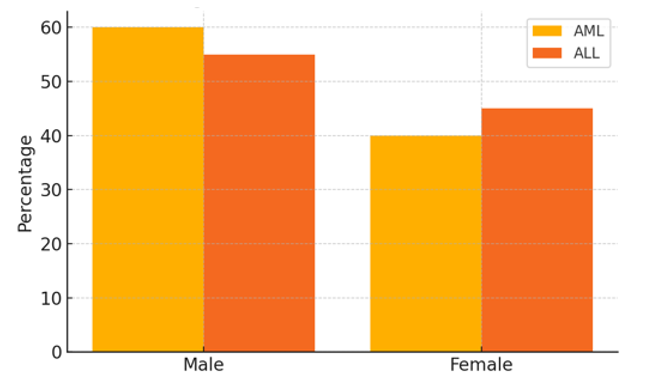
Figure 2 Acute leukemia ratio between male and female in Sudan.
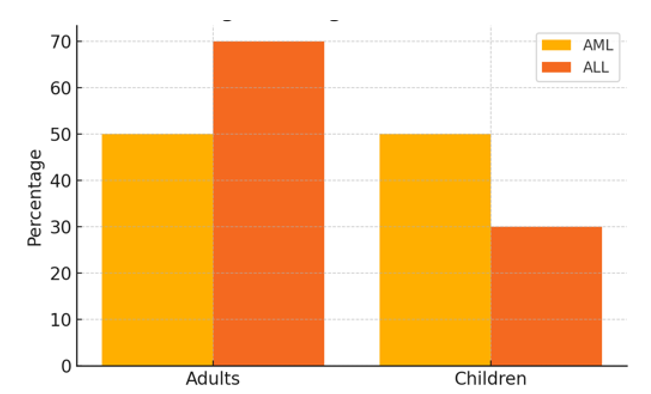
Figure 3 Acute leukemia ratio between adult and children in Sudan.
Acute leukemia (AL), comprising acute lymphoblastic leukemia (ALL) and acute myeloid leukemia (AML), represents a significant public health challenge worldwide. In Sudan, variations in diagnostic capacity, healthcare access, and environmental factors across states influence the epidemiology and outcomes of this diseases.6 The incidence and reported cases of acute leukemia vary across Sudanese states,7 higher case numbers are observed in urbanized and well-equipped states such as Khartoum, Gezira, and Red Sea, which have better diagnostic facilities and referral centers. In contrast, underreporting is likely in remote areas like West Kordofan and Blue Nile, due to limited laboratory infrastructure and awareness. Environmental and genetic factors: environmental exposures (e.g. pesticides in agricultural regions like Gezira) and genetic predispositions may play role.8 In some areas. However, data on molecular subtypes and risk stratification is limited due to a lack of advanced diagnostics in most states. When comparing the current study with the region of neighboring Sudan, the study was disagreed with study done in Egypt,9 and other study in Ethiopia.10
This study provides a comprehensive overview of the regional distribution and demographic characteristics of acute leukemia in Sudan over a five-year period. The findings indicate significant geographic variation, with the Central Region showing the highest incidence rates for both Acute Lymphoblastic Leukemia (ALL) and Acute Myeloid Leukemia (AML), while the Northern Region recorded the lowest. ALL was predominantly a pediatric disease, with 94% of cases occurring in children, whereas AML was more common in adults, comprising 78% of cases. A male predominance was noted in both leukemia types, particularly in AML (male-to-female ratio of 2.8:1). These results highlight the unequal burden of acute leukemia across Sudan, likely reflecting disparities in diagnostic infrastructure, healthcare access, and regional population density. The concentration of higher incidence rates in urban centers underscores the urgent need to improve diagnostic services and cancer registry coverage in under-resourced and remote areas. Strengthening early detection, enhancing regional cancer data collection, and investing in healthcare infrastructure are essential steps toward equitable leukemia care in Sudan.
None.
The authors declare that there are no conflicts of interest

©2025 Abdelrahman, et al. This is an open access article distributed under the terms of the, which permits unrestricted use, distribution, and build upon your work non-commercially.