Journal of
eISSN: 2373-4426


Research Article Volume 15 Issue 3
 Klikpezo R,4 Amouzoun S,1,4 Olujobi SJ1
1Research Office in Epidemiology and Population Health (CaRESaP), Benin
2Borgou and Alibori Departmental University Hospital (CHUD-B/A), Benin
3Faculty of Medicine, University of Parakou, Benin
4Armed Forces Teaching Hospital – University Hospital Center (HIA-CHU) of Parakou, Benin
Correspondence: NOUDAMADJO Alphonse, Pediatrician, University Hospital, 03BP 369 Parakou, Benin, Tel +229 0194794149
Received: October 10, 2025 | Published: December 17, 2025
Citation: Edaye BJD, Noudamadjo A, Klikpezo R, et al. Impact of delayed initiation of breastfeeding on neonatal survival at the Mono-Couffo departmental hospital maternity in 2022. J Pediatr Neonatal Care. 2025;15(3):202-206. DOI: 10.15406/jpnc.2025.15.00608
Introduction: Early breastfeeding within the first hour after birth significantly reduces neonatal mortality but remains underutilized in low- and middle-income countries, exposing newborns to preventable risks.
Study Method: This prospective observational study, conducted in 2022 at the Mono-Couffo Departmental Hospital maternity ward, assessed the impact of delayed breastfeeding initiation on neonatal survival. Full-term and preterm live-born infants were followed up to 28 days, with data collected through a structured questionnaire. Statistical analysis employed logistic regression to determine associations between delayed breastfeeding initiation and neonatal mortality, accounting for covariates.
Results: Among 146 newborns, 75.34% initiated breastfeeding late (≥212 minutes after birth). Neonatal mortality was 11.64%. Each additional minute of delay significantly increased the risk of death by 1.54% (OR = 1.0154; p = 0.0005). None of the factors studied, such as gestational age, maternal age, birth weight, or delivery method, were significantly associated with mortality.
Conclusion: Early breastfeeding initiation is a crucial strategy for improving neonatal survival. Strengthening immediate breastfeeding practices remains a priority to reduce mortality in low-income settings.
Keywords: early breastfeeding initiation, neonatal survival, breastfeeding, infant mortality
Early initiation of breastfeeding within the first hour after birth—recommended by the World Health Organization (WHO)—is recognized as a lifesaving practice in the prevention of neonatal deaths. Nearly 80% of neonatal deaths occur in low- and middle-income countries (LMICs), where early breastfeeding, despite being a readily available intervention, remains the least practiced.1 In sub-Saharan Africa in particular, numerous demographic surveys report low adherence to this vital practice.2 This apparent paradox in sub-Saharan Africa, and particularly in Benin, can be explained not by a lack of willingness or economic means, but rather by persistent sociocultural and institutional barriers. In many communities, traditional beliefs still consider colostrum as impure or harmful, leading to its rejection and delayed breastfeeding. The literature highlights that delayed initiation of breastfeeding can double to quadruple the risk of neonatal death, primarily through infections.3,4 Colostrum, often referred to as the “newborn’s first vaccine,” contains immunoglobulins, growth factors, and immune cells that drastically reduce the risk of sepsis and mortality.5,6 Yet, despite abundant scientific evidence, rates of early initiation remain low. In a study conducted across 58 countries, the overall prevalence of delayed initiation of breastfeeding was 53.8%, reaching as high as 83.4% in Guinea.1 In Ethiopia, for example, despite awareness campaigns, only 71.9% of infants were breastfed within the first hour in 2019, falling short of national health targets.7,8
According to the World Haelth Organization (WHO) and the United Nations Children’s Fund (UNICEF) guidelines, every newborn should be breastfed within one hour of birth, regardless of the mode of delivery.9,10
This practice should be preceded by immediate skin-to-skin contact and supported by respectful postpartum care.11,12 Ideally, healthcare providers are expected to assist mothers immediately after delivery, minimize delays caused by hospital procedures, and avoid harmful practices such as pre-lacteal feeding, which interfere with successful breastfeeding.13,14 Such optimal care enhances neonatal survival, strengthens immune protection, and reduces hospitalizations for infections, hypoglycemia, and severe jaundice.4
Despite these recommendations, the majority of mothers in LMICs continue to initiate breastfeeding beyond the first hour, exposing newborns to preventable risks. In Ethiopia, delayed initiation occurred in 53.4% of deliveries by cesarean section.8,11 In India, after gradual progress between 2005 and 2015, improvements stalled, with only 42% of infants breastfed within the first hour in 2019.13 The situation is even more concerning for preterm or hospitalized infants, with rates of same day as birth initiation as low as 5.4% in some neonatal units prior to intervention.12 Several structural determinants exacerbate this issue: lack of post-cesarean counseling, absence of skin-to-skin contact, and insufficient professional support.15
The consequences of delayed initiation are devastating. It increases the risk of neonatal death, heightens vulnerability to infections, prolongs hospital stays, and raises healthcare costs.16 Potential neurological outcomes such as autism, cerebral palsy, cognitive impairments, and hearing loss have also been reported.4 In Rwanda, for example, an improvement in same-day breastfeeding initiation reduced neonatal mortality from 16.1% to 10.5%, demonstrating the direct link between early breastfeeding and survival.12 Furthermore, delayed initiation undermines mother–infant bonding, reduces exclusivity of breastfeeding, and increases the likelihood of early cessation of breastfeeding.7,14
In light of this major public health issue, the central research question guiding this study was: “To what extent does the delay in initiating breastfeeding after delivery influence neonatal survival during the first 28 days of life, independently of other maternal and neonatal determinants?”
The objective of this study was to assess the impact of delayed initiation of breastfeeding on neonatal survival at the Mono-Couffo Departmental Hospital in 2022. Specifically, the study aimed to analyze the time elapsed between birth and the first breastfeeding and to examine, using survival analyses (Kaplan-Meier) and a Cox regression model, how this delay influences the probability of neonatal survival while accounting for maternal and neonatal factors that could confound this relationship. This approach does not seek to identify all causes of neonatal mortality but rather to highlight the potential protective role of early breastfeeding initiation.
Study setting and methods
This study was a prospective observational descriptive and analytical investigation conducted at the maternity ward of the Mono-Couffo Departmental Hospital Center between January and December 2022.
The study population consisted of live-born neonates delivered at the maternity ward, followed until day 28 (D28), together with their mothers or child guardians, who served as the responding units. Inclusion criteria were live-born term or preterm infants whose mothers consented to follow-up and were reachable either by telephone or postnatal visits. Exclusion criteria included neonates with lethal malformations, intrapartum deaths, and infants transferred to other facilities within the first six hours of life.
A systematic random sampling method was employed using the delivery register, by selecting every kᵗʰ birth (k determined as the ratio of the total number of deliveries during the study period to the calculated sample size), with a randomly chosen starting point (d = 2). The sample size was calculated using the standard formula for comparing two proportions, assuming an expected 20% difference in neonatal survival between the “early initiation” and “delayed initiation” groups, with 80% statistical power and a 5% alpha risk. This yielded a required sample of 146 subjects.
Maternal characteristics included age, parity, gravidity, mode of delivery, and history of obstetric complications. Perinatal variables comprised gestational age, birth weight, Apgar score at 1 minute, and presence of prematurity.
Data were collected using a structured questionnaire administered at discharge and complemented by follow-up assessments conducted either by telephone or during postnatal consultations on days 7, 14, and 28. Information gathered included maternal characteristics, perinatal factors, timing of first breastfeeding, and neonatal survival.
The relationship between maternal and neonatal factors and neonatal survival was analyzed using Kaplan-Meier survival analysis and a Cox proportional hazards regression. Variable selection was performed using the entry method. The overall model fit was assessed with the log-likelihood ratio test, which allows comparison between the full model and the null model. The explanatory power of the model was evaluated using Cox & Snell and Nagelkerke pseudo-R², indicating the proportion of variability in neonatal survival explained by the included variables. Model calibration was assessed using the Hosmer-Lemeshow goodness-of-fit test, ensuring that the predicted probabilities correspond well to the observed frequencies. A significance level of p < 0.05 was used to identify statistically significant associations. The variables collected and their operational definitions are detailed in Appendix A.
All mothers were informed of the study objectives, and their free and informed consent was obtained. Anonymity of participants and confidentiality of collected data were strictly ensured.
A total of 146 neonates born to mothers aged between 16 and 44 years were included in the study. The mean maternal age was 31.21 ± 8.64 years. On average, neonates waited 93.39 ± 66.91 minutes before their first breastfeeding. Among the 146 newborns, 55.48% were preterm, 63.70% were delivered vaginally, and 14.38% were born to mothers who were not grand multiparous. Delayed initiation of breastfeeding was observed in 75.34% of neonates. The mean birth weight was 2610 ± 450.29 grams, ranging from 980 to 3670 grams.
Table 1 presents the distribution of the included neonates according to maternal anamnesis and neonatal clinical characteristics.
|
|
Frequency (n=146) |
Percentage (%) |
|
Prematurity |
||
|
Yes1 |
81 |
55.48 |
|
No |
65 |
44.52 |
|
Mode of delivery |
||
|
Cesarean section |
53 |
36.3 |
|
Vaginal |
93 |
63.7 |
|
Grand multiparity |
||
|
Yes2 |
21 |
14.38 |
|
No |
125 |
85.62 |
|
Time to initiation of breastfeeding |
||
|
Early |
36 |
24.66 |
|
Delayed |
110 |
75.34 |
|
Gestationa age (week) |
||
|
< 28 (extreme prematurity) |
- |
- |
|
28–33 (moderate prematurity) |
39 |
26.71 |
|
34–36 (late prematurity) |
42 |
28.77 |
|
37–41 (term) |
65 |
44.52 |
|
Parity |
||
|
Nulliparous (0) |
- |
- |
|
Primiparous (1) |
25 |
17.12 |
|
Multiparous (2 – 5) |
100 |
68.49 |
|
Grand multiparous (>5) |
21 |
14.38 |
|
Birth weight (g) |
||
|
<1000 |
1 |
0.68 |
|
[1000 – 1500] |
- |
- |
|
[1500 – 2500] |
59 |
40.41 |
|
≥2500 |
86 |
58.9 |
|
APGAR score at 1 min |
||
|
[1 – 3] |
20 |
13.7 |
|
[4 – 6] |
54 |
36.99 |
|
[7 – 10] |
72 |
49.32 |
Neonatal survival analysis
Among the sample of 146 neonates, 11.64% experienced the event (death), while 88.36% were censored. The mean time to initiation of breastfeeding after delivery was estimated at 212 minutes (SD: 6.718), with a 95% confidence interval of 198.868 to 225.202 minutes (Figure 1).
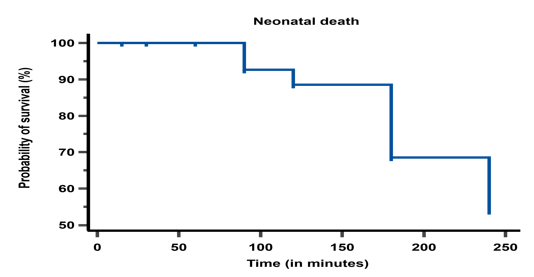
Figure 1 Kaplan-Meier neonatal survival curve according to the time to initiation of breastfeeding.
Logistic regression model fit
The log-likelihood test demonstrated a significant improvement of the full model over the null model (Chi² = 21.415, df = 7, p = 0.0032), indicating good overall explanatory capacity. Cox & Snell (0.1364) and Nagelkerke (0.2659) pseudo-R² values suggest that the variables included in the model explain between 13.6% and 26.6% of the variability in neonatal survival. Additionally, the Hosmer-Lemeshow goodness-of-fit test (Chi² = 4.0859, p = 0.8493) confirmed that the model fits the observed data well, reinforcing its validity for predicting neonatal survival (Table 2).
|
Factor |
Coefficient |
Standard error |
OR (CI 95 %) |
P-value |
|
Gestational age |
-0.0147 |
0.0970 |
0.985 (0.815 – 1.192) |
0.8797 |
|
Maternal age |
0.0044 |
0.0362 |
1.004 (0.936 – 1.078) |
0.9037 |
|
1-minute Apgar score |
-0.2901 |
0.1592 |
0.748 (0.548 – 1.022) |
0.0684 |
|
Time to initiation of breastfeeding |
0.0153 |
0.0044 |
1.015 (1.007 – 1.024) |
0.0005 |
|
Maternal parity |
-0.1720 |
0.1875 |
0.842 (0.583 – 1.216) |
0.3591 |
|
Birth weight |
0.4143 |
0.7178 |
1.513 (0.371 – 6.179) |
0.5638 |
|
Mode of delivery |
0.6435 |
0.6668 |
1.903 (0.515 – 7.032) |
0.3345 |
Table 2 Factors associated with neonatal survival based on multivariate logistic regression (Mono-Couffo Departmental Hospital Center, 2022).
Impact of breastfeeding initiation time on neonatal survival
Each additional minute of delay in breastfeeding initiation was associated with a significant 1.54% increase in the risk of neonatal death (OR = 1.0154; 95% CI: 1.0068–1.0242; p = 0.0005), highlighting the protective role of early breastfeeding. Although variables such as gestational age, maternal age, 1-minute Apgar score, parity, birth weight, and mode of delivery were included in the model, none showed a statistically significant association with neonatal survival in this context
The multivariate analysis conducted in this study demonstrated that each additional minute of delay in breastfeeding initiation significantly increased the risk of neonatal death by 1.54% (OR = 1.0154; 95% CI: 1.0068–1.0242; p = 0.0005). For instance, a neonate breastfed three hours (180 minutes) after birth instead of 30 minutes would theoretically have a more than 140% higher risk of death. This progressive and exponential risk gradient underscores the critical importance of the first hour of life.
However, the inclusion of both preterm and term neonates may have introduced heterogeneity, as prematurity and low birth weight are strong independent predictors of neonatal mortality. In addition, the limited sample size and absence of cause-of-death data may have reduced our ability to control for major confounders such as infection, asphyxia, or congenital anomalies. Future studies should perform stratified analyses by gestational age and include a multivariate regression model adjusted for these confounding factors.
Studies by Alrasheedi et al.,17 and Sharma et al.,18 emphasize that early breastfeeding depends on both individual and structural factors: support from healthcare staff (adjusted OR = 3.5), promotion of immediate postnatal care, skin-to-skin contact, and prenatal counseling are major determinants. This finding strongly highlights the protective effect of early breastfeeding on neonatal survival. It is consistent with existing literature demonstrating a direct link between breastfeeding within the first hour and reduced neonatal mortality. Numerous studies have shown a strong correlation between delayed initiation of breastfeeding and neonatal death. For example, Berhanu et al.,5 reported that initiating breastfeeding after the first hour increased the risk of mortality nearly threefold (adjusted OR = 2.9; 95% CI: 1.32–6.37). Similarly, Aguma et al.,6 identified late initiation of breastfeeding as one of four independent factors associated with neonatal mortality (adjusted OR = 2.79; 95% CI: 1.50–5.18), alongside prematurity, low Apgar score, and low birth weight.
In the context of our study, where 75.34% of neonates experienced delayed initiation of breastfeeding, these findings are particularly alarming. Agossou et al.,19 reported a prevalence of 67.38% in a community-based study in the Parakou municipality. Such a high prevalence of delayed breastfeeding in our sample suggests the presence of systemic or structural barriers that must be explored, especially given that the observed neonatal mortality (11.64%) could be largely attributable to this delay. At the community level, this high prevalence may partly explain the persistently elevated neonatal mortality in Benin,20 considering the crucial immuno-protective role of colostrum.
A notable aspect of our analysis is that variables usually considered important—such as gestational age, parity, maternal age, 1-minute Apgar score, birth weight, and mode of delivery—did not show statistically significant associations. However, multiple studies have demonstrated robust links between these variables and neonatal survival. For instance, Zekarias et al.,16 reported that an Apgar score ≤ 5, respiratory distress syndrome, hypothermia, and absence of breastfeeding were independently associated with neonatal mortality (adjusted OR for no breastfeeding: 3.68; 95% CI: 1.44–9.36). Similarly, Ali et al.,21 identified late breastfeeding as a significant factor (adjusted OR = 2.28; 95% CI: 1.12–4.66), alongside prematurity, low birth weight, and need for resuscitation.
Early breastfeeding has also been shown to be an immuno-protective factor, particularly against neonatal sepsis. Dessu et al.,3,22 reported that initiation of breastfeeding after the first hour increased the risk of mortality in neonates with sepsis by 3.4 times (adjusted OR: 3.4; 95% CI: 1.34–12.63). This corroborates immunological hypotheses that early exposure to colostrum, rich in immunoglobulins and immune cells, is vital within the first hours of life. Although our study focused on overall neonatal mortality, our findings align with this observation: delayed initiation of breastfeeding may not merely be a marker of delayed care but a direct causal factor in neonatal deaths, particularly via infection.23
The neonatal mortality rate of 11.64% may appear high but aligns with several hospital-based African studies. Aguma et al.,6 reported a mortality rate of 17.49%, with 70.27% of deaths occurring within the first seven days and 81% related to prematurity. These data support the need for immediate postpartum interventions, with early breastfeeding as a fundamental pillar. Berhanu et al.,5 also emphasize that implementing early breastfeeding, combined with improved perinatal care, could significantly reduce the burden of neonatal deaths in similar healthcare settings.
Study limitations
This study has several limitations. First, the study population included both term and preterm neonates, which may have affected the strength of the observed associations. Second, some important risk factors for neonatal death—such as infection, asphyxia, or congenital anomalies—were not fully controlled for. Third, the small sample size limited the statistical power to detect weak associations.
Nevertheless, this study highlights the crucial protective effect of early breastfeeding initiation in a real-world hospital setting.
Early initiation of breastfeeding was practiced in fewer than one in four neonates. Each additional minute of delay in breastfeeding initiation significantly increased the risk of neonatal death. In our context, where cultural behaviors and professional obligations evidently hinder the implementation of scientifically proven practices to reduce neonatal mortality, it is essential to continue and intensify awareness campaigns on the benefits of breastfeeding. Future studies focusing on factors associated with delayed initiation of breastfeeding could provide further evidence to guide targeted interventions.
None.
None.
The authors declare that they have no conflicts of interest in the conduct of this study.

©2025 Edaye, et al. This is an open access article distributed under the terms of the, which permits unrestricted use, distribution, and build upon your work non-commercially.