Journal of
eISSN: 2373-6445


Research Article Volume 14 Issue 4
Graduate Study Program in Experimental Psychology, Behavioural Analysis, Pontifícia Universidade Católica de São Paulo, Brazil
Correspondence: Samir Vidal Mussi, Graduate Study Program in Experimental Psychology, Behavioural Analysis, Pontifícia Universidade Católica de São Paulo, Rua Vergueiro, 1353/411, Postal code 04101000 - São Paulo, SP, Brazil
Received: July 05, 2023 | Published: July 20, 2023
Citation: Mussi SV, Malerbi FEK. Impact of the course ‘considerations on psychotherapy for LGBTQIAP+ people’ on the behaviour of psychologists. J Psychol Clin Psychiatry. 2023;14(4):102-109. DOI: 10.15406/jpcpy.2023.14.00737
This study evaluated the impact of a course called ‘Considerations on psychotherapy for LGBTQIAP+ people’ on the behaviour of psychologists who treat people from this population. Eighteen participating psychologists were divided into an intervention and a control group. The intervention group received 5 2-hour classes on psychotherapeutic intervention strategies for the LGBTQIAP+ population, while controls answered 3 questionnaires and the Prejudice Against Sexual and Gender Diversity Scale on two occasions. The same course was subsequently given to the control group. After the course, both the groups began to more frequently identify and apply its specific psychotherapeutic interventions for the LGBTQIAP+ population, and gender and sexual orientation prejudice decreased according to one instrument, but not the Prejudice Against Sexual and Gender Diversity Scale.
Keywords: psychologist training, LGBTQIAP+, sexual and gender minorities, behaviour analysis, specific psychotherapeutic interventions for the LGBTQIAP+ population
LGBTQIAP+ is an abbreviation for Lesbian, Gay, Bisexual, Transsexual, Transvestite, Queer, Intersex, Asexual, Pansexual and other people whose expression of sexual orientation and/or gender identity differs from that of cisgender and/or heterosexual people. Empirical data have shown that social isolation, a lack of social support, and physical and sexual aggression, experiences associated with adverse events that LGBTQIAP+ people often go through, are a risk factor for clinical problems, such as emotional dysregulation, anxiety, depression, and suicide.1–4 The history of punishment experienced by sexual and gender minorities is associated with self-criticism and behaviours related to excessive vigilance, distress, and efforts to hide their sexual and gender identities, which has also been called minority stress.5,6 It should be noted that, here, the term minority is not understood in a quantitative sense, but as a designation for a group that, compared to a privileged group, undergoes a series of losses due to its stigma.7
In a behavioural reading of the stress theory of minorities, Souza et al.,8 drew attention to the fact that the responses of the LGBTQIAP+ population are usually due to uncontrollable and unpredictable aversive stimuli. Such experiences can lead to negative self-assessment and the hiding of any characteristic related to sexual orientation or gender identity to avoid aversive events. In Brazil, aversive control has been reported over the behaviour of LGBTQIAP+ people, such as the abandonment of non-heterosexual/cisgender children,10 rejection of programs to combat homophobia in schools,9 death threats to LGBTQIAP+ politicians,11 and the exclusion of these people from the job market.12
Psychotherapy is a control agency that, according to Skinner,13 prevents, eliminates, or mitigates the aversive consequences (in the short, medium, or long term) of social control that is either institutionalized or being institutionalized. However, some authors have reported that psychotherapists punish responses related to sexual orientation and gender identity of the LGBTQIAP+ people who seek their help,14 treating their clients as if they were heterosexual, without worrying about whether this is true,14 and propagating a ‘gay cure’ in which LGBTQIAP+ people should modify their behaviour to become heterosexual or cisgender.15,16
In a review of 4 articles on corrective therapy (also known as ‘gay cure’),15 found that the involved psychology professionals demonstrated beliefs and/or attitudes favourable to corrective therapy. They found that these professionals considered LGBTQIAP+ people to be sinful, immoral, and sick. Silva and Rasera17 surveyed 8 medical students at a public university in the state of Minas Gerais, Brazil. These students were offered a series of 5 90-minute workshops on sexual diversity, medical training in sexuality, and public health policy for the LGBTQIAP+ population. The workshops addressed the health needs of this population, the effects of heteronormativity on the relationship between health professionals and LGBTQIAP+ patients, and information on health policies for this community. The results indicated training gaps about health-related issues specific to this population and an emphasis on physiological content to the detriment of psychosocial aspects of the doctor-patient relationship. The participants reported discomfort when addressing the topic of sexuality with LGBTQIAP+ patients and a belief that this topic should be restricted to specific areas, such as gynaecology, proctology, and urology. The authors highlighted the importance of interdisciplinary approaches in conjunction with the psychology department as a way of offering medical students more humane health care education regarding the LGBTQIAP+ population.
Investigating the conceptions of Brazilian undergraduate psychology students about gender and sexuality, as well as their knowledge of declarations by the Federal Council of Psychology regarding homosexuality and trans identities, Mizael18 applied a questionnaire to 82 students. The participants’ conceptions about homosexuality were generally consistent with those of the authorities responsible for regulating and supervising professional practice, i.e., that homosexuality is not a disease, homophobia must be combatted, and that pathologising sexual orientation behaviours and participating in ‘gay cure’ events must be prohibited. However, the students were uninformed about and pathologised trans identities, with their conceptions differing from standard current definitions.
Several countries currently lack professional training in psychotherapy regarding the LGBTQIAP+ population due to undervaluing variables such as family exclusion, prejudice at school, the lack legal protection for this population, etc.3,19,20 To fill this gap, some authors have proposed a set of specific psychotherapeutic interventions for the LGBTQIAP+ population called affirmative therapy. According to Perez,21 affirmative therapy consists of
integrating the therapist's knowledge and awareness of the unique cultural aspects of the development of LGBTQIAP+ individuals, the therapist's own self-knowledge, and the translation of that knowledge and awareness into effective and useful therapeutic skills at all stages of the therapeutic process.
From a behaviour analysis perspective, psychotherapists should analyze former and current reinforcement contingencies likely to be involved in the behaviours of LGBTQIAP+ people. To achieve this goal, therapists must identify the responses frequently presented by this population, as well as the antecedent and consequent stimuli associated with these responses. Some examples of this include reports of discomfort with same-sex desires, self-isolation, concealing failure in activities, distorted assumptions about affective relationships, relationship/sexual desire difficulties, depression, anxiety, and bipolarity disorders, punishment during childhood for behaviours that did not conform to expectations for their birth-assigned gender, family exclusion, unfavourable comparisons to heterosexual people, teasing at school, and psychological therapy to cure homosexuality.22 The behaviours of LGBTQIAP+ people that are targeted for modification in psychological therapy are often related to aversive control, including escape, revolt, passive resistance, fear, anxiety, anger, anger, depression, excessive substance use, excessively restricted behaviour, poor self-awareness, and aversive self-stimulation.13,22
Mussi and Malerbi (2022) reviewed studies on professional training in affirmative therapy for the LGBTQIAP+ population, finding that this training generally teaches therapists to 1) describe their own sexual prejudices and, for heterosexuals, their heterosexual privileges; 2) identify the ways they express their sexuality; 3) follow the responses of LGBTQIAP+ people with support and encouragement; 4) emphasize the positive characteristics of their clients; 5) provide instructions about expressing emotional states; 6) encourage participation in LGBTQIAP+ support groups; 7) determine whether appropriate responses from the LGBTQIAP+ population strengthened them; and 8) encourage participation in continuing education, seeking constant improvement through courses, reading, and events aimed promoting diversity. The authors reported that few studies evaluated psychotherapy training for the LGBTQIAP+ population and that the assessment was non-descriptive in studies that did. The aim of the present study was to evaluate an online course called ‘Considerations on psychotherapy for LGBTQIAP+ people’, sexual prejudice-related behaviours among psychologists, and the identification and application of appropriate psychotherapeutic interventions for the LGBTQIAP+ population.
Participants
The online course ‘Considerations on psychotherapy for LGBTQIAP+ people’ was announced on the first author’s social networks, and a sample of 18 psychologists who had enrolled through Google Forms were selected. The registration form consisted of 13 questions on sociodemographics (name, contact, age, marital status, gender, sexual orientation, and religion) and profession (time since graduation in psychology, current job, experience in assisting LGBTQIAP+ people, participation in training in serving the LGBTQIAP+ population, and self-assessed qualifications to serve these people). Those who worked in a clinic or a public service that cares for the LGBTQIAP+ population and declared they did not feel prepared for the task were prioritized in the selection. The following order of criteria was used:
Selected participants were contacted through WhatsApp; they were thanked for registering, were provided information about how the course works, including its duration and frequency of classes, were warned that some personal information could be revealed to other participants, and were asked to confirm their interest in participating.
A total of 51 people registered for the course after the invitation was posted: 41 remained after applying the first selection criterion (work setting), 36 remained after applying the second criterion (serving the LGBTQIAP+ population), 25 remained after applying the third criterion (feeling unqualified), and 23 remained after applying the final criterion (feeling inexperienced). A WhatsApp message was sent to these 23 participants to confirm their selection and describe the course schedule. Of these, 5 could not participate due to scheduling conflicts, leaving a sample of 18 participants, all of whom stated they worked in a clinic or public service and provided psychological care for LGBTQIAP+ people. The participants were divided into two groups paired by biological sex, age, sexual orientation, and religion. Supplementary material 5 details the participants’ profiles.
Those not selected for the study were invited to participate in a 4-hour theoretical class taught by the first author about assisting the LGBTQIAP+ population.
Most participants were female (n = 12 66.7%) and had no religion (n = 11 61.1%), with half (n = 9) declaring themselves homosexual. The mean participant age was 31.7 years (SD, 6.1; range 23-46 years). The mean age in the intervention and control groups was 29.8 (SD, 5.1) and 33.6 (SD, 6.7) years, respectively.
Measurement instruments
Four questionnaires and the Prejudice Against Sexual and Gender Diversity Scale (PASGDS) were used.
Questionnaire 1 – Specific interventions in psychotherapeutic care for the LGBTQIAP+ population
This questionnaire consists of a single open question, i.e., specific interventions the participant would use in psychotherapeutic care for LGBTQIAP+ people in general. After responding to the Questionnaire 2 (which describes appropriate interventions for this population), participants could not go back and change their answers on the Questionnaire 1. The frequency of specific interventions reported by each participant was calculated.
Questionnaire 2 - Application and pertinence of specific interventions for LGBTQIAP+ people
This instrument describes 13 interventions planned specifically for LGBTQIAP+ people who seek psychotherapy and asks participants whether they apply/applied each one and why or why not. The frequency of positive or negative responses was calculated, and the reasons were categorized.
Questionnaire 3 - Questionnaire to assess sexual and gender bias
This instrument consists of 40 statements of thoughts and/or feelings about LGBTQIAP+ people, for which participants are instructed to express their agreement/disagreement on a Likert scale (1: totally disagree to 5: totally agree). The scores of 15 of the 40 items (1, 2, 4, 5, 7, 10, 11, 12, 13, 14, 17, 20, 23, 24, 32) were inverted to calculate prejudice. The maximum score is 200 points; the higher the score, the greater the self-reported prejudice.
Questionnaire 4 - Course impact assessment
This instrument, which was applied 7 days after the end of the intervention group course (follow-up), asked respondents whether they observed any changes in their psychotherapy methods after the course and to describe these changes. The frequency of participants who declared that the course had an impact was calculated. The described changes were categorized and the frequency of participants who cited each category was calculated.
PASGDS
This instrument, created and validated by Costa23 and Costa et al.,24 to assess sexual and gender prejudice, contains 18 conceptions regarding the LGBTQIAP+ population. Respondents indicate their agreement/disagreement on a Likert scale (1: totally disagree to 5: totally agree); the higher the score, the greater the prejudice.
Pilot study
Questionnaires 1-4 were applied to a group of 10 volunteer psychologists to identify questions and suggestions. They reported no questions about the items and considered them all pertinent.
The study itself
After filling out the informed consent form, all participants answered Questionnaires 1-3 and the PASGD. A group design with before-after measurements was employed. Nine participants were assigned to the intervention group and 9 to the control group (Supplementary material 5).
Initially, Questionnaires 1 to 3 and the PASGD were applied to all participants (initial assessment). The intervention group then took the course and, at the end of it, answered the same instruments again (final assessment), while the control group answered the same instruments on 2 occasions (1st initial assessment and 2nd initial assessment). Finally, the control group also took the course, after which both groups answered Questionnaires 1-3 and the PASGDS again. For the intervention group (who had undergone the intervention first), this assessment served as a follow-up measure with the inclusion of Questionnaire 4.
The course consisted of 2 5-hour modules, with 1 2-hour class taught online per day for 1 week (5 classes in total). These modules were based on affirmative therapy studies reviewed by Mussi and Malerbi,22 and were organized as described below.
Module 1: Therapist self-knowledge
First, the researcher/teacher described the ethics rules about revealing personal issues during the course. The importance of attendance and participation throughout the course were also emphasized.
The aim of the first module was to help participants describe their educational history about gender and sexual orientation and their own privileges and prejudices related to sexual orientation and gender identity. Several studies reviewed by Mussi and Malerbi22 described this training stage in specific therapy for the LGBTQIAP+ population, given that the therapist's prejudices can interfere with the psychotherapy process.
The researcher/teacher made a brief PowerPoint presentation emphasizing that therapists must identify their own feelings when observing the behaviour of LGBTQIAP+ people to avoid reproducing prejudice during the sessions.
An exercise by Rutter25 to identify prejudice was used as a didactic resource. Known as a sexual genogram, it uses symbols of biological sex, sexual orientation, gender, marriages, and other gender-related aspects to graphically represent at least three generations of family members. The researcher/teacher’s own genogram was presented, and each student was then asked to make their own and present it to the class, answering the following questions:26
After these exercises, students were invited to report how they felt, and the following questions were offered for them to answer:
Module 2: Case reports and interventions
The objective of this module was to teach participants to identify responses related to the complaints of LGBTQIAP+ people who seek psychotherapy, the possible determinants of the reported responses, hypotheses about which behavioral processes are involved in these contingencies (reinforcement, punishment, extinction), and appropriate interventions for modifying the described problem behaviors.
Reports of client discomfort with their homosexual desires, self-isolation, concealing failure in activities, distorted assumptions about affective relationships, difficulties with relationships/sexual desire, responses related to depression, anxiety, or bipolar disorders, punishment during childhood when clients did not behave according to expectations for their biological sex, exclusion from the family due to sexual orientation or gender identity, unfavorable comparisons with heterosexual people, teasing at school due to sexual orientation or gender identity, and having undergone psychological therapy to cure homosexuality, etc. The researcher/teacher then presented frequent reasons that LGBTQIAP+ people seek psychotherapy and the possible functions of identified responses, pointing out antecedent and consequent stimuli and specific interventions for this population, such as creating a non-punitive environment, describing reinforcement contingencies commonly present in the life stories of LGBTQI+ people, encouraging clients to reveal their sexual orientation or gender identity to their family, and participate in LGBTQIAP+ support groups.
In this module, the researcher/teacher asked each participant to describe the complaints of one of their LGBTQIAP+ clients, identifying specific responses and possible related variables. The other participants were then instructed to hypothesize about the functions of the responses and propose appropriate psychotherapeutic interventions previously discussed in class.
With each participant verbalization, the researcher commented, saying ‘What you are talking about seems related to intervention X that we discussed in class’, to illustrate how these interventions could be applied in their practice and emphasize the content taught in class.
At the end of this meeting, the researcher/teacher asked the participants to answer Questionnaires 1 to 3 and the PASGDS again. The researcher created a WhatsApp group with control group participants so that they could also respond to the same questionnaires online again.
Ethical considerations
The study was approved by the Research Ethics Committee of Pontifícia Universidade Católica de São Paulo (approval number 5.559.162) and conducted in accordance with the provisions of the Declaration of Helsinki. All patients provided written informed consent prior to inclusion in the study.
Specific psychotherapeutic interventions for LGBTQIAP+ people reported before and after the course
The frequency of specific psychotherapeutic interventions that each participant reported they would use in psychotherapeutic care for LGBTQIAP+ people before and after the course (Supplementary material 1) is presented in Table 1.
|
Intervention group |
|||
|
Participant |
Initial evaluation |
Final evaluation |
Follow-up |
|
PI1 |
0 |
4 |
2 |
|
PI2 |
2 |
7 |
7 |
|
PI3 |
4 |
6 |
6 |
|
PI4 |
1 |
2 |
3 |
|
PI5 |
2 |
5 |
5 |
|
PI6 |
6 |
6 |
6 |
|
PI7 |
5 |
5 |
7 |
|
PI8 |
3 |
3 |
3 |
|
PI9 |
5 |
12 |
12 |
|
Mean |
3.1 |
5.6* |
5.7 |
|
Control group |
|||
|
Participant |
1st initial evaluation |
2nd initial evaluation |
Final evaluation |
|
PC1 |
3 |
1 |
3 |
|
PC2 |
3 |
1 |
4 |
|
PC3 |
2 |
3 |
4 |
|
PC4 |
0 |
1 |
4 |
|
PC5 |
9 |
4 |
13 |
|
PC6 |
2 |
1 |
5 |
|
PC7 |
0 |
1 |
1 |
|
PC8 |
1 |
0 |
2 |
|
PC9 |
4 |
3 |
5 |
|
Mean |
2.7 |
1.7 |
4.6* |
|
|
|
|
*p<0.05 |
Table 1 Frequency of specific interventions for the LGBTQIAP+ population reported by each participant (Questionnaire 1) before the course (Initial evaluation), at the end of the course (Final evaluation), and in follow-up
After the course, in 14 of the 18 participants (PI1, PI2, PI3, PI4, PI5, PI9, PC1, PC2, PC3, PC4, PC5, PC6, PC8 and PC9) there was a higher frequency of reporting specific interventions for the LGBTQIAP+ population. ‘Not punishing the expression of gender identity and sexual orientation’ and ‘attending support groups’ were the most cited interventions (7 participants) in the final evaluation.
In the intervention group, reported interventions increased from a mean of 3.1 (SD, 2.0) before the course to 5.7 (SD, 3.0) (p ˂ 0.05) after the course, while in the control group, the mean did not increase. A significant increase (p ˂ 0.05) only occurred in the control group after they had undergone the course. This indicates that the course introduced previously unknown psychotherapeutic interventions for the LGBTQIAP+ population to the participants.
In ANOVA for all participants of both groups, the mean number of reported interventions increased significantly (p = 0.00) from 2.9 (SD, 2.3) before the course to 5.1 (SD, 3. 1) after the course.
Table 2 shows the frequency of specific psychotherapeutic interventions for the LGBTQIAP+ population (from a list of 13 interventions) that the participants reported using in clinical practice (Supplementary material 2).
|
Intervention group |
|||
|
Participant |
Initial evaluation |
Final evaluation |
Follow-up |
|
PI1 |
13 |
13 |
13 |
|
PI2 |
13 |
13 |
13 |
|
PI3 |
13 |
13 |
13 |
|
PI4 |
6 |
13 |
9 |
|
PI5 |
8 |
11 |
11 |
|
PI6 |
12 |
13 |
13 |
|
PI7 |
11 |
12 |
13 |
|
PI8 |
10 |
10 |
10 |
|
PI9 |
8 |
13 |
13 |
|
Mean |
10.4 (±2.6) |
12.3 (±1.1) |
12.0(±1.6) |
|
Control group |
|||
|
Participant |
1st initial evaluation |
2nd initial evaluation |
Final evaluation |
|
PC1 |
10 |
10 |
13 |
|
PC2 |
13 |
13 |
13 |
|
PC3 |
6 |
9 |
13 |
|
PC4 |
12 |
12 |
13 |
|
PC5 |
10 |
11 |
11 |
|
PC6 |
12 |
12 |
12 |
|
PC7 |
10 |
11 |
13 |
|
PC8 |
13 |
12 |
13 |
|
PC9 |
10 |
11 |
11 |
|
Mean |
10.7(±2.2) |
11.2(±1.2) |
12.4*(±0.9) |
Table 2 Frequency of specific interventions for the LGBTQIAP+ population the participants reported using (Questionnaire 2)
As shown in Table 2, 11 of the 18 participants (PI4, PI5, PI6, PI7, PI9, PC1, PC3, PC4, PC5, PC7 and PC9) reported applying a greater number of specific interventions for the LGBTQIAP+ population after the course. In ANOVA, the mean number of interventions reported by both groups before (10.6 [SD, 2.3]) and after (12.4 [SD, 1.0]) the course differed significantly (p = 0.004).
It is interesting to note that 4 of the 13 interventions described in Questionnaire 2 (Supplementary material 2) as specific to the LGBTQIAP+ population were applied by all participants prior to the course: supporting the client in the process of coming out as LGBTQIAP+, analysing the impact of sexual and gender prejudice about LGBTQIAP+ client behaviour, helping an LGBTQIAP+ client identify the impact of sexual and gender bias on their behaviours, and identifying specific issues about LGBTQIAP+ care about which I need training and supervision. However, 4 other psychotherapeutic interventions described in Questionnaire 2 (Supplementary material 2) as specific to the LGBTQIAP+ population were recognized as important only after the course: ‘identifying my own feelings about my sexual orientation and gender identity and how this can influence a client’, ‘identifying how I express my gender identity’, ‘recognizing when I should refer my LGBTQIAP+ client to another therapist due to my own sexual and gender bias’, and ‘relating the client’s drug use to experienced episodes of homophobia’. All participants who reported that they started applying these interventions attributed this change to the course, in addition to a better understanding their gender identities and sexual orientations and the relationship between homophobia and substance abuse. After the course, 2 participants reported that they did not refer clients to LGBTQIAP+ support services due to a lack of these services or groups in their cities.
Sexual and gender prejudice
Table 3 presents the participants’ sexual and gender prejudice scores according to Questionnaire 3 (Supplementary material 3). Before the course, their prejudice scores were already low, ranging from 0 to 36 (maximum=200), but after the course the scores of 11 of the 18 participants (PI1, PI2, PI7, PI8, PC1, PC2, PC3, PC4, PC6, PC7 and PC8) were further reduced. Interestingly, the scores of 4 control group participants (PC2, PC3, PC4, and PC7) decreased at the second assessment before taking the course. According to the non-parametric Wilcoxon test, there was a significant difference (p=0.004) in the sexual prejudice scores of the 18 participants before and after the course, which suggests that the course reduced sexual and gender prejudice.
|
Intervention group |
|||
|
Participant |
Initial evaluation |
Final evaluation |
Follow-up |
|
PI1 |
14 |
6 |
11 |
|
PI2 |
15 |
10 |
9 |
|
PI3 |
0 |
0 |
0 |
|
PI4 |
16 |
18 |
17 |
|
PI5 |
3 |
3 |
1 |
|
PI6 |
7 |
7 |
4 |
|
PI7 |
26 |
9 |
8 |
|
PI8 |
28 |
11 |
8 |
|
PI9 |
4 |
5 |
1 |
|
Median (IQR) |
14.0 (17.5) |
7.0 (6.5) |
8.0 (9.0) |
|
Control group |
|||
|
Participant |
1st initial evaluation |
2nd initial evaluation |
Final evaluation |
|
PC1 |
3 |
3 |
0 |
|
PC2 |
14 |
15 |
4 |
|
PC3 |
7 |
5 |
0 |
|
PC4 |
9 |
7 |
3 |
|
PC5 |
6 |
7 |
7 |
|
PC6 |
2 |
0 |
0 |
|
PC7 |
36 |
14 |
27 |
|
PC8 |
6 |
8 |
3 |
|
PC9 |
13 |
13 |
13 |
|
Median (IQR) |
7.0 (9.0) |
7.0 (9.5) |
3.0 (10.0) |
Table 3 Participant scores for Questionnaire 3 (maximum score = 200 points)
‘I speak out against it when people joke about LGBTQIAP+ people in my presence’ was the item most scored as prejudice: 1 participant scored 4 points; 3 scored 3, and 6 scored 1 (i.e., 4, 3, and 1 on the Likert scale, respectively). Another item, scored by 9 participants, was ‘I feel comfortable talking about LGBTQIAP+ in a public place’: 1 participant scored 4 points, 2 scored 3, and 6 scored 1 (i.e., 4, 3, and 1 on the Likert scale, respectively). The other 2 items were scored by six participants: ‘masculine lesbians make me uncomfortable’ 4 scored 1 point, 1 scored 3, 1 scored 4; and ‘social situations with LGBTQIAP+ people make me uncomfortable’: 2 scored 3 points and 4 scored 5. These items are related to speaking or being in public with LGBTQIAP+ people.
The results of the Prejudice against Sexual and Gender Diversity Scale (PASGDS) are presented in Table 4.
|
Intervention group |
|||
|
Participant |
Initial evaluation |
Final evaluation |
Follow-up |
|
PI1 |
0 |
0 |
0 |
|
PI2 |
0 |
3 |
3 |
|
PI3 |
0 |
0 |
0 |
|
PI4 |
0 |
0 |
0 |
|
PI5 |
0 |
1 |
1 |
|
PI6 |
0 |
0 |
0 |
|
PI7 |
0 |
3 |
3 |
|
PI8 |
0 |
0 |
4 |
|
PI9 |
0 |
8 |
0 |
|
Median (IQR) |
0.0 (0) |
0.0 (3.0) |
0.0 (3.0) |
|
Control group |
|||
|
Participant |
1st initial evaluation |
2nd initial evaluation |
Final evaluation |
|
PC1 |
0 |
0 |
0 |
|
PC2 |
4 |
5 |
1 |
|
PC3 |
6 |
9 |
6 |
|
PC4 |
0 |
0 |
0 |
|
PC5 |
6 |
1 |
4 |
|
PC6 |
0 |
0 |
0 |
|
PC7 |
12 |
0 |
6 |
|
PC8 |
2 |
0 |
0 |
|
PC9 |
3 |
6 |
1 |
|
Median (IQR) |
3.0(6.0) |
0.0(5.5) |
1.0(5.0) |
Table 4 Participant scores on the Prejudice Against Sexual and Gender Diversity Scale (maximum score = 90 points)
The participants’ PASGDS responses showed a low level of sexual prejudice both before and after the course (maximum 90 points). After the course, the scores of 3 participants (PC2, PC7 and PC9) were further reduced. Unlike the Questionnaire 3 (Supplementary material 3) scores, the non-parametric Wilcoxon test showed no significant difference (p=0.952) in PASGDS scores before and after the course.
It is interesting to note that bias scores increased slightly for 3 participants (PI2, PI7 and PI8) after the course. The items with higher scores after the course were: ‘masculine women make me feel uncomfortable’ and ‘I can't understand why a woman would behave like a man’. Justifying these increases in a conversation with the researcher, one participant (PI5) reported that she felt harassed by some masculine women, whose behaviour was similar to some men. Another participant (PI7) reported that although she could understand the influence of social control on people's behaviour, she could not understand how some women reproduced the aggressive and violent behavioural pattern culturally considered masculine. A third participant (PC2) scored on the question ‘I would prefer my children to be heterosexual’ and claimed that, due to the impact of heteronormative practices on LGBTQIAP+ people and the unpredictability of when these practices will change, she believes that if her children were not heterosexual they could suffer greatly.
Impact of the course on psychotherapeutic care (Supplementary material 4)
All 9 intervention group participants answered a final question, added during follow-up, about what had changed in their psychotherapy for LGBTQIAP+ people after the course. The reported changes (personal and professional) are shown in Figure 1.
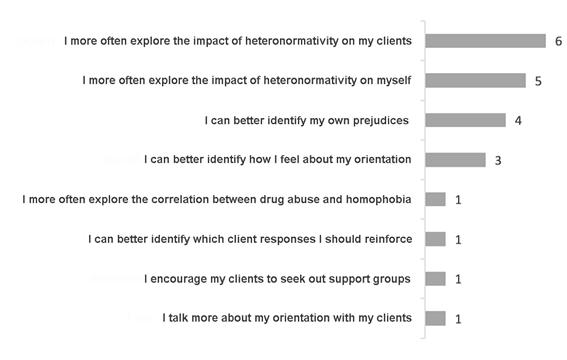
Figure 1 Changes (professional and/or personal) reported by participants after the course (Questionnaire 4/Supplementary material 4). The number next to each change indicates how often participants mentioned it.
All intervention group participants responded that the course changed their behavior in some way. As can be seen in Figure 1, 6 of the 9 participants said that they began to more often explore the impacts of heteronormative culture on client behavior and 5 declared that they also began exploring this influence on their own behavior. Almost half of the intervention group participants said that they began to identify their own prejudices after the course, and 3 reported that they could better recognize the way they felt about their own sexual orientation and gender identity (Supplementary material 5).
The present study focused on the behaviours of psychotherapists who treat LGBTQIAP+ people, evaluating a course on specific interventions for this population. One of the least observed points by the participants regarding their LGBTQIAP+ clients before the course was identifying the influence of heteronormative practices on their own behaviours. Similar results have also been found in studies reporting that psychotherapy training is deficient for this population,3,19,20 which demonstrates the need to include care for LGBTQIAP+ people in training courses for psychologists, as suggested by.15,17,18
Regarding the various interventions described in the course, searching for support groups was the most accepted, followed by creating a non-punitive environment for psychotherapy, and demonstrating to clients that the responses involved in their complaints are related to heteronormative cultural practices, given their main complaint concerned the concealment of gender identity/sexual orientation. Such interventions were also considered important in encouraging people to declare themselves as LGBTQIAP+ in the studies reviewed by Mussi and Malerbi.27
The increased frequency of applying specific interventions for the LGBTQIAP+ population after the course suggests that it was responsible for this change. The most frequent of these interventions were encouraging clients to seek out support groups and not punishing their expression of gender identity and sexual orientation. Although suggesting that clients attend support groups was the most common intervention mentioned at the end of the course, it was the least applied subsequently. This is perhaps due to the lack of support groups in the participants’ cities. There is an urgent need to create such groups in interior of Brazil and/or to develop strategies for these clients to remote support of this type (Supplementary material 6).
After the course, sexual and gender prejudice was significantly reduced according to Questionnaire 3 (Supplementary material 3) but not according to the PASGDS. The fact that the items with the highest scores for prejudice concern discomfort about being or speaking in public about LGBTQIAP+ people could be associated with the punishment experienced for these responses. Skill training to deal with aversive consequences when taking a stand against prejudice could help change this behaviour.
The slight increase in 2 participants’ PASGD scores regarding discomfort with masculine women may be related to identifying, during the course, response classes (aggressiveness and concealing emotions) reinforced in people of the male gender and how they negatively impacted their lives. It would be interesting for other studies to explore the effects of men's socialization on their own behaviour and that of their family members.
The socialization of males follows traditional Western cultural norms and is related to hiding emotions, aggressive behaviour, and not seeking health services.28 In behavioural terms, we could say that male cultural practices generally punish the expression of emotions and taking care of one's health. These practices contribute to a pattern of masculinity that is harmful and incomprehensible to many people, as pointed out by several participants in the present study who reported violence by men.
According to the intervention group, knowledge of the effects of cultural practices on their clients was what changed the most after the course. This is especially important if we consider that therapists who do not undergo similar training can reproduce such practices without realizing it.
New research on training for psychotherapists who work with LGBTQIAP+ people could increase the duration of the course, so that questions related to the therapist's self-knowledge could be further explored and more practical behavioural testing exercises could be performed. Other studies could involve different participant profiles, e.g., male, heterosexual, and transgender people.
This study had a small sample of participants and a short follow-up time (7 days). This may not provide information about the long-term effects of the course. In addition, all measurement instruments are self-report only, not containing direct observation measures, which can make the data less reliable.
None.
There is no conflicts of interest.

©2023 Mussi, et al. This is an open access article distributed under the terms of the, which permits unrestricted use, distribution, and build upon your work non-commercially.