Journal of
eISSN: 2373-4345


Short Communication Volume 16 Issue 3
 Valdir Cabral Andrade,2 Tales Cyríaco Morais,3 Milana Drumond Ramos Santana,1 Guilherme da Rocha Scalzer Lopes,4 Daher Antonio Queiroz5
1Department of Multidisciplinary Health, University Center Mauricio de Nassau (UNINASSAU), Brazil
2Department of Restorative Dentistry & Prosthodontics, The University of Texas Health Science Center at Houston (UTHealth) School of Dentistry, USA
3Department of Dentistry, Clínica Tales Cyríaco, Brazil
4Department of Biomaterials, Dental Materials and Prosthodontics, São Paulo State University (Unesp), Institute of Science and Technology, Brazil
5Departament of Oral and Maxillofacial Surgery, Universidade Federal de Juiz de Fora UFJF, Brazil
Correspondence: efferson David Melo de Matos, Department of Multidisciplinary Health,University Center Mauricio de Nassau (UNINASSAU), Juazeiro do Norte - CE, Brazil
Received: July 07, 2025 | Published: August 15, 2025
Citation: Matos JDM, Andrade VC, Morais TC, et al. Sutureless maxillary third molar extractions: clinical outcomes and healing responses. J Dent Health Oral Disord Ther. 2025;16(3):97-99. DOI: 10.15406/jdhodt.2025.16.00650
This narrative review aims to describe and analyze the clinical and biological aspects of a sutureless extraction technique for maxillary third molars, with particular focus on tissue repair, postoperative inflammatory response, and clot stabilization. The analysis highlights the role of 0.12% chlorhexidine digluconate as an adjunctive agent in promoting hemostasis and secondary intention healing. Anatomical and physiological factors influencing postoperative outcomes are considered, especially the implications of avoiding excessive curettage in sockets without pathological tissue. Evidence from the literature suggests that, when appropriately applied, sutureless extraction may offer benefits such as reduced postoperative inflammation, favorable healing due to the medullary nature of the maxillary bone, and effective clot stabilization. Further clinical studies are needed to confirm the safety and effectiveness of this technique and to optimize postoperative protocols.
Keywords: tooth extraction, oral surgery, sutures, molar, third
The extraction of maxillary third molars is a widely performed procedure in oral surgery, with indications that include orthodontic, infectious, prosthetic, and pathological reasons.1,2 Although it is generally less technically complex than the extraction of mandibular third molars, its execution requires careful consideration of specific anatomical features, such as the proximity to the maxillary sinus, lower bone density, and the high vascularization of the maxillary region.3
In cases of sutureless extraction, approximation of the surgical wound margins may be challenging. However, the use of oral antiseptics particularly 0.12% chlorhexidine digluconate has proven effective in stabilizing the blood clot within the socket, promoting hemostasis and favoring secondary intention healing.4,5 Due to its predominantly medullary composition and high vascularity, the maxillary bone exhibits a more favorable tissue repair response, with a lower intensity of the inflammatory process compared to the mandibular bone.6
Moreover, avoiding excessive curettage in sockets free of pathological tissue contributes to the preservation of local structures and reduction of bleeding, thus facilitating a more efficient healing process.7 Given the scarcity of information in the current literature, it is pertinent to discuss the clinical and biological aspects involved in the sutureless extraction technique of maxillary third molars, considering its implications for postoperative healing.
Therefore, the present study aims to describe and analyze the clinical and biological aspects related to the sutureless extraction of maxillary third molars, highlighting its advantages in tissue repair, postoperative inflammatory response, and clot stabilization, with an emphasis on the use of chlorhexidine digluconate as an adjunctive agent.
Selection of sources
A bibliographic search was conducted using the main health science databases, PubMed (www.pubmed.gov) and Google Scholar (www.scholar.google.com.br), covering studies published between 2000 and 2025. In the first phase, the retrieved articles were screened by reading their titles and abstracts. In the second phase, eligible studies were selected through full-text review. Both phases were independently conducted by two authors (JDMM and VCA).
The inclusion criteria comprised experimental, clinical, case-control, randomized controlled trials, laboratory cohort studies, case reports, systematic reviews, books, and narrative literature reviews involving human subjects. Exclusion criteria included studies not related to the research topic, letters to the editor, opinion articles, and duplicate publications across databases, and studies that did not address the variables under investigation (Figure 1 & Table 1).
|
Steps of the selection process |
N (number of studies) |
|
Records identified through the databases |
|
|
PubMed |
35 |
|
Google Scholar |
205 |
|
Total number of records identified |
240 |
|
Records after removal of duplicates |
210 |
|
Records screened by title and abstract |
210 |
|
Records excluded |
160 |
|
Full-text articles assessed for eligibility |
50 |
|
Full-text articles excluded Reasons: Unrelated topic, opinion papers, editorials, or lacking relevant variables |
40 |
|
Studies included in qualitative synthesis |
10 |
|
Studies included in the final review |
10 |
Table 1 PRISMA-ScR flow diagram based on the 10 studies
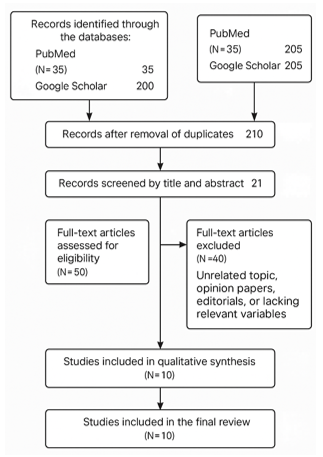
Figure 1 PRISMA-ScR flow diagram-based studies.
Through a bibliographic search, 10 articles were selected, of which 8 articles were extracted from PUBMED (www.pubmed.gov), 2 from Scholar Google (www.scholar.google.com.br). The following titles and keywords of specific medical subjects were used: Tooth Extraction (DeCS/MeSH terms); Oral Surgery (DeCS/MeSH terms); Sutures (DeCS/MeSH terms); Molar, Third (DeCS/MeSH terms).
The extraction of third molars is widely recognized as one of the most common surgical procedures in dental practice, with indications that include orthodontic, infectious, prosthetic, periodontal, and pathological conditions.1,2 Although the removal of maxillary third molars is generally associated with lower technical complexity when compared to mandibular third molars, specific anatomical and physiological considerations must be addressed. These include the reduced bone density and increased porosity of the maxillary bone, as well as its close relationship with critical anatomical structures such as the maxillary sinus.3,8
The maxillary bone differs from the mandibular bone due to its predominantly medullary nature, lower mineral density, and high vascularization, characteristics that contribute to a more favorable and accelerated tissue healing process.6,9 These properties directly influence the choice of surgical technique, the postoperative inflammatory response, and the rate of wound repair. In this context, sutureless extractions may be considered a viable approach, provided that the integrity of the soft tissues is maintained and the blood clot is properly stabilized within the socket.
Scientific evidence has shown that the use of 0.12% chlorhexidine digluconate mouthwash in the immediate postoperative period aids in clot maintenance, prevents alveolar osteitis, and reduces bacterial colonization at the surgical site.4,5,10 Chlorhexidine is widely regarded as the gold standard among oral antiseptics due to its bactericidal activity and high substantivity. Its use becomes particularly relevant in sutureless procedures, promoting optimal conditions for healing by secondary intention.
Furthermore, the literature emphasizes that in the absence of residual pathological tissue, aggressive alveolar curettage should be avoided, as it may increase intraoperative bleeding and delay the healing process.7-9 Conservative socket management, combined with effective hemostasis, supports a more physiological healing response, resulting in lower morbidity and improved patient comfort.
Therefore, the adoption of minimally invasive techniques such as sutureless third molar extraction along with evidence-based adjunctive strategies, such as the use of chlorhexidine, represents a safe, effective, and biologically sound approach, particularly in cases involving maxillary third molars with favorable positioning.
The findings of this study are consistent with previous literature, reinforcing the clinical feasibility of sutureless extraction of maxillary third molars, particularly in cases where invasive surgical approaches are not required.1,3,7,9 The high vascularization of the maxillary bone, combined with its lower mineral density, promotes tissue repair by secondary intention, which in many instances obviates the need for primary closure of the surgical wound.6
The absence of infectious complications in nearly all evaluated cases may be attributed to both the use of a minimally traumatic surgical technique and the systematic application of chlorhexidine digluconate in the postoperative period. Previous studies have demonstrated that 0.12% chlorhexidine is effective in reducing local bacterial load and preventing alveolar osteitis, even in procedures performed without sutures.4,5,10
Furthermore, clot preservation within the alveolus appears to have been facilitated by careful intraoperative curettage, avoiding excessive tissue manipulation in sockets without pathological findings.7,8 This conservative approach aligns with the principles of minimally invasive surgery and contributes to improved postoperative comfort, as evidenced by the progressive reduction in pain and edema.
It is important to note, however, that despite the favorable outcomes, the number of cases analyzed remains limited. Therefore, further studies with larger sample sizes and controlled designs are recommended to enable more robust statistical validation of these findings.
Based on the literature reviewed, the sutureless extraction technique of maxillary third molars appears to present clinical and biological advantages in selected cases. The adjunctive use of 0.12% chlorhexidine may contribute to clot stabilization and infection control. However, given the narrative nature of this review and the absence of original clinical data, caution is advised in generalizing these findings. Prospective clinical trials with larger sample sizes are necessary to validate the safety, effectiveness, and broader applicability of this approach.
This work was supported by the São Paulo Research Foundation (FAPESP – grant numbers 2019/24903-6 and 2021/11499-2).
All data analyzed during this study are available from the corresponding author upon reasonable request.
All data analyzed during this study are available from the corresponding author upon reasonable request. The authors report no conflicts of interest regarding any of the products or companies discussed in this article.
None.
The authors declare that there are no conflicts of interest.

©2025 Matos, et al. This is an open access article distributed under the terms of the, which permits unrestricted use, distribution, and build upon your work non-commercially.