Journal of
eISSN: 2572-8466


Review Article Volume 13 Issue 3
Department of Bioengineering, University of California, Los Angeles (UCLA), USA
Correspondence: Bill Tawil, Department of Bioengineering,UCLA School of Engineering, 420 Westwood Plaza, Room 5121, Engineering V. P.O. Box: 951600, Los Angeles, CA 90095–1600, USA
Received: July 20, 2026 | Published: August 4, 2026
Citation: Sarah A, Bill T. Osteoarthritis: symptoms, treatments, and market analysis. J Appl Biotechnol Bioeng. 2026;13(3):100-104. DOI: 10.15406/jabb.2026.13.00423
Osteoarthritis is a disease affecting around 7% of the global population. The condition is characterized by worn down hyaline cartilage, stripping the tissue of its protective qualities. Healthy cartilage serves to shield neighboring bones in the joint from friction, and absorb shock caused by daily movements. Osteoarthritis mainly affects joints and areas of high impact, including but not limited to the knees, hips, and ankles. Current treatments are largely limited to pain management, which cortisone and hyaluronic acid injections being the most common. Newer treatments have leveraged chondrocytes and Mesenchymal Stem Cells (MSCs), which are showing promising results in the clinical stage.
Cartilage is a multifunctional tissue located throughout the body as a means of reducing friction, absorbing shock, and providing shape and structure.1–3 Cartilage is categorized into three types, Hyaline, Elastic, and Fibrocartilage, each type corresponding to one of the tissue’s primary functions. Elastic cartilage is the tissue which provides structure, making up the shape of the outer ear, nostrils, etc. Hyaline and Fibrocartilage are more intrinsic to the health of bones and joints. Hyaline cartilage is an avascular tissue which is maintained through synovial fluid.5 It is the most common type of cartilage in the body, lining all the joints and bone caps.4,5 Fibrocartilage is thicker and more dense cartilage, existing at high impact joints/bones to absorb shock that might cause damage to the area.
Diseased cartilage is a secondary symptom, often delineating from other related conditions such as diabetes, sports injury, obesity, and aging.6 Cartilage repair boasts a market worth 5.9 Billion USD, only projected to increase over the next five years, with a CAGR at 5.1%.6 Primary conditions causing diseased cartilage also dominate the market, with 10.5% of Americans having diabetes and 3.5 million athletes being treated for sports related injuries annually.6,7
Osteoarthritis is a condition resulting from wearing down cartilage which rests between the bones.8 It is the most common form of arthritis, estimated to affect 595 million people globally each year as of 2020. The population of individuals struggling with osteoarthritis has only increased since, projected to continue its upward trajectory.4 The global growth of obesity and the aging population are major contributors to the positive trend. Apart from lifestyle changes, physical therapies and joint-supportive treatments, there are little medicinal therapies for the disease. One up and coming method of treating osteoarthritis minimally invasively is Stem Cell Therapies. These treatments typically leverage Mesenchymal Stem Cells (MSCs), which are able to differentiate into mesoderm, endoderm, and ectoderm germ cells under the correct conditions.9+
Healthy cartilage tissue
As mentioned, healthy cartilage can be categorized as Hyaline, Elastic, or Fibrocartilage. Elastic Cartilage provides structure to some areas of the face and body, like the ear, however, it is not involved in common cartilage diseases.3,10
Hyaline and Fibrocartilage, on the other hand, are pivotal effectors in these conditions. They act as lubrication to the bones, especially at joints, allowing for ease of motion without pain. Additionally, the tissue provides shock absorption, facilitating load distribution across bones. Cartilage is composed primarily of Extra Cellular Matrix (ECM), and chondrocytes. The ECM is made up of primarily collagen and proteoglycan, which allow the cartilage to redistribute applied weight.11
Hyaline cartilage is split into layers based on tissue depth (Figure1). The surface/superficial zone is smooth, with elongated chondrocytes arranged parallel the surface to reduce friction between tissues. The middle and deep layers have spherical chondrocytes and collagen fibers arranged with increasing density as the depth advances. The innermost zone is calcified, where the cartilage adheres to the bone. Cartilage is not vascularized, so it does not obtain nutrients in the same manner as other tissues in the body. Instead, Cartilage requires the constant presence of synovial fluid (SF) to gain its nutrients and maintain its physical load bearing and lubricant properties.11
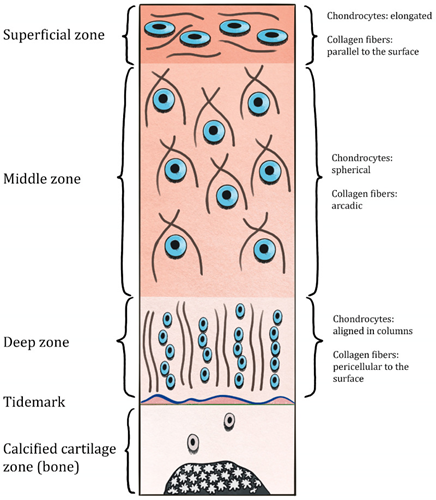
Figure 1 Visual breakdown of layers in the cartilage.11
The image shows the components present at different depths in healthy Cartilage Tissue.
Cartilage at high weight areas (HWA) absorbs shock because of the tissue’s tensile properties. Each layer of the cartilage possesses a different young modulus, with the surface cartilage being the lease elastic. The tensile modulus decreases with depth as follows: subsurface, middle, middle-deep (Figure 2).12
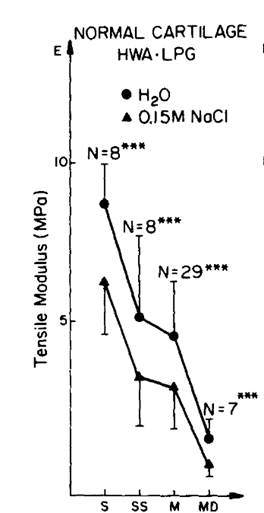
Figure 2 Graph of tensile modulus of cartilage tissue.12
The image shows a graph of the Young’s modulus of healthy cartilage at different depths within the tissue.
Diseased tissue – osteoarthritis (OA)
Osteoarthritis causes, symptoms, and common cases
Osteoarthritis is a chronic condition caused by worn down cartilage. While there is no set cause of Osteoarthritis, OA can be inherited genetically, with women having a higher chance of developing the condition. Aging, injury, and lifestyle also play roles in the likelihood of OA. Joints in the body which experience more daily stress have an increased likelihood of developing OA: namely knees, ankles, and hips.8,13 In areas of bone where a patient has OA, they may experience pain, stiffness, swelling, and reduced range of motion.
Biology of osteoarthritis
Cartilage are soft tissue complexes which separate bones at the joint, offering cushioning to the bone.14 This tissue is strong, and absorbs shock from daily movements which apply force to the bones at joints in the body.14 The specific cartilage involved in OA is Hyaline cartilage, which Is slippery in order to reduce the friction between bones. In individuals with OA, there is interruption of the chondrocyte homeostasis pathway (Figure 3).15 (Chondrocytes are cells present in the cartilage.16 The disease is known for its wear and tear on the bone, which is the cause of joint pain and swelling in the area. Additionally, the condition affects the entire joint. Aging individuals are more likely to have OA since cartilage is naturally expected to degrade over time, but age is not the only effector.8,14 Other damages to the hyaline cartilage can be spurred by sports injury, general joint injury, and continues stress on joints.8,15
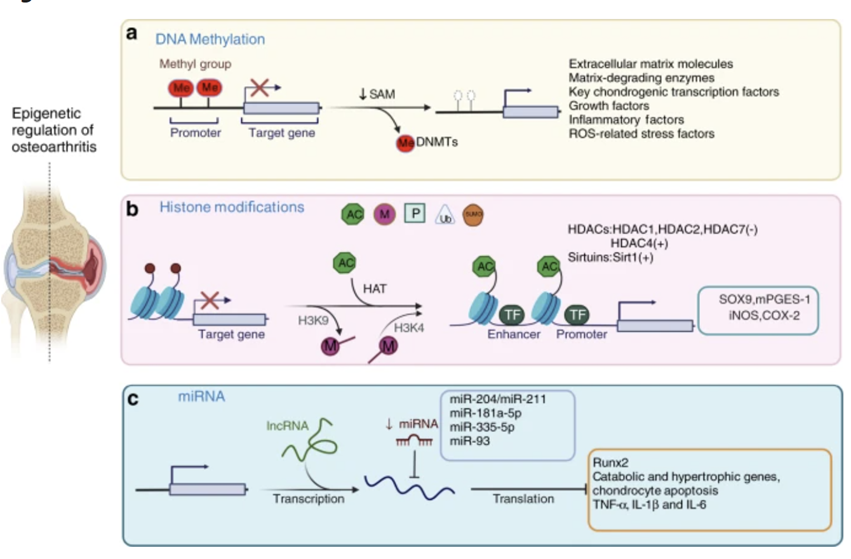
Figure 3 Schematic of signaling pathways involved in onset of OA.15
The image shows the disruption of regulatory signaling pathways which control the growth and degradation of cartilage, which is responsible for the onset of OA.
Osteoarthritis alters the ability of cartilage to effectively protect the bones and joints. The disease alters the tensile modulus and the lowers the collagen proteoglycan profile of the ECM (Figure 4). While there was no significant correlation between the collagen proteoglycan ratio and tensile modulus of the OA tissue, when compared to the normal and fibrillated cartilage, it has a significantly reduced upper limit for the tensile modulus, meaning the tissue is weaker overall. Fibrillated tissue, in comparison, is cartilage which has a higher level of proteoglycan than collagen, making it more fibrous.12
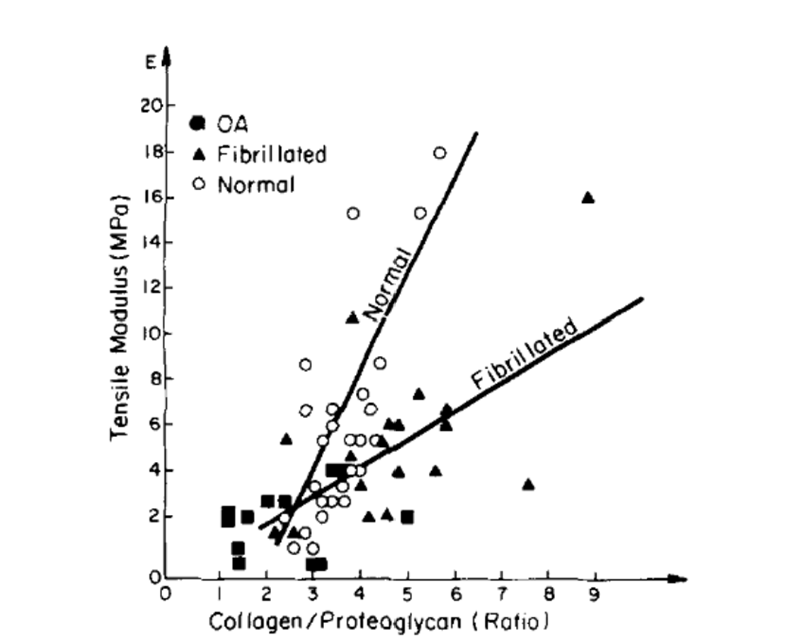
Figure 4 Graph of Tensile Modulus of Healthy and OA diseased Cartilage.12
The image shows a graphed comparison of the Tensile Modulus of healthy cartilage, fibrillated cartilage, and OA diseased cartilage.
Market size, products, and companies
Major market influences
7.6% of the global population is estimated to have OA. This number is continuously growing, with the main actors of growth being age and obesity. Aging population acts as the most prominent actor, given an estimated 50% of people over 75 are diagnosed with OA, and 73% of those diagnosed with OA are 75 and older.4,17 Beyond diagnosis rate, the rise of new therapeutics is another major driver of the OA market. New treatments such regenerative cell therapy, which leverage chondrocytes and stem cells, have caused a major boost in the market.17,18 The rise of other non-steroid and non-opioid treatments also drive the market, with approval for therapies like Tanezumab swiftly approaching.19
Artificial intelligence (AI) also contributes to the fast-changing market, given its use in data analysis.18 This greatly reduces the time required for R&D and approval stages, vastly lowering the barrier to entry of OA therapeutics. AI is also driving diagnosis, with tools designed to assist in imaging and image analysis.4,17,18
Market trend analysis
The global OA market has an estimated value of $10.1 billion dollars USD, a value projected to double in the next 7 years. In 2025, Europe holds the highest share of the OA market, shortly followed by North America. However, Asia Pacific is currently the fastest growing in the global market shares. The global CAGR of the OA therapeutics market rests at 9.7% with Asia Pacific alone having a 8.7% CAGR (Figure 5).17,18
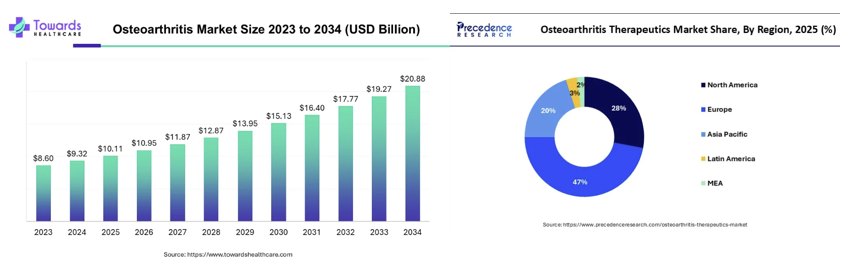
The OA market can also be viewed from a more segmented perspective. Knee osteoarthritis is the most dominant type in the market, at 49%.17 NSAIDs are currently the most dominant treatment in the market. These treatments are expected to hold their place as market dominator, given expediting approval rates.18
Existing product analysis
Non-cellular existing treatments
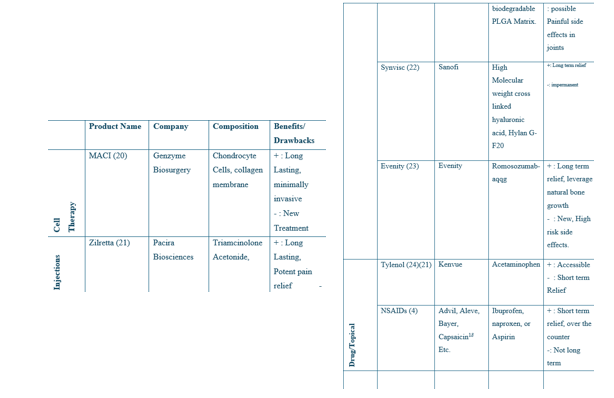
Cellular treatments are up and coming in OA management, but there are already many existing products and treatments.8,15 Examples of medicinal treatments include injections (plasmid-rich plasma (PRP), Hyaluronic Acid, Triamcinolone), oral pain management drugs (acetaminophen, Ibuprofen, aspirin, nonsteroidal ant inflammatory drugs (NSAIDS) ), and topical treatments (NSAIDs, Capsaicin, Salicylates).4,15,20–27 The most common and popular OA treatment is NSAIDs.4,17,18 This subcategory of treatments is also the fastest growing therapy, as new developments offer a path to faster approval.14 Topical products are generally considered shorter term, where injections are the standard for long-term pain relief.26,27
Cell therapy products
Early cellular therapy treatments for cartilage engineering mainly employed chondrocytes, and more recently have begun to include mesenchymal stem cells, which are considered the top of the line in the current stem cell therapy world. Since this is a relatively new treatment style, there is minimal FDA approval, with the only product currently approved being MACI.28
Comparison of qualities across common treatment
Clinical and pre-clinical trials
Stroma Forte, TG-C (pre clinical)29
Kolon Tissue Gene is currently sponsoring a pre-clinical trial for T-CG allogenic gene therapy for OA treatment. This Allogenic cell transplant would be accomplished via injection to the knee with damaged cartilage. The study is currently in its second phase and is designed to test effectiveness via random testing of drug and placebo. The first stage of the trial was successful, and the second, while still in the preclinical phase, shows promising signs of successful pain relief (Figure 6).
Adipose derived stem cells (completed trial)30
The second phase of Adipose Derived stem cell treatment was tested in individuals with localized Knee OA. The treatment was split into four stages: harvesting, separation, activation, and treatment. The therapy is administered intra-cellularly via STEM cell injections. Patients treated with the therapy were monitored for a year after treatment to track any adverse effects. While the study did not provide any results after closing the trial, there are companies continuing to develop such therapies. One of which is Regenexx-C, which is a stem cell-based therapy for OA treatment.
NON-cell based clinical trials
While cellular treatments are promising for the future of osteoarthritis, they are not the only novel approaches.3 Others include pain management therapies involving nerve growth factor inhibition using monoclonal antibody Tanezumab. While it is not yet approved for market sale, Pfizer is in the process of FDA fast track approval.5 Approval of the therapy would open the door to another non-opioid and non-steroid pain management option.31
Cost analysis of current therapies
The current average price of Knee Osteoarthritis treatment rests in the hundreds for the first 5 months of diagnosis, before skyrocketing to $15,000 within the first 2 years (Figures 7,8).3 The drastic price makes osteoarthritis therapies have expensive production costs, often leaving a large price for consumers and insurance companies.32 This price is for the treatment in the US.
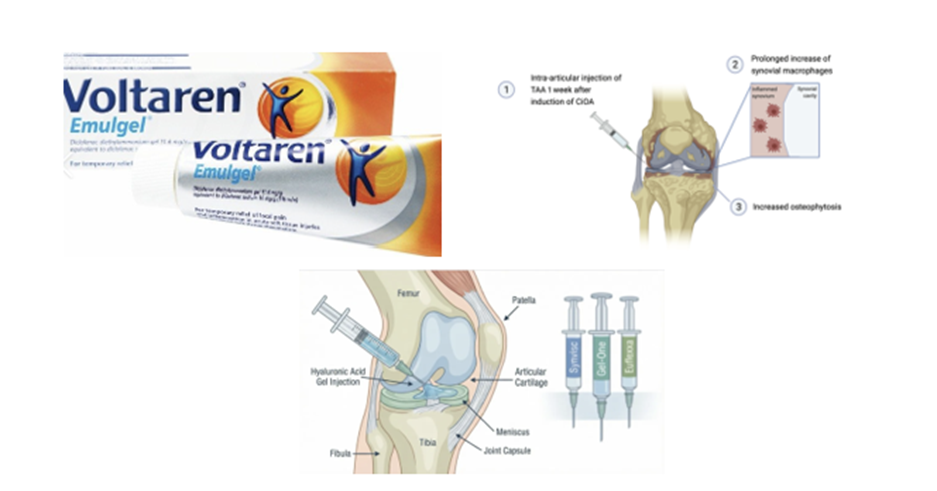
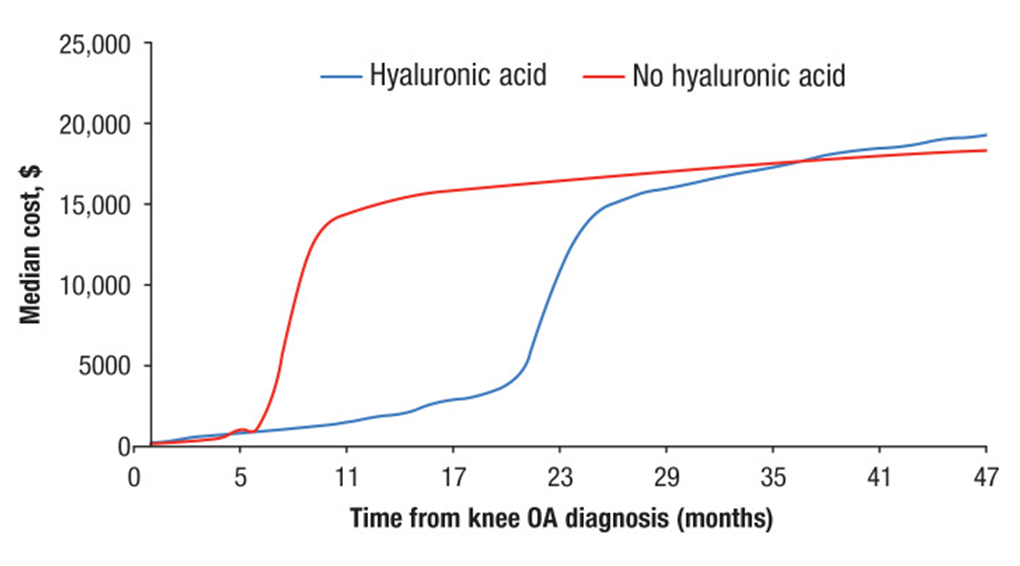
Figure 8 Cost analysis of OA treatments.32
The image shows the cost of treating OA using current methods as a function of time since diagnosis.
Osteoarthritis is a wide-reaching condition, affecting a major part of the population globally. With age being such a prominent risk factor in the development of OA, the rapidly increasing market size is an expected reflection of the growing global elderly population. While the barrier of entry for OA treatment was often considered to be high, namely because of approval processes, the urgency for treatment development has overcome approval pathway obstacles. Many clinical trials, namely for NASIDs, have made it easier to take an OA drug from R&D to market.4
OA is a highly studied condition, and new developments continually improve the outlook for patients in the future.
Special thanks to Dr. Bill Tawil for guidance and support of the authorship, review, and advice involved in the development of this study.
Authors declare that there is no conflict of interest.
There is no funding to report for this study.

©2026 Sarah, et al. This is an open access article distributed under the terms of the, which permits unrestricted use, distribution, and build upon your work non-commercially.