Journal of
eISSN: 2572-8466


Research Article Volume 12 Issue 6
 Guzmán P,2 González Basso V,1 Batallán Morales S,1 Viale S,3 Morales N,4 Luque V4
1Agricultural Microbiology, Faculty of Agricultural Sciences, National University of Catamarca, Argentina
2Field Seminar, Faculty of Agricultural Sciences, National University of Catamarca Argentina
3Soil Use and Management, Faculty of Agricultural Sciences, National University of Catamarca, Argentina
4Plant Physiology, Faculty of Agricultural Sciences, National University of Catamarca, Argentina
Correspondence: Di Barbaro G, Agricultural Microbiology, Faculty of Agricultural Sciences, National University of Catamarca, Argentina
Received: November 08, 2025 | Published: November 24, 2025
Citation: Barbaro DG, Guzmán P, Basso GV, et al. Application of a microbial consortium to sugarcane cultivation. J Appl Biotechnol Bioeng. 2025;12(5):216-218. DOI: 10.15406/jabb.2025.12.00406
The objective of this study was to determine the effect of applying a microbial consortium composed of biofertilizers, biostimulants, and biocontrol agents on sugarcane (Saccharum officinarum L.) variety TUC 95-10. In mid-August 2024, a completely randomized trial with two treatments (T0: Control and T1: Inoculation with microbial consortium) and three replicates was conducted in the Famaillá Department (Tucumán Province). At planting time, the inoculant of the microbial consortium, composed of selected native strains of the biocontrol fungus Trichoderma spp. and bacterial strains of Azospirillum brasilense, Bacillus thuringiensis, Rhizobium leguminosarum, and Bradyrhizobium sp., was applied to the seed cane using a hand sprayer. The crop cycle lasted 380 days, and the harvest was green, when the sugarcane was in an erect stage. Harvesting was done manually. To determine the productivity and quality of the sugarcane crop, agronomic, productive, and industrial quality parameters were evaluated, including: topping height, stalk diameter, number of stalks per hectare, sugarcane yield per hectare (t/ha), Brix (%), fiber (%), and juice yield. The results were statistically analyzed using analysis of variance (ANOVA), and means were compared using Fisher's LSD (Least Significant Difference) test at a significance level of 0.05 with the Infostat statistical software. Statistically significant differences were found in the main agronomic and productive parameters evaluated. Increases of 138% in the number of stalks per hectare yielded with the application of the microbial consortium, and increases exceeding 100% in industrial quality parameters were observed. The best results were seen in plants inoculated with the microbial consortium. Applying the microbial consortium at planting time increased the sugarcane crop's yield potential, resulting in the best outcomes.
Keywords: biofertilizer, biostimulant, biocontrol agent
Sugarcane (Saccharum officinarum L.) cultivation is a highly relevant agricultural system, both economically and socially, in the northwestern region of Argentina.1 Sugarcane cultivation in the province of Tucumán is a centuries-old activity, involving farmers of varying sizes, from small and medium-sized growers to large-scale producers, with some companies of significant economic importance within this category.2
It is recognized as the main source of sucrose and the most efficient raw material for bioethanol production, due to its high fermentable sugar content and high productivity per unit area.
The Argentine sugar industry consumes energy from fossil fuels and primarily from the combustion of bagasse. A major problem in Argentina is the generation of excess bagasse, which ends up being more of a waste product than a valuable byproduct. On the other hand, ethanol production from molasses, a byproduct of sugar milling, generates large quantities of effluent with a high organic load and high salt content, a situation that is difficult for agro-industries located in the province of Tucumán to resolve.2
Because of its high biomass production capacity and the extended duration of its phenological cycle, sugarcane has high nutrient and water requirements to sustain its growth and productivity. These requirements compromise its economic, environmental, and social sustainability. In the agronomic field, the main problems are related to soil degradation, the crop's high water and nutrient demands, and the impact of pests and diseases that affect productivity. Therefore, it is crucial to incorporate biotechnologies that improve the efficiency of agricultural management of the crop. Bio-inputs represent a sustainable and environmentally friendly alternative to enhance the growth and health of our crops, without compromising the quality of our food or harming our environment.3
The term bio-inputs refers to products made from beneficial organisms such as bacteria, fungi, insects, or natural extracts obtained from plants, which can be used in agricultural production to promote plant growth or control pests and diseases. These products do not leave toxic residues in the environment and their use does not pose risks to the health of farmers or consumers.3
The objective of this study was to determine the effect of applying a microbial consortium composed of biofertilizers, biostimulants, and biocontrol agents to sugarcane (Saccharum officinarum L.) variety TUC 95-10.
The trial was conducted in a field located in the Famaillá Department of Tucumán Province, Argentina. The planting of sugarcane (Saccharum officinarum L.) variety TUC 95-10 from the Obispo Colombres Experimental Station took place on August 17, 2024. The experimental design employed was completely randomized with two treatments and three replicates per treatment. Each replicate corresponded to a plot 15 meters long with 5 rows of crops spaced 1.65 meters apart. The treatments were designated as follows:
T1: Control (no microbial inoculation, only water application)
T2: Inoculated (inoculation with a microbial consortium). Plots were prepared for each treatment and replicate.
In the inoculated treatment (T2), at planting time, the inoculant, consisting of a microbial consortium called Bio MAsT with a microbial titer of 5 x 10¹¹ microorganisms mL⁻¹ quantified using a Neubauer chamber,4 was applied.
The microbial consortium was composed of selected native strains of the biocontrol fungus Trichoderma spp., and bacterial strains of Azospirillum brasilense, Bacillus thuringiensis, Rhizobium leguminosarum and Bradyrhizobium sp. The microbial consortium was applied using a hand sprayer to seed cane in the planting row.
Harvesting was carried out 380 days after planting (September 1, 2025) using the green harvest method, with the cane in the erect stage. The harvest was done manually (using a pruning knife), and three samples were taken from each replicate. Each sample consisted of all the stalks one meter in length along the planting row.
To determine the productivity and quality of the sugarcane crop, agronomic, productive, and industrial quality parameters were evaluated.
Agronomic parameters included: topping height; stalk diameter; and number of stalks per hectare. The productive parameter evaluated was sugarcane yield per hectare (t/ha). The industrial quality parameters considered were: Brix (%); fiber (%); and juice yield.
The results were statistically analyzed using analysis of variance (ANOVA), and means were compared using Fisher's LSD (Least Significant Difference) test at a significance level of 0.05 with the statistical software Infostat.5
Plant extraction and evaluation were carried out 13 months after planting.
Topping height: No statistically significant differences were detected between treatments, indicating that plants from both treatments exhibited similar vigor (Table 1 & Figure 2).
Stem diameter: Similar results were observed, with no statistically significant differences between treatments (Table 1).
Number of stems per hectare: Statistically significant differences were recorded compared to the control treatment (T1), exceeding the average number of stems of the control plants by 138% (Table 1 & Figure 1). These results allow for estimating the yield potential of the inoculated plants.
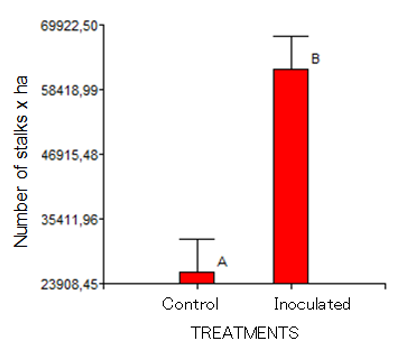
Figure 1 Number of stems per hectare of the sugarcane (Saccharum officinarum L.) crop.
Sugarcane yield per hectare (t/ha): Statistically significant differences were observed compared to the control treatment (T1), with the yield being double the average (Table 1 and Figure 2). These results indicate the highest total fresh sugarcane production per unit area with the inoculation of the microbial consortium.
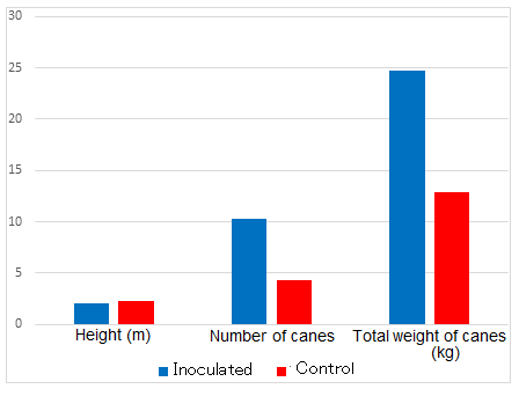
Figure 2 Performance parameters of the sugarcane crop (Saccharum officinarum L.)
Brix (%): Similar total soluble solids content in sugarcane juice was recorded in both treatments; however, higher values were observed in sugarcane juice from the inoculated treatment (Table 1).
|
Parameters |
Treatments |
|
|
Control |
Inoculated |
|
|
Height of topped stalk (m) |
2,28 A |
2,08 A |
|
Stalk diameter (cm) |
2,29 A |
2,50 A |
|
Number of stalks per hectare |
26000 A |
62000 B |
|
Cane yield per hectare (t/ha) |
25,6592 A |
49,4326 B |
|
Brix (%) |
20,06 A |
22,36 A |
|
Fiber (t/ha) |
7,762 A |
13,465 B |
|
Juice yield (L/ha) |
10274,32 A |
21932,32 B |
Table 1 Amplitude in mill volts of the Lead-1 of electrocardiography in sheep
Letters not commonly used in the same variable denote significant differences according to the LSD test (Minimum difference). significant) for P<0.05.
Fiber (%): Statistically significant differences were observed compared to the control treatment (T1), with the fiber content almost double the average percentage in the sugarcane of the control plants (Table 1). Bagasse is a byproduct of sugarcane processing and is a basic input in the paper industry because it provides the necessary fiber to obtain cellulose.2
Juice yield: The amount of juice extracted relative to the weight of the cane was greater in those from the inoculated treatment (T2), where statistically significant differences were recorded with respect to the control treatment (T1) (Table 1).
The best results were observed in plants inoculated with the microbial consortium. Applying the microbial consortium at planting time increased the sugarcane crop's yield potential, resulting in the best outcomes.
The application of the microbial consortium at planting time increased the potential of the sugarcane crop, yielding the best results. Statistically significant differences were recorded in the main agronomic and productive parameters evaluated.
Increases of 138% were obtained in the yield variable of number of stalks per hectare with the applications of the microbial consortiums, and increases of over 100% were observed in the industrial quality parameters of the sugarcane crop (Saccharum officinarum L.). The best results were observed in the plants inoculated with the microbial consortium.
We thank the Martínez Zucardi Family company, especially Agricultural Engineer Álvaro Martínez Zucardi, his technicians and field staff for the support received for the completion of this work.
There is no conflicts of interest.

©2025 Barbaro, et al. This is an open access article distributed under the terms of the, which permits unrestricted use, distribution, and build upon your work non-commercially.