International Journal of
eISSN: 2574-8084


Research Article Volume 13 Issue 3

Department of Radiation Oncology, Cachar Cancer Hospital and Research Centre, Silchar, India
Correspondence: Ramamoorthy Ravichandran, Chief Medical Physicist, RSO & Head, Medical Physics Unit, Department of Radiation Oncology, Cachar Cancer Hospital and Research Centre, Silchar-788 015, India
Received: May 15, 2026 | Published: May 26, 2026
Citation: Ravichandran R. Optimization of radiation therapy resources in cancer treatments: issues relating to cobalt treatments in Indian context. Int J Radiol Radiat Ther. 2026;13(3):58-62. DOI: 10.15406/ijrrt.2026.13.00455
Introduction: The economic, and optimal use of radiotherapy resources for cancer management are to be reviewed periodically in terms of availability and affordability. Objective assessment indicated two important points. There is no deficiency on cobalt beam in terms of clinical efficacy and radiobiological effects, vis-à-vis high energy linear accelerator photons. If multi-leaf collimator (MLC) facility for covering irregular tumor volumes, and also reduce the dose to risk organs, they will be able to use the high tech telecobalt machines efficiently, and cost-effectively. An effort is made to highlight the salient scientific points in favour of telecobalt machine as treatment unit, to be complimented with linear accelerators.
Materials and Methods: An overview of physics of cobalt beams and innovations taken place over the last 70 years after inception of cobalt teletherapy in 1951 is outlined. Recent availability of higher specification telecobalt machine manufactured in India is highlighted. Research works attempted with cobalt teletherapy are presented. Need for understanding technical and managerial aspects about initial investment and running costs reviewed.
Results: Scientific work showing continued application of cobalt RT in head and neck cancers, and possibility to use flattened beam profile mentioned. It is apparent that because of rectangular collimators in many cobalt machines, and revenues earned by hospitals are related to Government Support for treatments, only a few patients are treated by cobalt machines.
Discussion: There appears a strong justification for telecobalt machines in the armamentarium of cancer radiation therapy. If all the patients shall receive conformal, image guided treatments, with automated verification methods, then radiation oncologists will use these cobalt machines. Therefore it is recommended that there strong need for upgrades to MLC based cobalt machines with provision of supportive treatment planning systems for intensity modulated treatment plan as per oncologist’s requirements.
Keywords: telecobalt machines, RT resources, costing aspects on RT, head and neck RT
The economic, and optimal use of radiotherapy resources for cancer management are to be reviewed periodically in terms of availability and affordability. Based on the priority and clinical applications, a group of senior radiation oncology experts, in India, during 2014, reviewed the efficacy of tele-cobalt for treatment of large number of cancer patients.1 This was based on a sudden increase in number of linear accelerators in profession during 1980s, and there was a need for justification of continued use of telecobalt machines. Objective assessment indicated two important points. 1) There is no deficiency on cobalt beam in terms of clinical efficacy and radiobiological effects, vis-à-vis high energy linear accelerator photons. 2) If multi-leaf collimator (MLC) facility is available for covering irregular tumor volumes, and also reduce the dose to risk organs, they will be able to use the high-tech telecobalt machines efficiently, and cost-effectively. Based on World Health Organization (WHO) and other international bodies, recommendations continued towards telecobalt use in radiotherapy, with particular relevance to Low and Medium Income Countries (LMIC) and highly populated countries like India.2-4 In 2010, Van Dyk et al.5 brought out an overview on the actual inception and important physics of telecobalt and highlighted the need for its continued use for radiotherapy applications, despite of the growth in linac technology.5
Scientific background of cobalt radiotherapy
Capital and running costs and beam edge effects: During 1980’s, the number of installations of linear accelerators have superseded number of cobalt machines, not because of inefficacy of beam quality, but due to more technological developments such as multi-leaf collimator, intensity modulation, flatness filter free (FFF) beams, image guidance, volume modulated radiotherapy etc. In this review5 these authors emphasized, the following things. a) Telecobalt: Low Energy Linac: High Energy Linac are US$ 750,000: US$2,250,000:US$4,000,000 Capital Costs (2008 Figures) and Running Costs per year US$50,000:US$150,000:US$300,000 respectively (2008 Figures). This shows the investment requirement and complexity in maintenance of linacs in general. b) Discussion on the Penumbra in these beam deliveries at depths inside a patient. It is well clarified that, the penumbra effect is theoretically more “in air” for telecobalt, which become expanded at depths in tissue due to lateral knock-on electrons. This physical radiological penumbra effect increases and become worse with increase in energy and/or decrease in tissue density (especially with lung tissue). It was also highlighted that dose fall-off at field edges are mainly manifested due to overlap of many fields, and less affected due to geometric penumbra. This field edge effect is more significant due to uncertainty in repeat set ups and organ motion. Image guidance could control these issues to a certain extent.5 This review also indicated that with cobalt tomotherapy with slit beams, comparable isodose distributions were achieved with respect to linac, with insignificant dose variations. They surmised that if conformal therapy and IMRT could be implemented in telecobalt machines, beam energy will fade as an important variable in clinical outcome.
Radiobiology considerations for cobalt and linac beams: Both telecobalt and linac beams are classified under indirectly ionizing radiations, and the final dose deposition is from corpuscular secondary electrons released predominantly by Compton interactions. Both type of beams are classified as Low LET radiations (mean energy transfer to electrons is 588 KeV for Cobalt photons, and 742KeV for 1.5 MeV, and 1060 KeV for 2.0MeV, only at the first interaction. As the photon beam travels, they will undergo multiple interactions and die down. The Relative Biological Effectiveness (RBE) of both beams are approximately 1.0 when compared to standard reference radiations. Dose prescriptions for the desired clinical outcome remain same in almost all treatment sites. Two important reports are cited6,7 comparing cobalt and linac treatment plans, which highlight that by physical planning methods, dose conformity could be equally achieved in rival plans. They however did not discuss about possible radiobiology differences.
Attempt for development of novel design O ring linac: Panacea Medical Technologies (PMT) Ltd, a Indian Medical Equipment Manufacturer is manufacturing high end telecobalt machines and low energy linear accelerators, based on the need to support Indian hospitals1-4,8,9 as well as for global needs. A strong need for providing multi-leaf collimation and image guidance in telecobalt machine was emphasized by senior radiation oncologists in India.1 It was also confirmed by some reports10,11 the feasibility and efficacy of telecobalt machine with multi leaf collimators(MLC) to achieve similar treatment plans like low energy linacs.
Adhering to these recommendations, PMT took research and developmental efforts and manufactured high accuracy model O-ring telecobalt machines.12,13 3 numbers Bhabhatron 3i(Bh3i) machines were installed in South India, 2 in Karnataka and 1 in Tamilnadu states, and their technical specifications and efficacies were outlined in scientific communications. This new model Bh 3i12,13 is designed to deliver precise, conformal, image guidance based 3D Conformal Radiation Therapy (3D CRT), Field in Field(FIF) Intensity Modulated RT, mixing of FIF multiple fields and ARC plans. Figs 1,2 show Theratron 780 E (1990 model Telecobalt) with rectangular collimator and pendulum type gantry, compared with State of the Art O ring Telecobalt machine12,13 with MLC, IMRT executions(static, dynamic) with XRay KV image guidance. They can generate superior sparing of normal tissue, develop good homogeneity in treated volumes, with on-line image guidance.
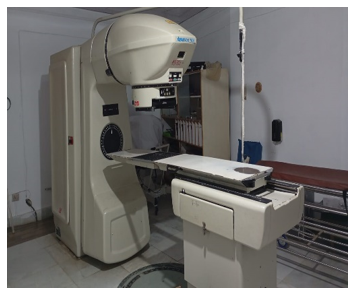
Figure 1 Theratron 780E (1990 model Co-60 unit).
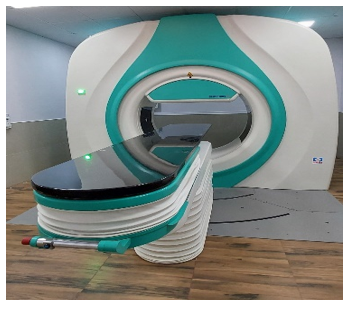
Figure 2 O Ring bhabhatron3E (2023 Model Co-60 Unit).
Clinical research and development efforts in the hospital: During this decade (2016-2026) we re-examined the efficacy of telecobalt machine for treatment of cancers, in a tertiary hospital in the north eastern part of India, Silchar. The need for continued use of cobalt machine in radical treatments was emphasized ten years back. A patient load of 600 new patients/year was treated which escalated to 800/year, and 1000/year respectively till 2023. Paralelly some scientific questions were addressed.
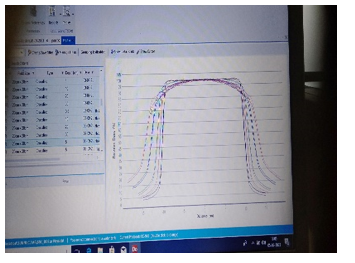
Figure 3 Co-60 flattened beam profiles. Unflattened rounded original profiles are also seen.
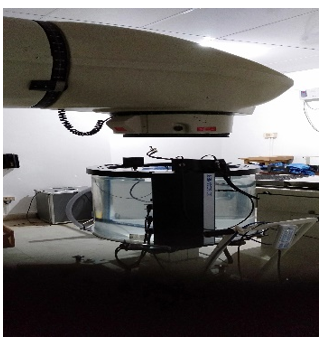
Figure 4 Radiation Field Analyser measurements in Theratron 780E to get beam profiles.
Encouraged by these results, this data led to a pilot study of randomised clinical trial of 7 fr/wk, 6frweek were compared with 5 fr/wk, for same total dose. It was found that patients tolerated well 70 Gy total dose.17 Phase III Clinical trial was conducted 70 Gy in 5 Wks (Arm 1) and 70 Gy in 7 wks at 2 Gy/fr (Arm 2, Control arm) (with 141 patients each). Test arm showed accepted tolerance to full RT. This is first report of this kind to be communicated (unpublished data),18 to get benefit of enhancing Biologically Effective Dose (BEDtumor enhanced by as high as 19%, with acute effects less than 5%, based on Linear Quadratic (LQ) model calculations. Till now, clinical trials in western world, in head and neck RT with 6 MV linac beams could show tolerance only with 64 Gy, in 7fr/wk, @1.80Gy/fraction. This clinical work showed the clinical benefit of 5mm cobalt dose build up preservation, tissue compensation, leading to efficient repair of normal tissues with inter-fraction(IF) interval 24 hours.
We wanted to replace the labour intensive preparation of ATC, by Field-in-Field (FIF) multiple fields technique using Bhabhatron 3i treatment plans. Figures 5(a) shows plan for un-compensated parallel opposed cobalt-60 fields (with hot spots), and Figure 5(b) shows 5 pairs of segmented (FIF) rectangular fields (equivalent to our ATC dose compensation. Still we have not used this method using Bh 3i MLCs, awaiting for ethics committee approval. In the North Eastern Parts of India, and Bangaladesh, head and neck(H &N) malignancy in general, and advanced H&N tumors in particular, are as high as 50%, there is justification to apply our solution using telecobalt machines.19
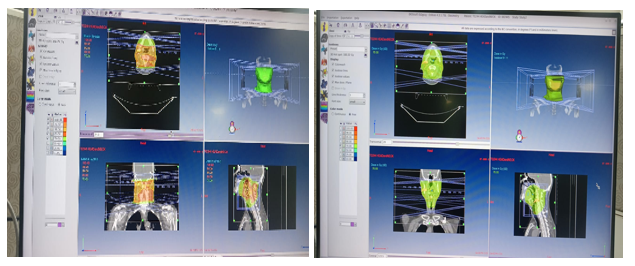
Figure 5 a) H &N Co-60 parallel opposed fields (Uncompensated) with hot spot neck
b) H&N Co-60 with MLC Multiple Segmented Fields(FIF-5Pairs)Homogenous dose
Review of clinical use of cobalt machines in the recent past in India: Though Bhabhatron 3i machines were installed around June, 2024, in 2 out of the 3 centres, either clinical treatments have not started or interrupted more than 3 months. Also they are outside one year warranty period and licenses for operation came to end. One more Bh 3i is installed and yet to get Regulatory Authority approval.
Another observation was made nationally. In many institutions they have telecobalt machines, with good dose rate output at normal treatment distance (NTD) at 80 cms, but seldom used for more number of patients, which amounts to wastage of Curie-Hours (CH). There are two reasons, 1) Higher revenues generated from linear accelerator 2) Patients are subjected to special techniques like intensity modulation RT (IMRT) or volume optimised treatments, when they do not require such special type of treatments. This trend is followed in public funded institutions also. As a general tendency, the availability of High End RT machines make an attitude that even for simple treatments they overload linear accelerators.
As higher reimbursements on treatments from Government Agencies are available, more patients are treated by High energy Linear Accelerators, and sudden drop in statistics in telecobalt machines, even in our own centre at CCHRC, Silchar. In Silchar Medical College Hospital (SMCH) they decommissioned cobalt machine, closing the radiation therapy department; with the inception of a True Beam linac in the same campus under Assam Cancer Care Foundation(ACCF). Roughly about 45 True Beam Varian High Energy linear accelerators are available in Assam state (north east India), where there is meagre Human Resources (HR) of Radiation Oncology Specialists, Senior Medical Physicists, Radiological Safety Officers, Radiotherapy technologists (RTT), and supporting imaging facilities. Many hospitals in Assam having telecobalt machines, treat only less number of patients, mainly by diverting all patients to linacs. Also in centers having conventional type of telecobalt machines alone, the personnel (doctors, physicists, RT Technologists) are compensated less, resulting in supporting staff not available for extending patient care. Ultimately these centers face forced closures, leading to decommissioning large expenses, and risk of abandoned radioactive cobalt sources.
Scientific and managerial inputs about cobalt machines vis-à-vis Linacs: In the above scenario, a few scientific and logistic facts are highlighted. Interaction of photons converted to corpuscular radiations (absorption process and linear energy transfer) is almost identical with linac and cobalt machines. 6 MV Linac photon has mean energy around 1.20 MeV at the exit of accelerator tube, and around 1.70 MeV after flattening filter. Scientific Details on cobalt and 6 MV beam qualities are highlighted in Table 1.
|
1. Absorbed dose to the soft tissue is delivered to the tumor or irradiated volume by Absorption Coefficient (µen/ρ) which is 0.992 for Cobalt photon and 0.991 for 6 MV photons. (Absorption there is no difference). |
|
2. Mean energy transfer to electrons is 588 KeV for Cobalt photons, and 742KeV for 1.5 MeV, and 1060 KeV for 2.0MeV, only at the first interaction. As the photon beam travels, they will undergo multiple interactions and die down. Except for larger depth of electron equilibrium (build-up of dose) and 4% per cm reduction of intensity/cm depth for 6MV; 5% per cm reduction in intensity/cm depth for Co-60, does not change any biological advantage, because both are classified as LOW LET radiations (5.2Kev/µm). |
|
3. Cobalt-60, 1.25MeV, Compton Effect 99.9%, Pair Production<0.1%; 6MV Compton Effect 98.4%, Pair Production 1.6%, is likely to give increase in absorbed doses in bones. |
|
4. Cobalt machine operated at 80 cm SSD, and Linac is operated at 100cm FSD, gives a change of 4.3% increase by inverse square law and penetration increases by 10% on intensity at 10cm depth. When input intensity is adjusted per cGy dose, there is no biological extra advantage in tumor kill. |
|
5. Physics with Monte Carlo methods showed that mean energy of 6 MV linac beam is 1.70 MeV (FF not different from cobalt (1.17, 1.33 MeV).20 |
|
6. When sophisticated delivery of dose to volumes are planned in Linear Accelerators, qualities in planning, reproducibility in execution, delivery stringent are the requirements. Infrastructure, team work shall be well organized for obtaining correct outcomes. |
Table 1 Comparison of Cobalt, 6MV Photons
Comparison of cost per cGy, and running costs: With rough estimates of input costs and running costs, approximately it will be about a factor of 3-5 in terms of cost/cGy for high energy linac compared to telecobalt cost/cGy. Hospital will be therefore overburdened if linac only used and Telecobalt is not used for treatments, despite collection of revenues. Earnings appears to be more but actual revenues shall be expressed against the input expenditure per annum to keep the infrastructure. If cobalt machine also is functional to full capacity, then definitely that revenue will help in maintaining partially the linac. This point is not looked at by the administration.
Inputs required for running cobalt machine: Telecobalt total load is 2 KVA, but routine operational loads are operation of 1/4HP motors for gantry movements, and patient treatment table up and down, and smaller DC motors with low voltage for table top movements. Source ON-OFF is done by 9V solenoid valves two numbers, and air compressor becomes On for 5 minutes twice an hour. No great amount of Electricity Board (EB) power is used for cobalt machine. Cobalt source emission is by radioactive decay and no heat exchange (Exothermic) takes place during treatments. Except room cooling requirement for patient comfort, as such there is no running costs. Once Source loaded, it comes for around 10 years. We have estimated in the department, that the actual cost is around Rs 25,000/- per patient for 30 fractions. At the rate of 40-50 patients/day RT, initial machine cost, Source cost, and staff salaries for 10 number of different category could be easily managed. From collected revenues, budget for new cobalt source after 8-9 years could be planned. Yearly Maintenance, about INR 600,000 Per annum. Estimated Spares: INR 2,00,000 Per annum.
Running high energy linac: High Energy Linear accelerator, machine, Power load 2 KVA (Standby), 15 KVA during machine On, and Mode up/Beam ON 42 KVA. Battery Banks are supporting such requirements throughout the day; Diesel Generator support switching Over during ASEB supply issues, and this is mandatory. Capacitor Power Bank for Un-interrupted Power Supply (UPS) added. In Table 2, the calculations of heat loads, and approximate expenditure on running the machine is shown.
|
HE Linac Loads: 42 KVA = 42 KJoule/h. Mechanical Eq.of Heat J = 4.2 Joules/cal;. 42 KiloJoules/h x (1/4.2) = 10 KiloCalorie/h = 10000 Calorie/h (heat generated during Beam ON). Air Density is 0.001293 gm/cm3. |
|
Therefore Linac develops lot of heating inside the room, and the whole structure is Cooled including the Accelerator Tube, Wave Guides and systems like Modulator, Pulse Forming Network capacitors, Thyratron valves etc. Minimum 6-8 Air Changes for total volume of air inside treatment room, and machine rooms; Chiller kept outside continuously dissipate heat during beam ON. Centralized Air Conditioning and other infrastructure makes approximately 8m x 8m x8m = 512 m3 volume of air to be displaced for 8 times per hour is lot of load on the central Air conditioning System. |
|
TrueBeam SVC, CCHRC, Silchar: October 2023 to July 2025 (22 months) Operated 7400 Filament Hours; 1273 Beam On Time Hours. |
|
a) 640 days x 24h x 2KW = 30,720KWH; b) 7400h x 8 KW = 59,200 KWH c) 1273h x 42KW= 53466 KWH. Total 1,37,086 KWH. @ Industrial Rate INR 15/Unit, the expenses INR 19,61,790. About INR 1,00,000/month. |
|
Centralized Air Conditioning, Chiller power supply needs to be considered additionally. |
Table 2 Technical aspects relating to running of Linacs
Yearly maintenance-true beam linac: (a) CMC Cost of the High energy Linac (b) Maintainence of TPS and Onco.Info system (c) On Board Imaging System, Maintenance (d) Peripheral Costs of Annual Maintenance Central AC, Chiller. Altogether INR 50,00,000-60,00,000.
Discussion on number of patients in linac per day: International and National guidelines indicate, appointments for treatments @ 4-5 patients per hour, normal plans; and about 3 patients/hour for treatments with Radiation Oncologist’s supervision, special techniques and image guidance. Therefore in 12 hours also they can treat only 60 patients/day. In most of the private centres in India, including CCHRC, total statistics per day exceed 90-100 per day. This clearly shows that there may be compromise on quality, and unnecessarily the procedures are hurried up. Morning QA and Warm up time, Pre RT Patient QA times also are included in total hours. This also highlights that radical special plans and simple plan patients are added in numbers. This overloading of linacs, based on earnings will likely to overload the hardwares, leading to more wear and tear; these cost indirectly lot of expenditure, also giving accelerated aging of the accelerators.
For Government supported reimbursement cost escalation, IMRT, VMAT special plans are executed for patients who does not deserve such special plans. When overloading of linac takes place, the risk increases for its break down, resulting in tool-down time introduced by lack of planning. Department become answerable to Admin, and also patient care suffers for deserving patients. If there is free slots available for patients, deserving special plans patients could be taken up for treatment immediately. There is a practice in radiation oncology departments to say that linacs will give more cure for the patients (because plans are more sophisticated, computer managed), and who really does not need specific linac treatments, also get misled.
This scientific report addresses all the scientific, technical and administrative aspects of optimising available resources are for planning additions. Radiation Oncology is a team work, and ultimately correct treatments for the full course shall be offered. It is very clear that when “volume dose and dose conformity” are equivalent, then there is no difference whether treatments are offered by linear accelerator or telecobalt. Efficient use of telecobalt machines to the full capacity is necessary wherever they are, to justify the total emitted radiations (Curie Hours) of cobalt source. Post graduate centres for Radiation Oncology training should continue to impart knowledge on the use of cobalt RT efficiently helping more patient population. More reimbursement from Governments will come only for Conformal and Image guided treatments.
Only based on revenues, if treatments are to be planned for cancer patients, then almost all the existing box collimator type cobalt machines shall be upgraded with high end telecobalt machines equivalent to Bh3i. Radiation Oncology professionals should give final verdict whether Indian Atomic Energy authorities should continue to produce high intensity cobalt sources (>200 RMM); also Indian Manufacturers of Cobalt machines shall continue further manufacture of more machines. There shall not be conflicts of interests that cobalt machines continue to stay, but seldom used in reality. The message is very clear that because initial and operational costs are lower with telecobalt machines, quality assurance and beam stability are simple, clinical results are not compromised, radiotherapy with telecobalt machines should be continued, as a solution to ever increasing cancer burden in India.
Permission from Director, CCHRC to express views is gratefully acknowledged
The authors declare no conflict of interest.

©2026 Ravichandran. This is an open access article distributed under the terms of the, which permits unrestricted use, distribution, and build upon your work non-commercially.