International Journal of
eISSN: 2574-8084


Research Article Volume 12 Issue 6

1Department of Physics, Faculty of Science, Akdeniz University, Turkey
2Department of Radiation Oncology, Faculty of Medicine, Akdeniz University, Turkey
Correspondence: Prof. Dr. Nina Tunçel, Department of Radiation Oncology, Faculty of Medicine, and Department of Physics, Faculty of Science, Akdeniz University, Antalya, Turkey
Received: October 24, 2025 | Published: November 27, 2025
Citation: Karakoç M, Tunçel N. Evaluation of angular dependence in intensity modulated arc therapy quality assurance using a 2D ion chamber array with gantry angle sensor. Int J Radiol Radiat Ther. 2025;12(6):154-159. DOI: 10.15406/ijrrt.2025.12.00439
Background: Accurate verification of rotational radiotherapy plans, such as Intensity-Modulated Arc Therapy (IMAT), require advanced quality control (QC) methodologies. This study investigates the effects of gantry angle sensor integration on the accuracy of QC measurements conducted with a 2D ion chamber array in the verification of IMAT plans.
Materials and methods: Ten IMAT treatment plans were created using a 6 MV photon beam and recalculated on a phantom dataset. QA was performed using the IBA MatriXX Evolution system in both active (with gantry angle sensor) and passive (without sensor) modes. The measurements were evaluated using gamma index analysis at 3%/3 mm criteria based on AAPM TG-119 guidelines.
Results: The gamma index pass rate improved with active angle correction. When the angular sensor was active, the average gamma index difference was -0.52% (SD= 0.61), compared to -4.1% (SD= 4.35) when passive. An average pass rate of 97.10% was observed in the active mode compared to 92.76% in the passive mode. A paired t-test comparing the gamma pass rates in active and passive modes demonstrated a statistically significant improvement when the angle sensor was active (t(9) = 2.48, p = 0.035; two-tailed), indicating that the increase in gamma pass rate was significant at the 0.05 level. Overall, regions of discrepancy were notably reduced with real-time angle correction.
Conclusion: The integration of a gantry angle sensor significantly enhances the accuracy and reliability of quality control in IMAT, highlighting its importance in routine clinical workflows for rotational radiotherapy.
Keywords: gamma analysis, IMAT, QC, gantry angle sensor, ion chamber array, angular dependence
Modern radiotherapy techniques, such as Intensity-Modulated Arc Therapy (IMAT), utilize continuous gantry rotation in combination with dynamic multileaf collimator (MLC) modulation to achieve highly conformal dose distributions.1 The primary objective of radiotherapy is to deliver a therapeutically effective dose to the tumor while minimizing radiation exposure to surrounding organs at risk (OARs) and healthy tissues.2 Although IMAT provides superior target conformity and enhanced organ sparing, it also introduces significant complexities in patient-specific quality control (QC). Ensuring that the treatment plan generated within the treatment planning system (TPS) accurately translates into clinical delivery is essential for maintaining dosimetric precision.3
Quality control for rotational techniques must therefore verify the accurate delivery of the planned dose. Conventional two-dimensional detector arrays such as MatriXX, which are typically calibrated in a fixed orientation, exhibit angular dependence, particularly for non-perpendicular beam incidences. Uncorrected angular responses can result in dose underestimations or overestimations, thereby compromising treatment accuracy.
Amerio et al.4 emphasized that when MatriXX is mounted in a fixed phantom (e.g., MULTICube), the measured dose strongly depends on the beam incidence angle. This angular dependence reflects the detector’s variable response at different gantry positions. Importantly, the manufacturer’s standard calibration procedure accounts only for anterior–posterior (AP) fields and does not compensate for this angular sensitivity, which may introduce significant dosimetric errors during plan verification. This observation has guided subsequent research toward improving detector calibration and system performance.
Several studies have further demonstrated the angular dependence of the MatriXX system in the verification of IMRT and VMAT (IMAT) plans. Han et al.5 reported detector response variations of up to 8% between 0° and 180° gantry angles and proposed a correction methodology to mitigate these effects. Similarly, Wolfsberger et al.6 investigated the angular dependence of the MatriXX Evolution series and developed an improved calibration method. In their study, posterior beam incidences exhibited uncertainties of up to 8–11%, whereas anterior beams showed only about 1% variability. They reported that neglecting angular dependence could lead to verification deviations of up to −3% in IMRT and VMAT plans.
Boggula et al.7 verified over 30 IMAT plans using the MatriXX system and observed deviations of approximately 17% and 11% for ion chambers positioned at 90° and 180° gantry angles, respectively. Similarly, Shimohigashi et al.8 reported dose discrepancies as high as −5.1%, concluding that the angular dependence of the MatriXX detector is influenced by both photon energy and detector geometry.
Over the years, one of the most critical challenges in dosimetric verification has been the angular dependence of two-dimensional detector systems. Wolfsberger et al.6 addressed this limitation by refining a correction methodology that accurately characterized the angular response of the MatriXX detector. Their findings demonstrated that the proposed calibration approach effectively eliminated the bias associated with angular dependence during experimental verification of IMRT and VMAT treatment plans.
Building upon these findings, the present study aims to investigate whether the integration of a gantry angle sensor into the MatriXX system enhances the agreement between measured and calculated dose distributions, thereby improving the reliability of quality assurance in Intensity-Modulated Arc Therapy (IMAT). In this study, ten IMAT plans were evaluated following the AAPM TG-119 criteria (3% dose difference and 3 mm distance-to-agreement). The dose distributions measured with the gantry angle sensor in both active and passive modes were compared against TPS-calculated reference distributions, and average gamma index differences were analyzed. This work provides a comparative evaluation of sensor-assisted and conventional measurement configurations within a clinical context.
This study was conducted in the Department of Radiation Oncology at Adana City Training and Research Hospital. The computed tomography (CT) datasets of ten retrospectively selected patients were analyzed for the purpose of this study.
Equipment
Elekta versa HD linear accelerator: The irradiation procedures in this study were performed using 6 MV photon beams generated by an Elekta Versa HD linear accelerator (Linac), which is capable of delivering a broad range of photon and electron energies. For image-guided radiotherapy (IGRT), the system’s integrated X-ray Volume Imaging (XVI) system was employed. This platform includes a kilovoltage (kV) X-ray source and a flat-panel amorphous silicon detector, enabling the acquisition of 2D radiographic, fluoroscopic, and 3D cone-beam CT (CBCT) images for patient positioning and verification prior.
CMS Monaco treatment planning system (TPS): CMS Monaco TPS Version 5.1 software was utilized to design prescribed target dose plans, assess the spatial relationships between target volumes and organs at risk, and optimize treatment plans through the application of objective functions and advanced mathematical algorithms for dose distribution mapping. The Monte Carlo algorithm was then employed for dose calculation. Using this system, ten IMAT treatment plans were generated. Subsequently, quality control plans were created within the same platform using virtual phantom models. Plans were recalculated on a virtual phantom derived from CT images of the MULTICube Lite setup. The graphical user interface of CMS Monaco TPS Version 5.1 is presented in Figure 1.
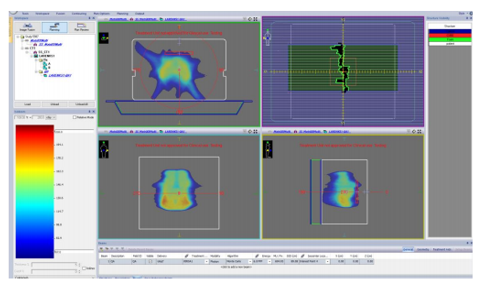
Figure 1 The graphical user interface of CMS Monaco TPS Version 5.1, utilized for the development of quality control (QC) plans.
MatriXX evolution system: The MatriXX Evolution system consists of a 2D-array detector, a MULTICube Lite phantom (IBA Dosimetry),9 a gantry angle sensor, and the OmniPro-I’mRT software. The measurement setup using the MatriXX Evolution system is shown in Figure 2. The detector used in this study comprises 1,021 independently operating cylindrical ionization chambers. Each ionization chamber has a sensitive volume of 0.07 cm³. These chambers are individually read out and arranged with a diameter of 4 mm and a height of 5.5 mm, spaced at 7.5 mm intervals.
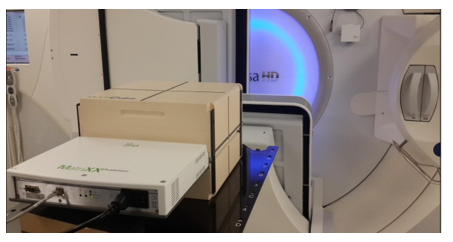
Figure 2 The MatriXX Evolution system used in the study.
The MULTICube Lite phantom is a solid, water-equivalent phantom. It allows vertical positioning of the MatriXX Evolution detector at different depths by raising the measurement plane up to 20 cm above the treatment couch. Using the OmniPro-I’mRT 2.0 software integrated within the MatriXX Evolution system, dose verification is performed by measuring the calculated doses at specific points through the MatriXX detector embedded in the MULTICube Lite phantom. The software enables the generation of a two-dimensional dose fluence map, which is then compared and verified against the dose fluence map generated by the TPS using the gamma analysis method provided within OmniPro-I’mRT. Additionally, the gantry angle sensor included in the MatriXX Evolution system allows for automatic correction of portal angles and is calibrated along the beam axis. The system was evaluated in two conditions: Passive Mode (without gantry angle correction) and Active Mode (with OmniPro-I’mRT angle sensor enabled).
Calibration procedures, and devices
The IBA FC65-P Farmer-type ionization chamber, filled with ambient air and featuring a 0.65 cm³ cavity volume with Delrin walls, was connected to an IBA Dose1 electrometer and used for dosimetric quality control and dose calibration of the linear accelerator prior to measurements.
The warm-up procedure was performed with the gantry and collimator angles set to 0°, using 6 MV photon energy, 1000 MU, and a dose rate of 400 MU/min, while the treatment field remained closed. The measurement setup was positioned on the treatment couch in accordance with the IAEA TRS 398 protocol, with the collimator and gantry angles set to 0°, the ion chamber centered on the device’s crosshair, and the source-to-surface distance (SSD) set to 100 cm (IAEA, 2000). A 10×10 cm² field size was defined, and the ion chamber was placed at a depth of 10 cm within RW-3 solid water phantoms using an adapter slice (Figure 3). A 6 MV X-ray beam was delivered using 100 MU at a dose rate of 400 MU/min. According to the AAPM Task Group 142 report by Klein et al.,10 the acceptance criterion for X-ray output constancy of a linear accelerator is ±2%.11 In this study, the X-ray output constancy of the Elekta Versa HD linear accelerator was achieved.
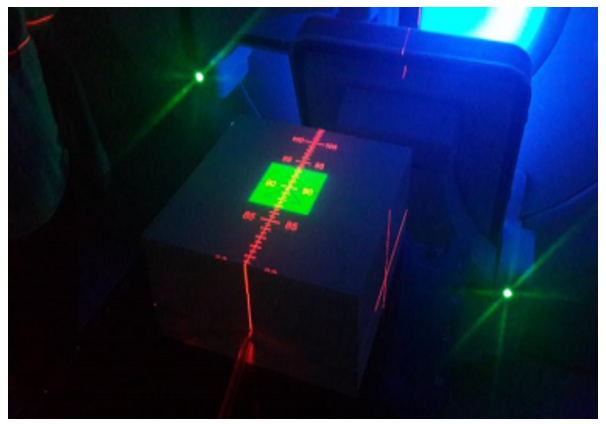
Figure 3 Measurement setup for evaluating X-ray output constancy on the Elekta Versa HD linear accelerator.
Angular correction factor generation for MatriXX evolution
MatriXX Evolution system with gantry angle sensor needed to arrange angular correction factors by acquiring the measurement for create lookup table.
The MatriXX Evolution detector array exhibited a notable angular dependence in its response due to the geometry of the ionization chambers, the detector housing, and scattering effects within the measurement phantom. To account for this variation and ensure accurate verification of volumetric modulated arc therapy (VMAT) plans, the use of a gantry angle sensor (GAS) was essential for the creation of angular correction factors. During the calibration process, the MatriXX Evolution system was placed at the linac isocenter on the treatment couch with a source-to-surface distance (SSD) of 100 cm. The required absorbed dose was determined by inputting the appropriate temperature and pressure values into the software. The detector was combined with a miniPhantom assembly providing approximately 8 cm of buildup and 5 cm of backscatter to achieve adequate scatter conditions. Static beams were delivered at predefined gantry angles, typically covering the full 360° rotation in 10° increments, with finer angular steps of 2-3° near lateral orientations (90° and 270°) where the detector response varied most significantly. A standard 10 × 10 cm² field was used for basic correction factor generation, while larger field sizes up to 24 × 24 cm² were employed to incorporate off‑axis chamber response. The GAS, attached magnetically to the gantry head, provided accurate real‑time gantry angle information for each beam exposure. The measured dose at each angle was compared with the corresponding treatment planning system (TPS) calculated dose or with a reference ionization chamber measurement under identical conditions. Angular correction factors for each detector chamber Cij(θ) were computed as the ratio of the TPS‑predicted dose to the MatriXX‑measured dose at angle θ, normalized such that Cij(0°)=1. These correction factors were compiled using the myQA LUT Creator to generate a lookup table (LUT), which was subsequently imported into the myQA Patients software. During routine patient-specific QA measurements, the angular correction option was enabled, and the corresponding LUT was applied to compensate for the detector’s angular response dependence.
Treatment plans
Treatment volume contours were delineated based on anatomical information obtained from the transverse (axial) CT slices of ten retrospectively selected patients, following the recommendations of ICRU Report 62.12 Fraction doses of 180 cGy or 200 cGy were prescribed according to the clinical protocol for each patient. Treatment plans were generated using the Monaco Treatment Planning System with the Monte Carlo algorithm, employing 6 MV photon beams for the IMAT technique. An example of the resulting treatment plans is presented in Figure 4.
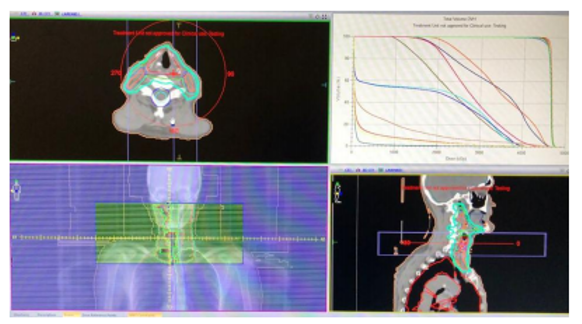
Figure 4 Example of a treatment plan generated using the TPS.
Patient specific QC plan creation
Quality Control (QC) plans for the ten patient-specific treatment plans generated using the IMAT technique were created in the TPS using the predefined MultiCube Lite phantom. Based on the prescribed fraction doses, three-dimensional dose distributions were calculated in the TPS and subsequently transferred to the OmniPro-I’mRT 2.0. The software was prepared for use by calibrating and verifying temperature, pressure, and angle sensors, as well as by evaluating the dose profiles.
Measurement acquisition with 2D arrays
The dose delivery was performed using an Elekta Versa HD linear accelerator. Measurements were acquired under identical conditions for both modes. The measurement setup was established, and the warm-up procedure for the MatriXX ion chamber arrays was conducted using a 24 × 24 cm² field size at a source-to-surface distance (SSD) of 95 cm, with irradiation parameters of 6 MV photon energy, 1000 MU, and a dose rate of 400 MU/min. All plans were delivered with the same setup to isolate the effect of gantry angle correction. Angle sensor calibration was performed at gantry angles of 0° and 90°. It was verified that the flatness and symmetry values were within the acceptance criteria. Data processing was carried out using the OmniPro-I’mRT 2.0 software interface, as illustrated in Figure 5.
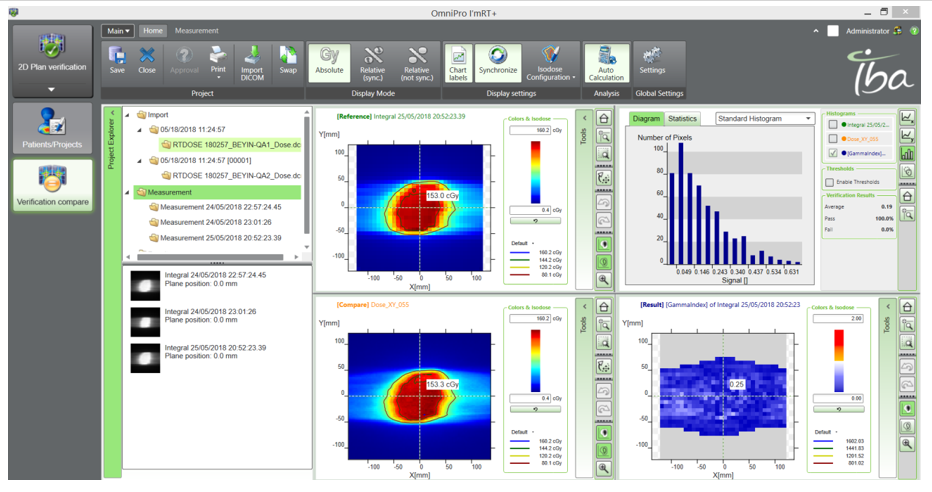
Figure 5 OmniPro-I’mRT 2.0 interface.
Measurement with angle sensor activated and gamma analysis: Initially, the detectability of the angle sensor was activated via the OmniPro-I’mRT 2.0 software. Mosaiq and OmniPro-I’mRT 2.0 were operated simultaneously to generate two-dimensional dose maps from the measured dose data within OmniPro-I’mRT 2.0. The 2D dose distributions calculated on the reference phantom and those acquired from MatriXX measurements were uploaded into the corresponding data fields. Gamma analysis between calculated and measured data was performed using parameters defined according to the acceptance criteria. Gamma index verification was conducted and evaluated separately for each of the ten IMAT plan measurements. The resulting gamma index values for a sample case are presented in Figure 6.
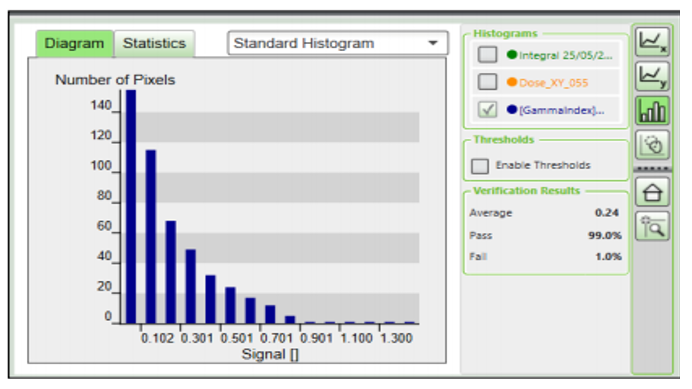
Figure 6 Gamma analysis evaluation of the measurement performed with the portal angle sensor activated.
Measurement with angle sensor inactive and gamma analysis: The same procedures described in Section 2.5.2 were repeated with the angle sensor deactivated. Gamma analysis was performed and evaluated separately for each of the ten IMAT treatment plan measurements. The resulting gamma index values for the same sample case are presented in Figure 7.
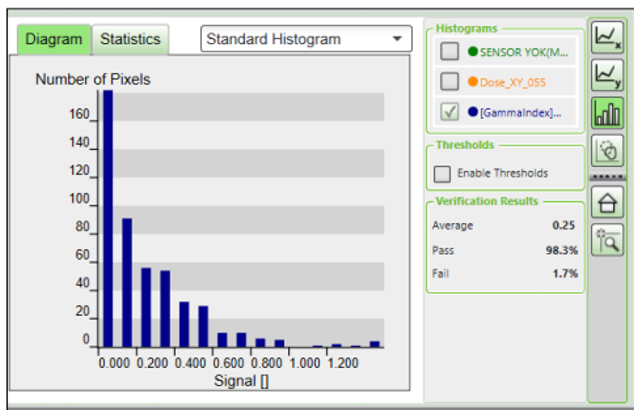
Figure 7 Gamma analysis evaluation of the measurement performed with the portal angle sensor deactivated.
The output constancy of 6 MV X-ray photon energy from the Elekta Versa HD linear accelerator was verified. The measured dose was 100.1 cGy, corresponding to a +0.1% deviation from the nominal output value, which is well within the ±2% acceptance criterion.
For each ten selected patient an IMAT plan was regenerated in TPS by ensuring that the isodose distributions for the PTV remained within the accepted +7% / -5% criteria, then QA plans were created and transferred to OmniPro-I’mRT for measurements regard to this study. The treatment sites of the patients and the monitor units (MUs) of the corresponding QA plans are presented in Table 1.
|
Patient No. |
Treatment site of IMAT plans |
MUs of QA plans |
|
1 |
Larynx |
885.0 |
|
2 |
Prostate |
695.9 |
|
3 |
Prostate |
667.8 |
|
4 |
GBM |
549.6 |
|
5 |
Bucal Mucosa |
1247.4 |
|
6 |
Larynx |
694.9 |
|
7 |
Lung |
1340.8 |
|
8 |
Lung |
1027.6 |
|
9 |
Prostate |
658.0 |
|
10 |
Prostate |
585.8 |
Table 1 Patient treatment sites and monitor units (MUs) of the QA plans
In the first step of the measurement acquisition with 2D detector arrays, the corresponding lookup table associated with the angle sensor was tested, and the angular correction option was enabled. As a result, the measured flatness and symmetry values were approximately +1%, both of which met the established acceptance criteria.
Measurements with 2D detector arrays were performed with the angle sensor activated for ten IMAT plans using 6 MV photon energy at a source-to-surface distance (SSD) of 89 cm and a 360° arc. Regard All measurements were analyzed in accordance with the AAPM TG-119 acceptance criteria (3% dose difference and 3 mm distance-to-agreement). The average gamma index difference between the measured and calculated dose distributions was -0.52% (SD= 0.61). The minimum and maximum gamma index differences were 0% and -1.7%, respectively. In all QA plan evaluations, the 95% gamma index acceptance criterion was satisfied, confirming that all plans complied with the required standards of acceptability when the angular correction was activated.
When the angle sensor was deactivated, the average gamma index difference between the measured and calculated dose distributions was -4.1% (SD= 4.35). The gamma index difference ranged from 0% to 13.7%. The IMAT plans for Lung (Plans 7 and 8) did not satisfy the 95% gamma index acceptance criterion, although several other measurements demonstrated gamma index values approaching this threshold.
Table 2 summarizes the gamma index and percentage differences between the measured and reference phantom dose distributions obtained under the angle sensor active and passive condition.
|
Patient No. |
Treatment site of IMAT plans |
The angle sensor active |
The angle sensor passive |
||
|
Gamma Index (%) |
Difference (%) |
Gamma Index (%) |
Difference (%) |
||
|
1 |
Larynx |
98.3 |
-1.7 |
97.2 |
-2.8 |
|
2 |
Prostate |
98.9 |
-1.1 |
96.2 |
-3.8 |
|
3 |
Prostate |
99.0 |
-1.0 |
98.3 |
-1.7 |
|
4 |
GBM |
99.8 |
-0.2 |
100.0 |
0.0 |
|
5 |
Bucal Mucosa |
99.1 |
-0.9 |
96.0 |
-4.0 |
|
6 |
Larynx |
100.0 |
0.0 |
95.5 |
-4.5 |
|
7 |
Lung |
100.0 |
0.0 |
86.3 |
-13.7 |
|
8 |
Lung |
100.0 |
0.0 |
90.6 |
-9.4 |
|
9 |
Prostate |
99.7 |
-0.3 |
99.2 |
-0.8 |
|
10 |
Prostate |
100.0 |
0.0 |
99.7 |
-0.3 |
Table 2 The gamma index and percentage differences between the measured and calculation dose under the angle sensor active and passive condition.
Significant improvements in gamma pass rates were observed with the use of the gantry angle sensor. The average pass rate in Active Mode was 97.10%, compared to 92.76% in Passive Mode. Gamma index deviations ranged from 0% to 13.7% depending on gantry angle and measurement conditions.
When the gantry angle sensor was active, the average gamma index difference was -0.52% (SD 0.61), which was statistically significant compared with zero (one-sample t-test, p= 0.024), whereas the inactive mode showed a significantly larger mean difference of -4.10% (SD 4.35; p= 0.015). The mean gamma pass rate increased from 95.90% (passive) to 99.48% (active), with a statistically significant paired improvement of 3.58% (95% CI: 0.32–6.84%); a paired t-test confirmed this improvement (t(9) = 2.48, p= 0.035; two-tailed), indicating that the increase in gamma pass rate with the angle sensor active was significant at the 0.05 level, which was further supported by the Wilcoxon signed-rank test (p= 0.0039).
The most notable differences occurred at oblique angles (90° and 270°), where uncorrected detector orientations led to under-response. With angle correction, discrepancies in high-gradient areas were reduced, supporting the sensor’s role in compensating for beam incidence variation.
These results align with previous research highlighting angular dependence on detector arrays. For instance, Boggula et al.7 showed up to 17% deviation in measurements at 90° without correction. Wolfsberger et al.6 developed correction algorithms for MatriXX arrays that confirmed the importance of angular sensitivity.
The real-time angle correction provided by the gantry sensor adjusts the recorded dose relative to beam incidence, leading to improved spatial dose agreement. While radiochromic films offer high spatial resolution and angular independence,13 their use is limited by processing time and manual handling. Therefore, angle-corrected ion chamber arrays offer a practical and efficient alternative for routine QA.
Moreover, according to the AAPM TG-218 report, maintaining gamma pass rates above 95% is a benchmark for clinical acceptability. In this study, the sensor-enabled setup consistently met this benchmark, while the passive setup failed in some instances.
Thus, incorporating gantry angle sensors not only improves dosimetric accuracy but also ensures compliance with international QA standards.
In conclusion, this study demonstrates that incorporating a gantry angle sensor significantly improves the dosimetric accuracy of patient-specific QA for IMAT. By correcting for angular dependence, the sensor-enhanced system yields higher gamma pass rates, better spatial accuracy, and greater confidence in plan verification. Although the study included only ten IMAT treatment plans, this focused dataset allowed for a detailed analysis of each plan. The findings provide valuable insights into treatment plan performance and support the routine clinical adoption of angle-corrected detector systems in rotational therapy QA workflows, while also laying a foundation for future studies with larger datasets to further validate and expand upon these results.
This study is based on the MSc thesis of Melike KARAKOÇ, submitted to the Department of Physics, Faculty of Science, Akdeniz University, under the supervision of Prof. Dr. Nina Tunçel in 2018. The authors express their gratitude to the staff of the Department of Radiation Oncology at Adana City Training and Research Hospital, as well as to all medical physicists who contributed to data collection.
The authors declare no conflict of interest.

©2025 Karakoç, et al. This is an open access article distributed under the terms of the, which permits unrestricted use, distribution, and build upon your work non-commercially.