International Journal of
eISSN: 2574-9862


Research Article Volume 9 Issue 2
 Zuzana Farkašová,1 Zuzana Lacková,1 Silvia Ondrašovičová2
1Department of Animal Nutrition and Husbandry, University of Veterinary Medicine and Pharmacy, Košice, Slovakia
2Department of Biology and Physiology, University of Veterinary Medicine and Pharmacy, Košice, Slovakia
Correspondence: Assoc. prof. DVM. František Zigo, PhD., University of Veterinary Medicine and Pharmacy in Košice, Department of Nutrition and Animal Husbandry, Slovakia, Tel +421-908-689-722, Tel +421-908-689-722
Received: August 14, 2025 | Published: August 25, 2025
Citation: Zahorecová L, Zigo F, Farkašová Z, et al. Evaluation of exterior defects in dwarf Rabbit breeds. Int J Avian & Wildlife Biol. 2025;9(2):79-82. DOI: 10.15406/ijawb.2025.09.00237
Dwarf rabbit breeds have become increasingly popular in recent decades. They are not only popular pets, but we can also meet them more and more often when judging at exhibitions. The aim of this study was to obtain an overview of the most common advantages and disadvantages of commonly exhibited dwarf rabbit breeds, taking into account individual colour and drawing traits. A total of 1562 dwarf rabbits of 3 breeds were evaluated - Dwarf Lop in 24 colour varieties, Hermelin in 2 colour varieties and Netherland Dwarf in 19 colour varieties. The awards were collected at 8 exhibitions during 2023 and 2024 in the Czech Republic and Slovakia. Individual rabbits were judged by trained judges in 7 positions - weight, shape, type, coat, breeding criteria and care and health. In Position 1(weight), the most common fault across all selected breeds was excessive body weight. In Position 2 (shape), the most frequent faults were protruding hips with slanting rump and loose skin on the chest. Position 3 (type) primarily included conformation faults of the ears and a narrow chest. Position 4 (coat) addressed issues with reduced coat elasticity and density. Positions 5 and 6 (breed standards) are specific to individual colour varieties and concern faults in markings, coat colour, undercoat, and intermediate colour. By evaluating the exterior defects and advantages of dwarf rabbits, we can contribute to improving their breeding by selecting suitable individuals and increase awareness of specific areas that stand in the way of achieving the desired ideal of beauty.
Keywords: dwarf lop, hermelin, exhibitions, exterior, deficiencies, positions
The dwarf rabbit is defined by its small stature and distinctive type. However, the effort toward miniaturisation also carries its drawbacks, notably the lethal factor (dwdw) of the dwarfing gene, the so-called Dwarf gene. In its ideal heterozygous form (Dwdw), this gene ensures the desired appearance and size of a dwarf rabbit. In contrast, in the case of the recessive homozygote (inheritance of dw from both parents), it results in small, weak kits with significantly lower birth weight (Figure 1), poorly developed sucking reflex, and, in most cases, death from starvation within a few days, either on their own or due to being outcompeted by the other kits in the litter.1,2
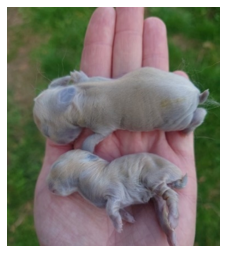
Figure 1 Standard heterozygous pup (Dwdw – top) and recessive homozygous pup (dwdw – bottom).
Photo: Zahorecova (2024)
Standard heterozygous individuals (Dwdw) are used for exhibitions and breeding; therefore, this phenomenon cannot be completely avoided. Along with the generally smaller litter size and the not always ideal maternal abilities of dwarf does, this is one of the reasons why breeding dwarf rabbits-especially those intended for exhibitions is much more challenging than in the case of other rabbit breeds. The Dwarf Lop does not carry the dwarfing gene; therefore, the general aim is not to further reduce the size of dwarf breeds, in order to avoid the risks associated with further miniaturisation of these already small rabbits, a trend in modern breeding.3
Dwarf rabbits are further classified according to breed into: Dwarf Lop (ZB), Dwarf Checkered (Zstr), Hermelin (He), Dwarf (Z), and Dwarf Hare (ZZa). Newly recognised and less commonly bred breeds include the Dwarf Lop Satin and Rex, Dwarf Angora, Dwarf Fox, Dwarf Lionhead, Dwarf Lop Teddy, and Dwarf Teddy.2,4 This study evaluates the conformation of selected dwarf rabbit breeds at exhibitions, focusing on the 7 positions of the score sheet, and provides a comprehensive overview of the level and quality of the dwarf rabbit population in the Czech and Slovak Republics.
This study evaluates the conformation faults and strengths of the most frequently exhibited dwarf rabbit breeds, taking into account their respective colour and marking varieties. The work included three breeds: the Dwarf Lop (510 individuals) in 24 colour varieties, the Hermelin (260 individuals) in 2 colour varieties, and the Netherland Dwarf (792 individuals) in 19 colour varieties, giving a total of 1,562 individuals. The selected breeds were evaluated at eight exhibitions held in Slovakia and the Czech Republic during 2023–2024.
Exterior of selected dwarf rabbit breeds - Dwarf Lop
It is among the most popular dwarf rabbit breeds, particularly in the form of crossbreeds and unrecognised varieties, even among the general public. In purebred breeding, the standard defines it as having a compact body with a strong bone structure. The limbs are short, set wide apart, and sturdy. The stance is half-upright. The head appears short, with a broad forehead and nasal area, and is markedly snub-nosed throughout the profile. The heads of does are finer. The neck is short, thick, and hardly visible. The ears are of firm structure with a strong base, lopped in a horseshoe shape along the sides of the head, with the ear openings lying close to the head (from the front, the so-called horseshoe is visible). The lopped ears form pronounced cartilaginous swellings at the base (the so-called crowns) and are rounded at the tips. The ear span, measured across the head, ranges from 22.0 to 28.0 cm.2,5 The coat should be dense, elastic, 2.0 to 2.5 cm in length, with uniformly pronounced guard hairs. In terms of colour, all varieties of breeds with normal coat type listed in the breed standard are recognised, with no exceptions for spotting or markings. The ideal weight is between 1.50 and 1.90 kg (Figure 2).5
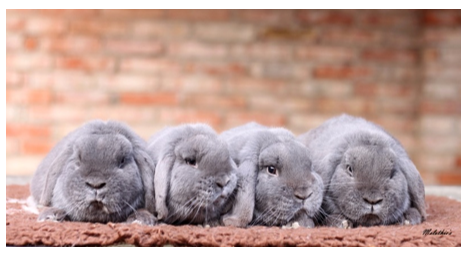
Figure 2 A collection of blue colored Dwarf Lop.
Photo: Zahorecova (2025)
Exterior of selected dwarf rabbit breeds – Hermelin and Netherland Dwarf
The Hermelin is recognised in two colour varieties: red-eyed and blue-eyed, with the latter enjoying slightly greater popularity.6 The Dwarf Coloured Rabbit is recognised in all colour and marking varieties permitted by the current Rabbit Breed Standard.2,4 In Europe, they are commonly known as the “Netherland Dwarf.”7 The body is short and distinctly compact, with a strong bone structure, broad in both the chest and pelvic regions. The limbs appear short and strong, are set wide apart, and are sturdy. The stance is at least half-upright. The neck is thick, short, and hardly visible.2 The coat is dense, soft to the touch, and approximately 1.8–2.0 cm in length.8 The head is relatively large and rounded, with a broad forehead and nasal area, and a short, blunt muzzle (the so-called “frog face”). The heads of does are of a finer build. The ears are firm, held close together, well-furred, rounded at the tips, and 5.0–6.0 cm in length, with the ideal length being 5.5 cm. The ideal weight ranges from 1.00 to 1.35 kg (Figure 3).2
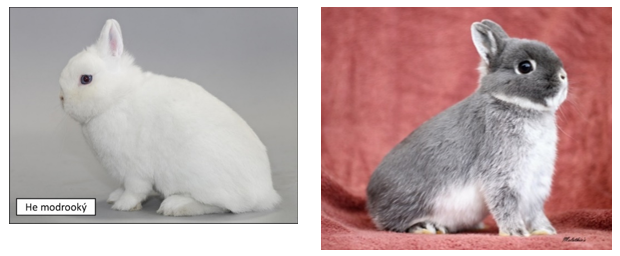
Figure 3 string Blue-eyed Hermeline and Netherland dwarf white-spotted blue.
Photo: Šimek (2015) and Zahorecova (2022)
Rabbit judging system
The evaluation of a rabbit is carried out by comparing the individual with the requirements specified in the breed standard. The outcome of the evaluation is a score sheet, in which the strengths and faults of the given rabbit should be clearly and legibly recorded in each category, together with the total score, where the maximum possible score is 100 points. The score sheet contains seven categories: weight, shape, type, coat, breed standard 1, breed standard 2, and care, health, and condition. The point allocation for each category is shown in Table 1.9
|
Position number |
Characteristic of Position |
Czech1 standard |
Slovak2 standard |
|
1 |
Weight |
10 |
10 |
|
2 |
Shape |
20 |
20 |
|
3 |
Type |
20 |
15 |
|
4 |
Coat |
15 |
20 |
|
5 |
Specific breed traits3 (colour, markings) |
20 |
20 |
|
6 |
Specific breed traits4 (undercolour, intermediate colour) |
10 |
10 |
|
7 |
Condition and health |
5 |
5 |
|
Total |
100 |
100 |
Two types of faults are distinguished: permissible faults (minor deviations from the standard, resulting in point deductions in the respective category) and disqualifying faults (more pronounced deviations from the standard, resulting in the rabbit being excluded from judging). Disqualifying faults may be of two kinds: those leading to the decision “Disqualified” (faults likely to be hereditary – e.g., dental or skeletal defects, colour deviations, etc.) and those leading to the decision “Not classified” (faults caused by external factors, not hereditary – such as suspected illness, injury, or problems with the legibility of ear tattooing). Each disqualifying fault must be consulted with at least one fellow judge, except in the case of an exhibition judged by a single evaluator.4
Evaluation of the exterior of Dwarf Lop
In the Dwarf Lop breed, the most common fault in Position 1 – Weight – was lower body weight. In Position 2 – Shape – the most frequent permissible faults were protruding hips with slanting rump and loose skin on the chest. Other permissible faults included wiry or shorter guard hairs, a tendency toward cow hocks, and slight penis deformity. Disqualifying faults recorded in this position included deformities of the reproductive organs, primarily split penis or missing scrotum and loose skin on the neck.
As expected, the second position, evaluating shape, revealed the greatest issues with less pronounced hip bones (Table 2). This trait can be best influenced through selection by the breeder, as it is a quantitative hereditary characteristic that can be reduced through the careful choice of breeding rabbits. Dwarf does are also particularly prone to loose skin around the neck and chest; therefore, it is important to ensure an appropriate genetic foundation and a correct feeding regimen, which can also influence the expression of this trait. Issues with loose skin on the body may occur across breeds.10
|
Exterior faults |
Dwarf Lop (%) |
Hermelin (%) |
Netherland Dwarf (%) |
|
Slightly prodruding hips |
21.4 |
33.1 |
26.9 |
|
Dense and less elastic structure of coat |
20.8 |
43.5 |
25.9 |
|
Slightly slanting rump |
6.8 |
0 |
1.7 |
|
Incomplete color |
2.4 |
0 |
18.6 |
|
Less yellowed color |
2.4 |
13.5 |
1.7 |
Table 2 The most common exterior faults in the evaluated breeds
Note: The exterior assesment consisted of 510 pcs Dwarf Lop, 260 pcs Hermelin and 792 pcs Netherland Dwarf.
The most frequent conformation faults in Position 3 – Type – were a slightly slanted ear carriage, narrow chest, and less pronounced crowns. Other permissible faults included a shorter body, a less distinct head, a less closed horseshoe, thinner ear leather, a larger body frame, a longer body, a longer ear, and weaker musculature. In contrast, 28.6% of individuals were evaluated as having very good type and body proportions (Table 3).
|
Exterior advantages |
Dwarf Lop (%) |
Hermelin (%) |
Netherland Dwarf (%) |
|
Very good back |
28.6 |
32.7 |
37.5 |
|
Very good body frame |
0 |
16.2 |
23.9 |
|
very good head and ears |
22.5 |
26.2 |
15.3 |
|
Very good characters / drawing |
15.5 |
0 |
0 |
Table 3 The most common exterior advantages of the evaluated breeds
Note: The exterior assesment consisted of 510 pcs Dwarf Lop, 260 pcs Hermelin and 792 pcs Netherland Dwarf.
In Position 4 – Coat – the most common fault was reduced coat elasticity, followed by moulting, and a finer, sparser, or longer coat. Occasionally, immature or slightly matted coats were observed. Disqualifying faults included alopecic patches in the jaw area and on the ear.
Position 5 – Breed Standard 1 (colour and markings) – is the most extensive and variable category, as each colour and marking variant is assessed according to its specific traits.11 The most common faults shared across all colour varieties included uneven coat colour, slight rustiness on the body, occasional white hairs, and white spots on the head, limbs, or body. Other recorded issues were lighter markings on the body, excessive patterning, and pigment spots on the chest. White spots on the head, limbs, and body, as well as white claws, are disqualifying faults. In Position 6 – Breed Standard 2 (undercoat and intermediate colour) – the most frequent fault observed was a lighter undercoat near the skin. Less common faults included a less pronounced, poorly defined, or lighter intermediate colour, as well as a darker, greyish, or bluish undercoat. Position 7 – Care, health, and condition – evaluates the rabbit’s readiness for exhibition. The most common deviations in this category were overgrown claws, unclean genital areas, poorly legible tattooing, and inverted tattooing. Disqualification in this position was given for dental deformities, illegible tattooing, the presence of an abscess on the side or back, or an old eye injury.
Evaluation of the exterior of Hermelin and Netherland Dwarf
The Hermelin and Netherland Dwarf are among the most popular dwarf rabbit breeds, with a body weight ranging from 1.00 to 1.35 kg.6 Deviations from this standard, both higher and lower body weights are frequently observed during evaluations. Disqualification in Position 1 (weight) was issued for animals with excessively high or low body weight. In Position 2 (shape), concerning body shape, the most common permissible fault was slightly protruding pelvic bones, followed by loose skin on the chest. Less frequent issues included protruding hip bones, splayed forelegs, shorter guard hairs, a tendency toward cow hocks, and wiry guard hairs. These faults were distributed evenly across all colour varieties. Disqualifying faults occurred only sporadically and included loose skin on the neck, deformation of the ear canal at the ear base, split or undeveloped penis.
According to Zadina,5 Position 3 (type) is crucial for dwarf rabbits. A dwarf rabbit should give a compact and rounded impression, which in recent years has been increasingly achieved thanks to the influx of high-quality animals from abroad. The most common faults in this category include a narrower chest and issues with ear length and firmness. In Hermelins, the most frequent problems in this position were a narrow chest, soft ear tips, and ears that were either longer or thinner than desired. Other recorded faults included slightly splayed ears, a longer or, conversely, a shorter body, a larger body frame, shorter ears, and a finer head. In Netherland Dwarf, the most common faults were soft ear tips, longer ears, a finer head, and thinner ear leather. Other issues observed included a longer body, narrow chest, slightly splayed ears, and a larger body frame. Excessive ear length and markedly splayed ears were already grounds for disqualification in this breed. Among conformation strengths, the most frequently recorded were a very good back, type, and head (Table 3).
Position 4, coat, reflects a situation similar to that observed in other rabbit breeds. The most frequent deviation is reduced coat elasticity, which may be partially influenced by the climatic conditions of the area where the rabbits are kept.3 In the present evaluation, within the fourth position dealing with coat, similar shortcomings were recorded as in the Dwarf Lop. The most common fault was reduced coat elasticity. Other issues included a sparser, longer, or finer coat, coat in moult, immature coat, and slightly matted coat.
Position 5 evaluates colour and markings and, depending on the specific colour variety, is in many aspects unique to each variety. A common denominator is uneven colour, which will affect the majority of rabbits during moulting.11 In the most numerous wild-coloured Dwarf Rabbits, the most frequent defect was uneven colouration, along with lighter flanks and chest, and pale bands on the forelegs. In the second most numerous variety, black otter, frequent faults included a slight rusty tinge on the body and, to the same extent, the occurrence of occasional white hairs. Other faults observed were a less pronounced eye ring, a lighter chest, uneven colour, and pale bands on the forelegs.
Position 6, under colour and intermediate colour, belongs to the positions with the lowest frequency of faults. However, a lighter under colour at the skin or lighter intermediate colour in those varieties that possess it can occur relatively often.3 Hermelins, due to their snow-white coat, are more prone to yellowing and therefore must be kept in the cleanest possible environment.8 In this position, the most frequent faults in Netherland Dwarf were lighter under colour at the skin and less intense intermediate colour. In Hermelins, the most common permissible defect was a yellowish tinge to the coat.
In the seventh category, long claws, watery eyes, injuries to the ear and nose, and inverted tattooing were recorded. Disqualification was applied in cases of dental deformities. Responsibility for this category lies directly with the breeder of the rabbit in question. With regular care and attention, most potential point deductions in the “care and health” category can be avoided. Nevertheless, issues such as overgrown claws or uncleaned genital areas may still occur, both of which can be addressed with just a few minutes of preparation before the exhibition. Rabbits showing signs of emerging illness should not be presented at shows. It is the breeder’s responsibility to recognise such conditions and refrain from exhibiting these animals, thereby avoiding the risk of endangering other breeders’ rabbits.
This study maps the occurrence of the most common strengths and faults in the most prevalent breeds of dwarf rabbits, aiming to provide a comprehensive overview of the quality of their breeding. Based on the obtained results, we can conclude that the evaluated dwarf rabbit breeds achieved an average score of 94.5 points in the Dwarf Lop and 94.9 points in the Hermelin and Netherland Dwarf, which represents a very good starting point for their inclusion in breeding programs. However, rabbit breeders must continue to address the elimination of conformation defects that still occur even in dwarf rabbit breeds, as evidenced by evaluations at exhibitions.
None.
Authors declare that there are no conflicts of interest.
The study was supported by the Ministry of Education, Research, Development and Youth of the Slovak Republic, contract No. KEGA 011UVLF-4/2024: Innovation and implementation of new knowledge of scientific research and breeding practice to improve the teaching of foreign students in the subject of Animal Husbandry.

©2025 Zahorecová, et al. This is an open access article distributed under the terms of the, which permits unrestricted use, distribution, and build upon your work non-commercially.