International Journal of
eISSN: 2574-9862


Research Article Volume 9 Issue 2
 Deep Chandan Chakraborty
Department of Zoology, Asutosh College, India
Correspondence: Dr Deep Chandan Chakraborty, Faculty- Department of Zoology, Asutosh College, India
Received: June 17, 2025 | Published: August 13, 2025
Citation: Bhattacharjee S, Chakraborty DC. Dummy nests in birds - Reproductive ‘false’ advertisement! Int J Avian & Wildlife Biold. 2025;9(2):73-77. DOI: 10.15406/ijawb.2025.09.00236
Avian species showcase the complex nature of survival through various anti-predation strategies associated with nest building. Researchers have undertaken extensive studies to understand the key motive behind unique nesting behaviours, such as dummy nesting. Dummy nesting seems to be an unusual nesting strategy, can be grossly classified under anti-predation activities and a testament of reproductive success in avian species. Studies have also been conducted mimicking dummy nests as artificial models to understand its significance in respect to a certain habitat, season or prey-predator relationship. Majority of those pin down to the reproductive success associated with dummy nesting pattern. In this review, the key focus has been laid on the avian species performing dummy nest construction. We hypothesized that dummy nesting patterns in avian species are a result of predator interference, nesting complexity and reproductive competition. To justify the hypothesis, articles and journals dating back to the earliest study regarding dummy nests were retrieved and reviewed. A comprehensive literature review highlighted the most relevant research articles and their valuable findings that fit with the objective, i.e., identifying the evolutionary role of dummy nesting phenomena. It was observed that dummy nesting patterns in avian species can be correlated to anti-predation, reproductive decision and unusual nesting behaviours. Of these factors anti-predation is the most prominent pattern among the bird species constructing dummy nests. In some species, dummy nests have served as a temporary refuge for avian species even in post-reproductive stages in highly predated zones. Dummy nests are also crucial for reproductive success and fledgling survival in avian species. The review provides valuable insights and a cumulative understanding of natural nesting patterns in birds.
Keywords: energetics, survival strategy, reproductive strategy, reproductive insurance, nesting complexity, behavioural decoy
Nest formation is a crucial task in ensuring critical fitness not only within the avian community but also in different taxa as it provides stability to the process of offspring production and nurturing.1, 2 Over the years of scientific research, it has been observed that the passerine community showcases spectacular variations in the structure of nests.3,4 The structural complexity of birds’ nests varies enormously across species, from roughly constructed stick platforms to neatly woven cups, domes and even cavity nests.1 Physical factors including geographic, spatiotemporal, temperature, climatic and latitudinal differences inevitably contribute to the nesting decisions of avian communities.5,6 Several ecological factors including intraspecies competition, predator availability, vegetation, availability of nesting materials, egg size and eco-geolocation impact the type shape and overall structure of nests.7 Nests are particularly built to ensure the survival of juveniles at vulnerable stages and for prolonged mono or biparental incubation or simply a reflection of the evolutionary history of an avian lineage.6 Thus the paper focuses on understanding the behavioural intentions and external triggers that contribute to nesting patterns among avians.
Understanding the potential factors leading to the formation of nests leads to the potential challenges that the bird community faces in light of climatic and evolutionary changes. Nests provide the basic security net for nestling and also ensure a safe microenvironment free from life-threatening parasites.1 However, nests also demarcate a prominent location within the breeding territory, which can be exploited by potential nest enemies. These highly defended localized resources are often targeted by merciless predators from time to time.8,9 Nests have also served as the key criterion in reproductive fitness and mate selection. Bird species invest considerable time and energy in suitable nest construction before breeding. Minor mishaps and incompetencies in the process can minimize tradeoffs and incur high costs for the avian species.10,11 However, the point of evolution that diversified the need for appropriate nest formation within different avian species to ensure reproductive success and support mate selection is unclear. Evolution has introduced new challenges to the nesting habits of birds. Most significantly climate change indicated a prominent change in the nesting behavior due to the adaptive nature of certain species.12 These evolutionary factors might have led to the construction of dummy nests. The paper aims to emphasize the cost-benefit of nesting behaviour from the perspective of dummy nests.
Dummy nesting phenomena
The term ‘dummy nest’ holistically translates to an abandoned and loosely constructed secondary nest. The need for a holistic term comes from the different studies conducted surrounding these unique nesting phenomena. While several passerine species have constructed dummy nests for improving reproductive success rates, dummy models have also been tested by the researchers as a decoy for checking out their effects on nesting patterns and behaviours within birds. A common notion is that dummy nests are built to evade attacks from sneaky predators. This suggests the term ‘dummy’ for the nesting pattern. Understanding of such nesting behaviour is gradually gaining momentum with several new cases. Certain species of birds resort to nest abandonment before breeding season, thus leading to dummy nest formation.13,14 Most of the observed pattern of dummy nest formation coincides with this theory of nest abandonment. This multi-nesting behaviour might result from external triggers. Vulnerability of the nesting place to events of storm and protection of unhatched eggs and nestlings from predators might be the most justifiable events in dummy nest formation.15 These observations from subsequent recent and past studies provide a backbone for understanding the connection and nature of dummy nests.
Review objective
From the above perspective, dummy nesting stands as a method of ensuring reproductive success and nesting potential for the avian species. Yet the purpose of a dummy nest is an under-explored and debatable topic. The paper investigates dummy nests from a comprehensive perspective of passerine nest construction behaviour with examples of non-passerine to check the stability of the strategy in evolutionary terms. The significance of the study lies in its holistic approach to determining the purpose, cost-benefit trade off and complexity of dummy nest construction behaviour. The main aims and objectives of the study are determined in this section of the manuscript. In this context, we put forward two opposing hypotheses over which the occurrence of dummy nests depends on an evolutionary appreciation of the anti-predator strategy. The detailed discussion regarding key indices in dummy passerine nest decisions is discussed in the following section. Several research studies have been conducted to analyze the characteristic nature and behavioural pattern associated with dummy nest construction. For this paper, we retrieved information from research articles published between 1950 to 2023, related to the dummy nesting phenomenon in avian species, its evolutionary significance, the introduction of artificial nests and its effect on offspring survival through the popular search engines like Web of Science (http://www.webofscience.com), Google Scholar(https://scholar.google.com/), Semantic Scholar(https://www.semanticscholar.org).
Opposing hypotheses
At the onset let us consider two complementary hypotheses which explain the evolutionary background of dummy nest construction. It would be either; H0: predator interference, nesting complexity and reproductive competition do not impact dummy nest decisions or H1: predator interference, nesting complexity and reproductive competition impact dummy nest decisions in most birds. Here we look into the various published literature on nesting biology, particularly those associated with anti-predator strategies to increase reproductive success, design, time and energetics behind nest construction, foraging provisions, artificial nest deployment experiments etc.
Probing down the evolutionary role
Reproductive insurance
Nesting patterns and designing for avian species substantially determine their reproductive success. Bird species rely on various methods of reducing predation pressure, and improving reproductive success and offspring survival. Dummy nests are one such strategy opted by a large number of bird species to ensure maximum survival of nestlings. Biologists studied nest defense behaviour and reproductive success16–18 in the form of non-breeding dummy nesting among Northern Hobbies (Falco subbute), Grass Wrens (Cistothorus platensis). Traditionally it was observed that dummy nests substantially reduced the frequency and intensity of predation in the post-egg- laying period for the bird species. On the contrary, certain avian species like the Australian Reed Warbler (Acrocephalus australis) build distinct nest structures, termed Type I and II.19 Here the Type II nests serve as the dummy nests with the sole purpose of providing momentary security to fledglings. In this regard, the hypothesized purpose of dummy nests in reproductive success and diminishing predation pressure does not hold for all bird species. Globally, the dummy nest behaviour was hypothesized to be associated with four key factors. These include the use of dummy nests as decoys to check predation, occasionally as an advertisement of sexual selection, shelter for fledglings20 and reduction in intraspecies competition. In the case of different bird species, dummy nests were observed to be associated with sexual selection. The dummy nests were also used by paired individuals to showcase their parental abilities and influence their partner’s investment on reproductive success.20 reported the dummy nest behaviour in Worthington's Marsh Wren (Cistothorus palustris griseus) was used as a refuge for young fledglings, in cases more than one nesting was absent from the main nest. These findings aligned the reproductive insurance of the dummy nest with post-fledging survival sites for the avian species.
Energetics, survival instincts with dummy nest construction
Dummy nest building might be an energy-intensive process for dummy birds21 aimed to understand the cost-benefit of dummy nests decisions in Grass Wrens (Cistothorus platensis). These birds usually build a platform and dummy nest. Here the dummy nest more closely resembles the breeding structures of the avian species. Despite having similarities in appearance, a striking difference in the composition of the dummy nests was observed. Here the dummy nests are less dense and lack several necessary layering as in breeding nests, especially those that are imperative in the later building stages. These factors provide a probable implication that dummy nests are abandoned during the building process, probably in case of low-cost benefit for the bird species.
Relationship between resource availability in dummy nest formation
Dummy nest construction has been considered a unique reproductive behaviour of many avian species. Availability of resources during the nesting season and their quality have been examined.22 The Nest predation behaviour in Urla Owl (Strix Uralensis) and the role of dummy nests pointed towards significant differences in the proportion of dummies predicted by predators in various food conditions. Furthermore, in intermediate food conditions, distance from owl nests affected predation rates in dummy nests. In other words, prey-predator interaction in areas with dummy nests depends upon fluctuating food availability. A similar study on the Australian Reed Warbler (Acrocephalus australis) showed whenever birds were relieved from the energetic and temporal constraints through experimental supplementation of foraging resources in their territories they seemed to invest more in dummy nest construction.19 Intentions of the avian community in the time-intensive process of dummy nest formation are still at a poorly understood stage. However certain common behavioural cues have been identified in different species of birds associated with dummy nest formation. Reproductive insurance is one such remarkable aspect that justifies dummy nesting the behaviours of several avian species.18 Here comes the cost- benefit aspect of dummy nests for avian species residing in a highly predated niche. Alternatively, the success of dummy nests to conceal and maintain the seclusion of nestlings from predation reduces the cost of nest formation and energy investment.23 Many avian species use differentiated nests to improve reproductive success. While traditionally dummy nests were associated with post-egg-laying shelter for passerines, recent studies have provided a different outlook. It is considered that evolution in prey-predator interaction strategies has altered the use of spare nests by some bird species.24 More specifically, these dummy nests also act as decoys to increase manipulative reproductive behaviour. Having multiple nests increases mating suitability and chances of the male passerine otherwise considered weak in the pact. Another key aspect of dummy nests associated with reproductive strategy and success is reduced intraspecific competition and avoid potential predators.25 In this case, dummy nests act as an advantageous factor in mate selection and reproductive security.
Post-reproductive refuge for fledglings
Another interesting fact about dummy nest decisions is the post-reproductive success. Dummy nests have been identified to be a great refuge for fledglings of certain bird species.20 In this scenario, young nestlings take refuge in dummy nests in the absence of parents or sudden attack from apex predators. This increases their chances of survival to a substantial extent. However several studies observed differences in the nest composition of dummy nests which is suggestive of differences in function of these nests. In simpler words, avian species invest resources and time on dummy nests based on certain prerequisites and benefits. This also implies that not all dummy nests serve the purpose initially specified by bird species.26 In certain bird species like the Herons, delayed dummy nest building resulted in higher predation. In case of low-cost benefit due to high competition, low resource availability, proximity to the breeding nest,27 unsuitable nesting conditions28 or predators,29 these dummy nests are abandoned at the early developmental stage. From here, it is safe to infer that all dummy nests do not serve the purpose of reproduction or shelter from predation.
High resource availability
As mentioned earlier, resources also play a crucial role in determining the suitability of dummy nests. High resource availability implies low intraspecific competition. But it might not necessarily mean low prominence of predators. On the other hand, nesting resource availability reduces the cost of dummy nest-building behavior substantially increasing the benefit of the process.30 Food resource availability increases the reproductive and post- reproductive sustenance of passerine species.31 On the contrary, studies observed that intermediate food resource availability might increase the risk of predation and intraspecific competition.32 Based on these recent observations, decisions of dummy nest formation can be considered to be a meticulous process of trial and error within the avian community (Table 1).
|
Functions |
Biological benefits / Functional aspect of dummy/artificial/multiple nests |
Species involved in the survey and type of nest |
Method of study |
References |
|
Defense /Shelter |
Anti-predation activities |
Marsh wrens, (Cistothorus palustris) - dome-shaped nests hanging on wetland grasses |
Experimental study |
42 |
|
post-fledging survival |
Worthington's Marsh Wren (Cistothorus palustris griseus) - dome-shaped nests hanging on wetland grasses |
Experimental study |
20 |
|
|
Method of ensuring maximum offspring survival |
Northern Hobbies (Falco subbuteo) - elevated, tree branch cup-shaped nest |
Experimental study |
16 |
|
|
Distance from breeding nest effects predation pressure |
Black-billed magpie (Pica Pica) - elevated, tree branch dome-shaped nest |
Experimental study (with dummy nest models) |
27 |
|
|
Increased survival rate with dummy nest |
Red-backed Shrike Lanius collurio) - Open, untidy nest in dense shrubs or hedgerows |
Experimental study |
34 |
|
|
Delayed nests leads to higher predation |
Herons (Ardea cinerea)- elevated, tree branch cup-shaped nest |
Experimental study (with dummy nest models) |
26 |
|
|
Avoidance of direct conflict with predators |
Black Sparrow hawks (Accipiter melanoleucus) - elevated, tree branch cup- shaped nest |
Hypothesis based study |
25 |
|
|
shelters for fledglings |
- |
Review |
18 |
|
|
Reproduction decisions |
Breeding success in nest boxes |
European Starlings (Sturnus vulgaris) - Secondary cavity nests on tree trunk |
Experimental study |
43 |
|
Manipulation of breeding decisions |
Grass Wrens (Cistothorus platensis) - platform-shaped nests hanging on wetland grasses |
Experimental study |
17 |
|
|
Reuse of nest for breeding security |
Grey Wagtails (Motacilla cinerea) - ground nests near riverbed Pied Wagtails (Motacilla alba) and Common Blackbirds (Turdus merula) - cup-shaped grass nest on ground |
Observational study |
24 |
|
|
Unusual nesting behavior |
Manifestation of multiple nesting behavior |
Australian Reed Warbler (Acrocephalus australis) - Cup-shaped nests floating on reed bed) |
Experimental study |
21 |
Table 1 Prominent studies on dummy nesting phenomenon, species involved, key biological benefits
The current trend of research on dummy nesting
Artificial dummy nests introduction: Behavioural strategies associated with bird reproduction with special reference to nesting are the most intriguing aspect of most passerine bird research. Studies based on the sole purpose of artificial nesting behaviour are not quite abundant. However artificial model nests made of synthetic materials such as ceramic, and plastic wood that closely replicate the original nests have been a subject of experiment for understanding the predation pattern of bird species.33 Depredation rates of the artificial and natural nets in Red-backed Shrike (Lanius collurio) might be associated with certain limitations.34 Disadvantages over natural nests might include differences in colour, size, microenvironment, egg type and appearance. These anomalies promote depredation activities. Furthermore, artificial nests are deprived of parental vigilance, which might result in a higher prevalence of predators and depredation. Other studies have been conducted to understand the prey-predator interaction of bird species on a spatiotemporal scale (Table 1).
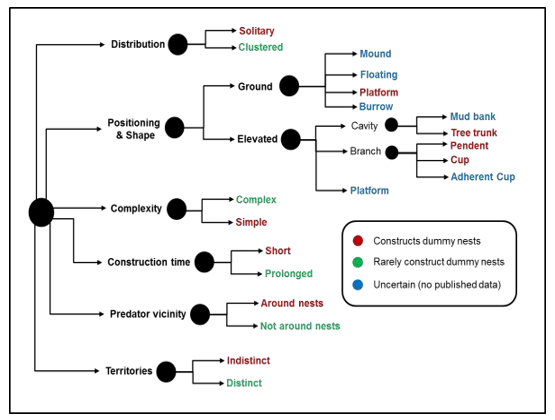
Figure 1 Propensity of dummy nesting behaviour across diverse nesting strategies in birds.
Nest visibility: Another study by Krüger et al,35 examined the effect of nest visibility and predation pattern of bird species in forests using artificial nests. The introduction of artificial nests as additional advertisement indulges substantial depredation and hence higher offspring survival in avian communities. However the introduction of artificial nest boxes experiences higher 36, 37 or lower 38, 39 predation rates compared to natural nests (Table 1). These both-way trends in predation rates between natural and artificial nests have been attributed to several variables.40
Urbanization and predation rates: In densely populated parts rapid urbanization is considered to have influenced the nesting pattern and success of avian species.41 utilized the nesting behavioural repertoire of Chinese Bulins (Pycnonotus sinensis) where artificial eggs were placed in the nests to mimic the originals and analyze prey-predator relationships. It was observed that the degree of urbanization specifically reduced the predation pressure on either artificial or natural nests, thus reducing the evolutionary fitness behind dummy nesting in urban settings compared to the rest. The artificial dummy nests thus operate as an insurance factor in reproductive success in passerine species in semi-urban or nonurban settings.
Tendency of dummy nesting decision across diverse nesting strategies
Nesting strategy differs depending on different ecological conditions such as nest distribution (solitary or clustered), positioning and nest shape depending on substratum, construction time and complexity of design, whether predators are close or not, nesting species maintaining their own territory or not. Based on the availability of nesting materials, forage stuffs etc. the usage of nests were determined. Dummy nests were constructed more by the solitary nesters compared to species building nests in cluster since close nests provides mutual defences to each other from potential predators. Short constructed nests are simple in structure and less energetics were linked, thus birds built additional nests within a very short period to decoy predators. Figure 1 shows the propensities of different nesting strategies to involve dummy nest decision in the nesting ecology, which have been stated under three categories i. Constructs dummy nests; ii. Rarely constructs dummy nests and iii. Uncertain (since no published data present).
Anti-predator behaviour has a direct evolutionary connection with the survival of a species and it is applied at various stages of species' foraging, nesting and territoriality. Initially two opposing hypotheses (H0 & H1) were proposed to validate whether the dummy nesting decision impacted by predator interference, nesting complexity and reproductive competition or not; seems to follow the H1 i.e., construction of dummy nests have provided birds profound evolutionary advantages and most of them can be categorized as anti-predator strategies to minimize nest predation and increase reproductive success. Through this article we have reviewed the dummy nesting phenomena across bird communities, identified the contributing factors and decision making strategies associated with it. Dummy nests have inspired researchers to install artificial nests to validate the additional nest construction decision in natural nesting territories. Moreover species that form simple or short-built nests were found to be the most likely dummy nester, while areas with higher biotic homogenization such as cities, lowered predation risk along with the occurrence of dummy nests. Dummy nesting phenomena represent one of the many inherent ways chosen by the birds to maximize their fitness. Literature cited here highlights the passerine bird communities as the strong users of this behavioural strategy; however more research is required to determine the actual usage of this strategy and its impact on reproductive success beyond the passerine group.
We thank Mrinal Mal and Kapil Bag for useful insights.
The authors declare that they have no conflict of interests.

©2025 Bhattacharjee, et al. This is an open access article distributed under the terms of the, which permits unrestricted use, distribution, and build upon your work non-commercially.