International Journal of
eISSN: 2574-9862


Research Article Volume 9 Issue 3
 Chalachew Alemneh, Geleta Shasho
Department of Wildlife and Ecotourism Management, Wolkite University, Central Ethiopia
Correspondence: Tamenut Desalegn, Department of Wildlife and Ecotourism Management, Wolkite University, Central Ethiopia, Tel +251921603517
Received: September 03, 2025 | Published: October 2, 2025
Citation: Desalegn T, Alemneh C, Shasho G. Abundance, diurnal activity patterns and conservation challenges of hooded vulture (Necrosyrtes monachus) in Wolkite and Butajira Towns, Gurage Zone, Ethiopia. Int J Avian & Wildlife Biol. 2025;9(2):84‒90. DOI: 10.15406/ijawb.2025.09.00238
Understanding the abundance, diurnal activity pattern, and challenges of hooded vultures (Necrosyrtes monachus) in towns is vital to their conservation and monitoring strategies. This study investigated the abundance, diurnal activity patterns, and conservation challenges of hooded vultures in Gurage Zone towns of Ethiopia. The study was carried out from June 2022 to April 2023, considering both wet and dry seasons. The study had three sampling sites (Abattoir, Waste disposal, and near café & restaurants). In total, 29-point stations were employed, 12 at Wolkite town and 17 at Butajira town. The abundance and diurnal activity patterns data were collected using 5 minutes instantaneous scan sampling within 15-minute intervals from 7:00 AM to 18:00 PM for 12 days per month at the sampling sites. In total, the data were taken for 120 sampling days, 60 in the wet season and 60 in the dry season. The abundance of hooded vultures in seasons (fasting and non-fasting seasons) in the study sites were analyzed by Mann-Whitney statistical tests and Kruskal-Wallis test used to examine the abundance of hooded vultures in the three sampling sights. To analyze the effect of season and time interval on behavioral activity patterns of hooded vultures by using One-Way ANOVA. Descriptive analysis such as percentages, frequencies, tables, figures, and graphs were used to analyze the conservation challenges. From 2896 behavioral scans on the various activities, resting was the highest (41.4%) diurnal activity followed by foraging (37.1%) and preening (31.3%). Fasting and non-fasting seasons have statistical significance (U=6348.078, df=2, p<0.05) on the abundance of hooded vultures and the sampling sites (Abattoir, waste disposal, café, and restaurants). Destruction of nesting habitats, poisonous, lack of awareness, food computation, and traditional medicine are the major challenges of hooded vultures. Therefore, this study suggests that to reduce these problems, the concerned body can conserve their habitats by providing awareness training to the community about the ecological roles of hooded vultures to the environment.
Keywords: abattoir, daytime activity, restaurants, towns, threats, waste disposal
Understanding bird health, food, social dynamics, environment, and ecological systems requires an understanding of bird behavior.1,2 We can learn more about how vultures find and use food when it's scarce by observing how they migrate on a daily and seasonal basis. In Europe, Asia, and Africa, vultures of the hooded variety can be found.3 It inhabits a wide range of environments, including grassy fields, farms, urban areas, dry regions, and areas close to the ocean.4 This kind of animal is frequently observed close to residential areas, although it can also be found in deserts, large plains with poorly scattered trees, and coastal regions. Although it can be found up to 4,000 meters above sea level, it is more common at lower elevations, particularly below 1,800 meters.
The Hooded Vulture is a member of the Accipitriformes genus of birds. Other birds such as hawks, buzzards, kites, and eagles are also included in this group. The hooded vulture is a small, messy-looking bird of prey that is primarily brown in color. It is between 67 and 70 centimeters tall. The beak of the bird is long and thin. Its ears are widely open, and there are no feathers on its head or neck. Soft feathers decorate the back of its neck as well. Men and women are alike, and perching birds have drooping wings and a slumped stance. The juvenile frequently has a pale blue face and a short, dark brown hood rather than beige.5
The number of vultures in Africa has greatly decreased6 including the Hooded Vulture.7 Hooded Vultures are found near people in tropical Africa and in many cities in their habitat, these species are the only scavengers in that area.4 The main reason for the decrease in the vulture population is the selling of vulture parts for traditional medicine, poisoning, hunting, killing, and accidental death by electricity5,8 due to that vulture are losing their homes and their environment is getting worse. One thing that affects animals is how much food they have,9 this depends on how many people there are and how waste is thrown away, especially at places where animals are killed for meat.10 Furthermore, a lot of birds that scavenge gather together at places where they rest together, and this is a crucial part of the environment they need to survive.11 Additionally, it has been discovered that hooded vultures tend to stay near places where they search for food. This helps them save energy and reduces the effort needed for traveling.12 Not many researchers in Africa have studied the connection between how many facultative and obligate avian scavengers there are.
The presence of hooded vultures is extensively studied by numerous writers in Ethiopia, particularly at the Addis Ababa Abattoirs Enterprise,14 local Vulture Restaurants,15 and waste disposal sites16. Research on the number, daily habits, and difficulties faced by birds that eat dead animals near the town is still at the very beginning stages. However, cities can be a good place for scavenger birds to live because they have a lot of garbage that these birds need to find food. However, no studies have been done to find out how many hooded vultures there are, when they are most active during the day, and what challenges they face in terms of conservation. So, this research looks for information about the number of hooded vultures, when they are active, and the problems they face in Gurage Zone, Wolkite and Butajira towns, Ethiopia.
Description of the study area
The study was conducted in Gurage Zone (Figure 1), which is located 155 km from the capital city (Addis Ababa). The Zone is located between 7.80 - 8.50 North latitude and 37.50C - 38.70 East longitude of the equator.17 The altitude of the area ranges from 1,001 to 3,500 meters above sea level (m.a.s.l). The mean annual temperature of the study area ranges from 13 0C to 30 0C and the mean annual rainfall ranges from 600 to 1600 mm.17 Gurage zone is one of Ethiopia’s administrative zones of the Southern Nation Nationalities and Peoples’ Region (SNNPR). Wolkite town serves as the zone’s capital. The Gurage zone now has a projected total population of 1,280,483, including 657,568 women, based on the 2007 census conducted by the Central Statistical Agency of Ethiopia.18 Heterogeneous landscape, flora, fauna, and habitat type characterize the zone. It consists of 16 districts and five self-administration towns. From the five self-administrative towns Wolkite and Butajira towns selected for this study.
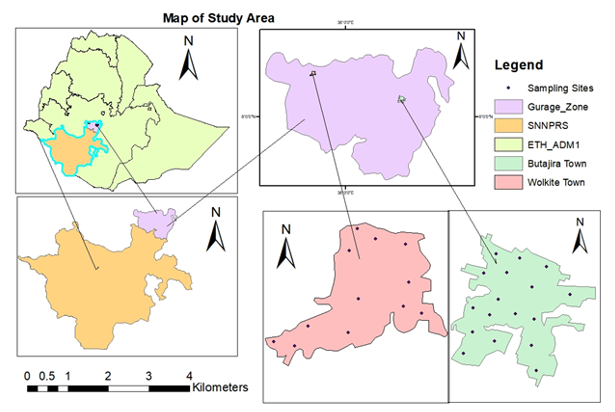
Figure 1 Map of the study area.
Materials
Field binoculars and Geospatial Positioning System (GPS72hz) were used during the study period. Binoculars are used to determine the clear vision of bird species at a distance different from other vulture species; GPS is used to determine the position of the sampling area and area demarcation.
Data collection and sampling design
Reconnaissance surveys were carried out in May 2022 before the real data collection to gather basic information about the study site such as accessibility, climate, topography, infrastructure, fauna, and distribution of birds, and to begin sampling plans. The real study on the abundance and challenges of hooded vultures was carried out during the wet (June 2022 to October 2022) and dry (December 2022 to April 2023) seasons. Purposive sampling designs were employed, because scavengers mostly feed carcasses of dead animals and around waste, which they find by soaring around human habitation, including waste tips and abattoirs.19 Depending on the pilot survey, these towns contain huge amounts of waste and have abattoirs relative to the other rural areas.
Data were collected 3 days per week, in total 12 days per month. In total, the data were taken for 120 sampling days, 60 in the wet season and 60 in the dry season. In total 29 sampling point stations were designed to determine the abundance and activity patterns of hooded vultures around the discharge waste areas, café, and restaurants and near the abattoir of the towns. The sampling point stations were distributed based on the study towns having waste disposal areas, restaurants, and abattoirs. Moreover, the point stations were established (Abattoir=3, Waste disposal =15, café, and restaurants =11) based on the preliminary survey of the study where vultures mostly visit and their habitat preference. The abundance of hooded vultures in the enterprise was studied using a direct point count method. The observation was made under good weather conditions with the aid of binoculars and/or naked eyes. The diurnal activity patterns of the hooded vulture were collected during both wet and dry seasons, 5 months for dry and 5 months for wet. When flocks, pairs, or individuals of hooded vultures were located, instantaneous scan sampling was carried out20 to collect the daily activity time budget of the species. Individuals were observed for five minutes, during which instantaneous behavioral observations were recorded at 15-minute intervals to avoid double counting.21 At each point, station 2-5 minutes stayed for the birds to settle in case of any disturbance. To avoid double counting of avian species the distance between each sampling plot was 250m. The observations were made from early morning 7:00hr AM to 12:00hr PM at the end of the day.
To investigate the conservation challenges of the hooded vulture a purposive sampling design was employed. Purposively 161 respondents were selected who live near Abattoirs Enterprise, Local Restaurants, and waste disposal areas. Qualitative data were collected using both open-ended and closed-ended alternatives and interview guides to catch data, which could not be addressed by the survey. Quantitative data were collected using self-administered structured questionnaires. Questionnaires were distributed to the local communities around the targeted towns. By using the Likert scale (1=strongly agree, 2=agree 3=neutral, 4=disagree, 5=strongly disagree) the respondents simply answered questions. Focus group discussion (FGD) supports obtaining useful and detailed information from similar backgrounds or experiences to discuss the specific issue of interest towards hooded vultures. Discussions were made with randomly selected 5-12 respondents in each study town. This method provides insights into how people think and provides a deeper understanding of the values and conservation challenges of hooded vultures in the study area.
Data analysis
All statistical analyses were comprehended using SPSS statistical software version 23 (SPSS Inc.Chicago, IL, USA). All data were assessed to determine whether they satisfied the assumptions of the parametric test or not. Nonparametric tests were used for the data that did not fulfill the assumptions. The level of statistical significance was set at P 0.05 for all analyses. The chi-square test was used to compare the abundance of hooded vultures in the study sites. To observe the abundance of hooded vultures in seasons (fasting and non-fasting seasons) and sampling sites Mann-Whitney and Kruskal-Wallis statistical tests were used. Fasting season simply put, means you stop eating completely, or almost completely, for a certain period. Fasting and prayer can restore the loss of the “first love” for your Lord and result in a more intimate relationship with Christ. Fasting is a biblical way to truly humble yourself in the sight of God. Non-fasting season simply put; means you continuously eat a certain period. To examine the effect of season and time interval on different behavioral activity patterns (resting, roosting, feeding, flying, and other) One-Way ANOVA were used. Descriptive analysis such as percentages, frequencies, tables, figures and graphs were used to analyze the challenges of hooded vultures.
Abundance of hooded vultures
During this study period, 7759 individuals of hooded vultures were recorded. Table 1 describes that the occurrence of species shows a statistically significant difference in Wolkite and Butajira towns (χ2 =372.033, df=1, p<0.05). Among the total of individuals, 3030 were recorded in Wolkite town and 4729 were recorded in Butajira town. During the wet season, 2158 individuals and 5601 individuals were in the dry season (Table 2). In both towns, the highest abundance of hooded vultures is recorded during the dry season (Figure 2).
|
Study Site |
Seasons |
Total No. of individuals |
|||
|
Dry |
Wet |
Observed N |
Expected N |
Residual |
|
|
Wolkite |
2188 |
842 |
3030 |
3879.5 |
-849.5 |
|
Butajira |
3413 |
1316 |
4729 |
3879.5 |
849.5 |
|
No. of individuals observed N |
5601 |
2158 |
7759 |
||
|
No. of individuals expected N |
3879.5 |
3879.5 |
|||
|
Residual |
1721.5 |
-1721.5 |
|||
Table 1 The abundance of hooded Vulture in the wet and dry seasons in the study towns
|
Mann-Whitney statistical test |
||||||
|
Abundance |
Season |
N |
Mean Rank |
Sum of Ranks |
Z |
Asymp. Sig. |
|
Fasting |
4314 |
4514.86 |
19477095 |
-28.919 |
.000 |
|
|
Non-fasting |
3445 |
3085 |
10627825 |
|||
|
Total |
7759 |
|||||
|
Kruskal-Wallis statistical test |
||||||
|
Abundance |
Sampling site |
N |
Mean Rank |
χ2 |
df |
Asymp. Sig. |
|
Near to Abattoir |
4267 |
5626 |
6348.078 |
2 |
.000 |
|
|
Near to waste disposal |
1926 |
2184.08 |
||||
|
Near to cafe and restaurant |
1566 |
1208.33 |
||||
|
Total |
7759 |
|||||
Table 2 Mann-Whitney and Kruskal-Wallis statistical test in season and sampling site
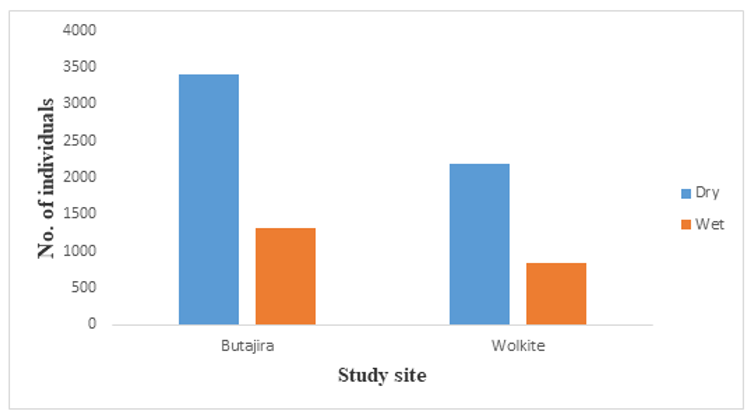
Figure 2 The abundance of hooded Vulture in the wet and dry seasons in the study towns.
During the study period, the abundance of hooded vultures shows statistically significant differences (Z= -28.919, p<0.05) in fasting and non-fasting seasons (Table 2). During the fasting season, 4314 individuals and 3445 individuals were recorded. The highest number of individuals 2952 were recorded during the fasting season near the Abattoir and the least number of individuals 642 were recorded near café and restaurants (Figure 3). Moreover, the abundance of hooded vultures shows statistically significant differences (U=6348.078, df=2, p<0.05) in the sampling sites (Abattoir, waste disposal, café, and restaurants) (Table 2), Near the abattoir 4267, Near to waste disposal 1926, Near to café and restaurant 1566 individuals of hooded vultures were recorded, respectively.
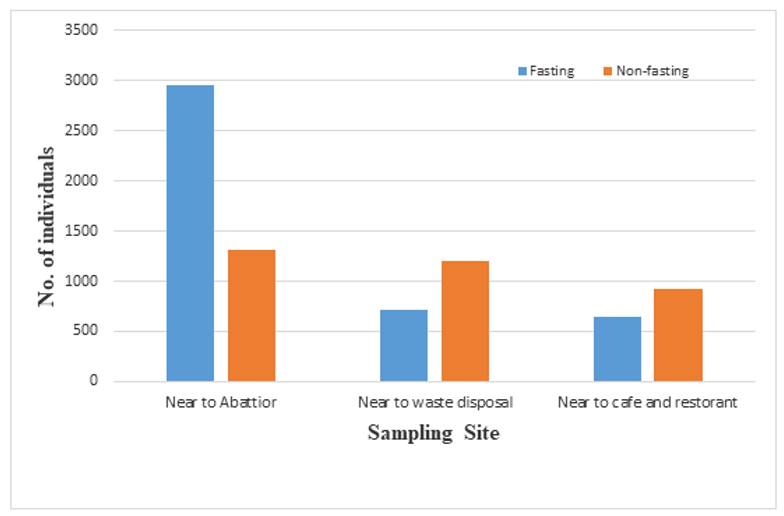
Figure 3 The abundance of hooded vultures during fasting and fasting seasons on sampling sites.
Activity patterns
During this study period, a total of 2896 behavioral scans were recorded during this study period. The behavioral observation was recorded in 1421 in the wet season and 1475 in the dry season. Mostly hooded vultures start their diurnal activities early in the morning (07:00 AM) until sunset (18:00 PM) before they come back to their roosting site. Roosting peaks early in the morning (07:00–5:00 AM) before the group starts other activities and late afternoon (15:00-18:00 PM) during the wet season (Figure 5). Feeding was very rare early in the morning (07:00–08:00 AM) and late afternoon (17:00-18: PM). Feeding was at peak (2:00-5:00 AM) and late afternoon (14:00-15:00 hr PM) during the dry season (Figure 6). However, feeding was at its peak (5:00 AM-14:00 PM) during the wet season (Figure 2). Preening was observed in the morning before starting feeding and after taking food (7:00-2:00 AM) and late afternoon (13:00-14:00 PM) (Figure 5). The most dominant daily activity pattern of hooded vultures was resting (41.4%), followed by foraging (37.1%) and preening (32.3%) (Figure 4).
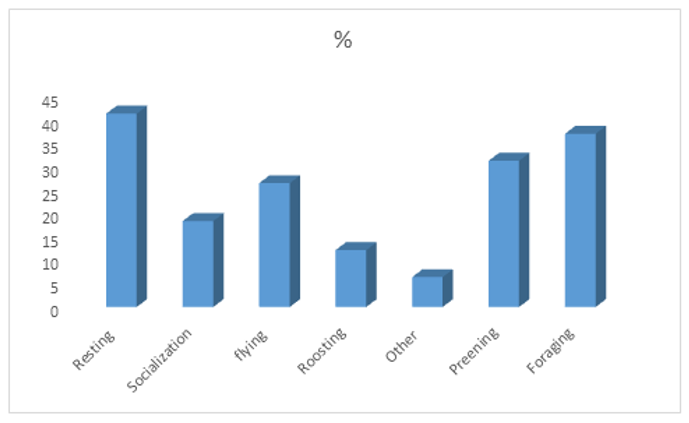
Figure 4 Percentage of time spent in different activities by hooded vulture.
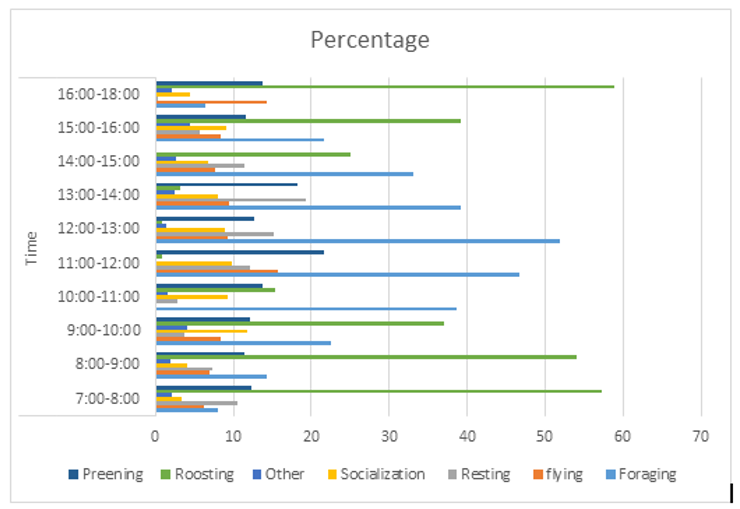
Figure 5 Activity Patterns of hooded vulture during the wet season.
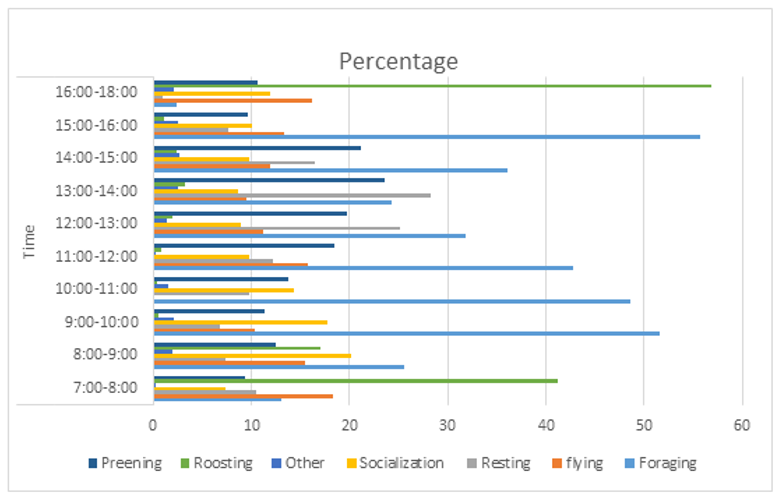
Figure 6 Activity Patterns of hooded vulture during the dry season.
The behavioral activity pattern of hooded vultures shows statistically significant differences (F=4.12, df=1, p=.042) between wet and dry seasons (Table 3). The behavioral activity of hooded vultures also shows statistically significant differences (F=54.34, df=1, p<0.05) in time intervals (7:00 AM to 18:00 PM) (Figure 5).
|
Sum of Squares |
df |
Mean Square |
F |
Sig. |
||
|
Average |
Between Groups |
1302.849 |
1 |
1302.849 |
4.142 |
0.042 |
|
Within Groups |
628788.9 |
1999 |
314.552 |
|||
|
Total |
630091.7 |
2000 |
||||
|
Activities |
Between Groups |
217.305 |
1 |
217.305 |
54.337 |
.000 |
|
Within Groups |
6918.573 |
1730 |
3.999 |
|||
|
Total |
7135.878 |
1731 |
Table 3 One-Way ANOVA statistical test of the activity patterns of hooded vulture in season and between time intervals
Conservation challenges
Demographic characteristics of respondents
The demographic information of respondents from the society who were provided with a structured questionnaire to assess their views towards conservation challenges of hooded vultures in Butajira and Wolkite towns was mentioned in (Table 4). Out of the sampled respondents, the majority 60.9 % were males and 39.3 % were females. The majority 56.5% of the age of respondents were between 18 - 25. Regarding the respondents’ marital status, 60 % were single and the least 3.1 % were divorced. The most 34.2 % of respondent’s education level were degree and above but the lowest 17.3 % of the respondent’s education level were between grade 8 – 10. This indicates that most participants have had an educational background and understand the conservation challenges of hooded vultures in the study area.
|
Demographic variables |
Frequency (N) |
(%) |
|
|
Gender of respondents |
Male |
98 |
60.9 |
|
Female |
63 |
39.1 |
|
|
Age of respondents |
18–25 |
91 |
56.5 |
|
26–35 |
48 |
29.8 |
|
|
36–45 |
17 |
10.6 |
|
|
46–60 & > 60 |
5 |
3.1 |
|
|
Marital status of respondents |
Single |
89 |
60 |
|
Married |
68 |
38.6 |
|
|
Divorced |
4 |
0.7 |
|
|
Educational Level of respondents |
Grade 8–10 |
28 |
17.3 |
|
Grade 11–12 |
37 |
22.9 |
|
|
Diploma |
41 |
25.5 |
|
|
Degree & above |
55 |
34.2 |
|
|
Total |
161 |
100 |
|
Table 4 Description of the demographic background of the respondents
As shown in Table 5, the majority 98.6% of respondents agree on the issue that the destruction of roosting and nesting habitats is the main challenge of hooded vultures in Wolkite and Butajira towns. Feeding poisonous carcasses of dead bodies was the second major challenge that accounted for 91.7% and was followed by a lack of awareness of 83.4%. Moreover, increased food computation and traditional medicine were the fourth and the fifth challenges of hooded vultures in the study areas that accounted for 71.7% and 66.9%, respectively. While the lowest 31.7% of respondents agreed that electric lines were the least challenging of hooded vulture Wolkite and Butajira town.
|
Variables |
Response |
SDA |
DA |
N |
AG |
SAG |
|
Increase computation for food |
F |
8 |
32 |
1 |
55 |
49 |
|
% |
55.5 |
22.1 |
0.7 |
37.9 |
33.8 |
|
|
Traditional medicine |
F |
8 |
32 |
8 |
61 |
36 |
|
% |
5.5 |
22.1 |
5.5 |
42.1 |
24.8 |
|
|
Lack of awareness |
F |
4 |
15 |
5 |
65 |
56 |
|
% |
2.8 |
10.3 |
3.4 |
44.8 |
38.6 |
|
|
Feeding Poisonous carcasses of dead bodies |
F |
1 |
5 |
6 |
73 |
60 |
|
% |
0.7 |
3.4 |
4.1 |
50.3 |
41.4 |
|
|
Electric lines |
F |
32 |
45 |
6 |
28 |
18 |
|
% |
28.2 |
36.3 |
4.1 |
19.3 |
12.1 |
|
|
Destruction of roosting & nesting habitats |
F |
- |
2 |
- |
77 |
66 |
|
% |
- |
1.4 |
- |
53.1 |
45.5 |
Table 5 Respondent’s level of agreement on Conservation Challenges of Hooded Vulture at Wolkite and Butajira Towns
Note: SDA = Strongly Disagree, DA = Disagree, N = Neutral, AG = Agree, SAG = Strongly Agree
Abundance
The abundance of bird species is largely influenced by the spatiotemporal distribution of some environmental factors.22 The significant variation in the abundance of bird species between the dry and wet seasons could be due to climate conditions.23 During this study, the abundance of Necrosyrtes monachus was high in the dry season in both Wolkite and Butajira towns. This might be because the species in the dry season can find their food easily at short range if they are surrounded by them, but in the wet season the amount of garbage thrown around the garbage dump is reduced and they are faced with a shortage of food as it is washed away by the flood, so they spread to other places. In line with this study,24 reported seasonal shifts in ranging behavior, particularly wider ranging of White-backed vultures during the wet than dry seasons. Furthermore,25 reported the seasonal variation in the amount of rainfall and temperature affect the availability of various food items for birds.
On the other side, during the fasting season, the highest number of individuals were recorded near the abattoir and the least number of individuals were recorded near café and restaurants. This is possible because meat slaughtering takes place in the abattoir during the fasting season and they come to the abattoir to get food. Correspondingly,14 investigated the abundance of food in the vicinity of the abattoir increased during the fasting period due to the increased number of slaughtered animals. However, when the fast is over, during the non-fasting period the community traditionally slaughters in every area and throws the leftovers everywhere, so the vultures get food leftovers from garbage dumps, and waste disposal areas instead of abattoirs, and their numbers increase in waste disposal areas and near to cafes/restaurants instead of abattoirs. Similarly,26 investigated that during the non-fasting season, the abundance of hooded vultures near the abattoir was low might be that during holidays people have the traditional culture to slaughter animals around their houses, and leftovers are disposed of everywhere in the city’s sewage channels and garbage dump sites. These leftovers are the source of food for most hooded vultures and hence lowest population was recorded in the abattoir.14 Moreover,27 reported the spatial distribution of food and cover resources to determine the abundance of bird species.
Activity pattern
Studying the activity patterns of birds helps to understand the bird's behavioral and ecological and physiological features.2 Moreover, used to realize life history and ecological adaptation.28 In the present study, the diurnal activities of hooded vultures vary during the wet and dry seasons. Roosting peaks early in the morning (7:00–11:00 AM) and late afternoon (15:00-18:00 PM) during the wet season. In the wet season, the activities of hooded vultures might be affected by weather condition such as rain, fog, and chill. Conversely,29 found that higher relative humidity and rainfall during the wet season limit the activities of birds. Due to this reason, the species spent much time roosting in the nest during the morning until the favorable weather condition is good for feeding, flying, and socialization. Mostly, the other activities foraging, flying, preening, socialization, and resting were observed between 11:00 AM and 14:00. However, higher activity is seen during the morning and late afternoon in the dry season. Supported,30 reported the activities of many avian species are usually decreased at midday because of high temperatures. In both seasons, resting was high during midday and early afternoon (12:00 - 14:00). Similarly,29 investigated that resting was high during midday and late afternoon. This might be because after spending a long time searching for food, socialization, and flying, vultures take rest to regenerate energy, escape from high temperatures, and preen their feathers to make strength and clean. Hooded vultures spend the majority of their time resting before moving for feeding and after feeding, they recreate by cleaning their feathers and preening during rest time. Correspondingly, in this study,15, 26 reported that hooded vultures rested much of their time.
Conservation challenges
Avian scavengers, by feeding on carrion and other organic matter, provide critical ecosystem services.31 However, the species are facing extinction with different threats. One of the various biodiversity habitats in Ethiopia is exposed to habitat loss and degradation.32,33 As per population growth, there is an aggregate use for agriculture explanation and resource consumption that impacts wildlife.34,35 The expansion of agricultural expansion is the most dominant driver for habitat loss, which contributes to the most significant cause of species aggregate in some less disturbed areas.36 Similarly, in the present study, the highest 98.6% of respondents agree that the destruction of roosting and nesting habitats was the main conservation challenge of hooded vultures in the study area. Feeding poisonous carcasses of dead bodies was the second major challenge at Wolkite and Butajira towns, which accounted for 91.7% and was followed by a lack of awareness of 83.4%. In line with4,8,37,38,5 investigated indiscriminate poisoning, traditional medicine, and electrocution, as well as habitat loss and degradation the threats of hooded vultures. As a result of these threats, the species is gradually disappearing from its range and thus the sighting of vultures or their nests is becoming very rare.5 Furthermore, multiple threats related to human activity have caused widespread declines in vulture populations in Africa, especially outside protected areas.24 Additionally, the present study explores the lack of awareness and use of traditional medicine were the fourth and fifth problems. The local communities in the study area do not have enough awareness of the ecosystem value of hooded vultures because they kill the vultures and use them for traditional medicine. In line with this study,36 reported birds are hunted for food and their meat is prized for its flavor and medicinal properties, and they are often caught for sale at local markets. Moreover,4 investigate Africa’s vultures including the hooded vultures are facing a range of specific threats, the most significant of which are trade in traditional medicine and poisoning. In the study area, the effect of electric lines on hooded vultures is very rare depending on the information gathered from the respondents. This might be because, at the study site, there are no high-power electric lines that affect the hooded vultures.
Hooded vulture conservation depends heavily on research into the species' numbers, diurnal activity pattern, and conservation issues. Seasonal fluctuation affected hooded vulture abundance and diurnal activities. The abundance of hooded vultures is determined by the spatial distribution of food and nest availability. Hooded vultures that eat waste products from dumps have good feeding grounds near cafes and restaurants, waste disposal places, and abattoirs. The hooded vulture exhibits a variety of behaviors, including flying, roosting, socializing, foraging, and preening; nevertheless, the majority of the bird's time is spent in repose. The primary conservation issues facing the towns of Wolkite and Butajira are the disappearance of nesting habitat, the feeding of toxic carcasses, ignorance, food rivalry, and the trafficking of traditional medicine. Such challenges have an impact on the number and behavior of hooded vultures. Therefore, rapid conservation action is required to save this species. In addition, a campaign to raise awareness about the ecological significance of hooded vultures and other conservation strategies is required.
The authors desires to thank deeply local communities in Gurage Zone for supporting us by sharing information and encouragement and motivation that helped us to complete my research project work. Last, but not least, we thank Hooded Vulture. They were very passive, which permitted us to more closely observe during the fieldwork.
The authors cover all expenses during the investigation of this research. This research did not receive any specific funding.
Availability of data and materials
The data generated and analyzed during the current study are included in the body of this paper and the data used for this study are available from the corresponding author upon reasonable request.

©2025 Desalegn, et al. This is an open access article distributed under the terms of the, which permits unrestricted use, distribution, and build upon your work non-commercially.