eISSN: 2576-4462


Research Article Volume 9 Issue 4
 Efraín Acosta-Díaz,2 Cynthia Guadalupe Rodríguez-Quibrera,3 Santiago Saavedra-Alonso,4 Karla Ivonne Pérez-Aviña,5 Isidro Humberto Almeyda-León2
1INIFAP-CIRNE-Río Bravo Experimental Station, Km 61 Matamoros – Reynosa Highway. Z.C. 88900, Cd. Río Bravo, Tamaulipas, México
2INIFAP-CIRNE-General Terán Experimental Station, Km 31 Montemorelos-China Highway. Z.C. 67400, General Terán, Nuevo León, México
3INIFAP-CIRNE-Ixtacuaco Experimental Station, Km 4.5 Martínez de la Torre-Tlapacoyan Highway. Z.C. 93600, Javier Rojo Gómez, Tlapacoya, Veracruz, México
4Autonomous University of Nuevo León, Faculty of Biological Sciences, Pedro de Alba Street S/N, University City. Z.C. 66455, San Nicolás de los Garza, Nuevo León, México
5Unidad Académica Multidisciplanaria Reynosa-Aztlán, Reynosa-Aztlán Multidisciplinary Academic Unit, Autonomous University of Tamaulipas, Mexico
Correspondence: Isidro Humberto Almeyda-León, INIFAP-CIRNE-General Terán Experimental Station, Km 31 Montemorelos-China Highway. Z.C. 67400, General Terán, Nuevo León, México, Tel 52-8110778421
Received: September 22, 2025 | Published: October 6, 2025
Citation: Alvarez-Ojeda MG, Acosta-Díazz E, Rodríguez-Quibrera CG, et al. Detection and molecular characterization of Candidatus liberibacter spp. in sour orange of the municipality of Río Bravo, Tamaulipas. Horticult Int J. 2025;9(3):159-162. DOI: 10.15406/hij.2025.09.00339
The disease known as yellow dragon of citrus or Huanglongbing is considered the most destructive disease affecting citrus trees. There are three known species of bacteria considered to be the causative agent of Huanglongbing: Candidatus Liberibacter asiaticus, Candidatus Liberibacter americanus, and Candidatus Liberibacter africanus. The objective of this work was to detect, characterize, and determine the possible variants of the bacterium Candidatus Liberibacter spp. in sour orange plants in the municipality of Río Bravo, Tamaulipas, Mexico. Seventeen sour orange trees with symptoms of Huanglongbing infection were analyzed; the detection of the bacterium was carried out using the end-point PCR technique, and the amplified fragments were sequenced for their phylogenetic analysis. The presence of the bacteria was confirmed in three of the total trees sampled, and by analyzing the sequences obtained, it was confirmed that the bacterium associated with Huanglongbing in the municipality of Río Bravo, Tamaulipas is Candidatus Liberibacter asiaticus. On the other hand, based on the comparison of the three sequences generated in this study, it was established that the populations of the bacteria in the municipality of Río Bravo, Tamaulipas belong to the haplotype H34Y, since it has a 99.0% homology with the sequence reported for this haplotype of the bacterial in the NCBI Gene Bank. With these results, we can establish that the pathogen associated with the presence of HLB in citrus in the municipality of Río Bravo is the bacterium Candidatus Liberibacter asiaticus, and there is no significant genetic differentiation that allows us to define the presence of variants of this pathogen in the study region.
Keywords: citrus, HLB, CaLas, identification
In Mexico, citrus farming is one of the most important economic activities for national fruit growing, with a production of 8.8 million tons and an economic impact of 47.499 billion pesos per year.1 However, production is affected by pests and diseases, notably Huanglongbing (HLB), or "yellow dragon" or citrus greening, which is considered the most lethal disease affecting citrus fruits.2 Its economic impact worldwide is incalculable, and reports on the economic and social effects are estimates made using models, with very few approximations to a real diagnosis in important citrus-growing areas, especially in Mexico. The effects of HLB on trees are related to a reduction in fruit yield and quality, as well as the eventual death of diseased trees. The economic impact of this disease in Mexico has been little studied, and local associations have made estimates of the potential impact. In Veracruz, a reduction in production of approximately 30% is estimated due to the effect of the disease; however, a rigorous study is required to confirm its real impact on citrus production in this state.3 HLB has become endemic in Mexican lemon and Persian lemon producing areas in the states of Colima, Michoacán, Jalisco, and Nayarit, where it has had a significant economic and social impact.4 In Colima alone, from 2010 to 2012, there was an estimated drop in demand for field and harvest labor of 2,435 full-time jobs.5 It is considered the most serious threat to Mexican lemon cultivation [Citrus aurantifolia (Christm) Swingle]; in Colima, Mexico, it was detected in April 2010 and quickly spread throughout all producing areas, causing heavy production losses.4
HLB is caused by an uncultivable bacterium of the genus Candidatus Liberibacter,6 which inhabits the phloem of plants, retards their growth, and causes incomplete coloring of ripe fruit.7 Three species of the bacterium that causes this disease are recognized: Candidatus Liberibacter asiaticus (CaLas), Candidatus Liberibacter africanus (CaLaf), and Candidatus Liberibacter americanus (CaLam).8 These bacteria are introduced by a vector into the phloem of the host plant, and as they move through the vascular system, they contaminate it entirely, eventually causing its death 2 to 3 years after the first symptoms are observed.4 In Mexico, the epidemiological scenarios of HLB have been categorized into two regions based on the occurrence and intensity of the disease: the Pacific region (high intensity) and the Yucatan Peninsula region (low intensity).9
Various studies have been conducted worldwide on the genetic diversity of Candidatus Liberibacter asiaticus, showing an association between genetic variability and the virulence of the bacterium and its ability to infest different citrus varieties, which has indicated the bacterium's adaptability to different environmental conditions. In this regard, the diversity of climatic conditions in Mexico and the variability in the development of symptoms and effects suggest a possible genetic diversity of the bacterium.3 Advances in molecular biology have led to the design of new techniques for identifying bacteria and have made it possible to establish phylogenetic relationships, mainly using the amplification and sequencing of ribosomal genes. Ribosomal RNA (rRNA) 16S is the macromolecule widely used in bacterial phylogeny and taxonomy studies. Its application as a molecular clock was proposed by Carl Woese (University of Illinois) in the early 1970s. In microbiology, molecular identification based on 16S rRNA is used primarily for bacteria whose identification by other techniques is impossible, difficult, or time-consuming.10
Currently, the complete genome of Candidatus Liberibacter asiaticus (CaLas) has been sequenced from both plant tissue and the infected insect vector, D. citri,11,12 which has allowed the identification of short tandem repeats (STRs). STRs, also known as microsatellites, consist of repetitive nucleotide sequences in a DNA sequence fragment with a length of two to six or more base pairs (bp). Microsatellites are considered molecular markers for studies of evolutionary relationships, genetic mapping, and population genetics.13 They are widely used to track the possible introduction of CaLas strains from one country to another,14 understand the effect of CaLas on plants,15 insect vector,16 evolution, and to address the intrinsic diversity of the pathogen. In addition, genomic studies with reference strains can help identify the predominant or rare genotype at a given time or in a given region.12 Matos et al.15 used four STR markers based on TRNs, including the genomic locus CLIBASIA_01645 (AGACACA), the adenosine deaminase locus (TACAGAA), and two non-coding bacterial loci (CAGT and TTTG), to analyze the variation of CaLas strains in populations of Florida, Mexico, several Central American countries, and Caribbean region. Their results demonstrated the presence of two haplotypes (HA and HB) in Florida. Interestingly, these haplotypes were found in countries of Central America, Caribbean region, and Mexico; however, they were different from those obtained in samples from South Asia and Brazil. The objective of this study was to detect and molecularly characterize the bacterium Candidatus Liberibacter spp., as well as to determine its possible variants in sour orange trees collected in the municipality of Río Bravo, Tamaulipas (Northern Mexico).
This research was conducted at the Biotechnology Laboratory of the Rio Bravo Experimental Field, Tamaulipas, km 61 Matamoros-Reynosa Highway, C.P. 88900, in the city of Rio Bravo, located at coordinates 25° 57´ north latitude and 98° 01´ west longitude, at an average altitude of 20 meters above sea level.
Vegetative material
Samples were collected at three locations in the municipality of Río Bravo, Tamaulipas, Mexico: Brecha 18, Las Palomas ranch, km 61, Río Bravo Experimental Field, and La Feria ranch. The main criterion for selecting the trees to sample was the symptoms observed on the leaves (chlorotic shoots, diffuse asymmetrical mottling, and thickening of the central vein). In some cases, the asymmetry of the fruit was also considered. In total, samples were collected from 17 sour orange trees (Citrus aurantium L.). The samples were placed in envelopes clearly labeled with the tree number, citrus species, and sampling date, and stored in a cooler for transport to the Biotechnology Laboratory at the Rio Bravo Experimental Field for processing and analysis.
DNA extraction
DNA extraction from the collected samples was performed in duplicate using the methodology reported by Almeyda et al.17 The samples were processed as follows. Two hundred and fifty milligrams central leaf veins were weighed and macerated in a mortar with liquid nitrogen. The pulverized samples were transferred to sterile 1.5 ml eppendorf tubes containing 750 µl of CTAB/2-ME extraction solution preheated to 65 °C (CTAB 2% w/v, Tris – HCl pH 8.0 100 mM, EDTA pH 8.0 20 mM, NaCl 1.4 M, polyvinylpyrrolidone 40,000 1% w/v, 2-Mercaptoethanol 0.2%) and incubated for 45 minutes at 65 °C. A volume (considering the volume of the recovered sample) of chloroform-isoamyl alcohol 24:1 was then added and centrifuged at 10,000 rpm for 10 min at room temperature. The aqueous phase (upper part) was recovered and 1 volume of chloroform-isoamyl alcohol 24:1 was added and centrifuged at 10,000 rpm for 10 min at room temperature. The aqueous phase was recovered and 0.5 volumes of ammonium acetate (7.5 M) were added, leaving it on ice for 10 min and centrifuging for 10 min at 14,000 rpm at room temperature. To precipitate the DNA, 0.6 volumes of isopropanol were added to the recovered volume and left to precipitate for 30 min at room temperature. It was then centrifuged at 10,000 rpm for 20 minutes and the supernatant was removed. The precipitate was washed twice with cold 70% ethanol (centrifuging at 10,000 rpm for 15 min). The precipitate was dried at room temperature and resuspended in 100 µL of sterile ultrapure water (100 ng/μl) and stored at 4 °C until use. To establish the quality of the extracted DNA, electrophoresis was performed using 0.8% BIOLINE molecular biology grade agarose, and quantification was performed in a microphotospectrophotometer - nanodrop (Genova Nano).
Polymerase chain reaction (PCR)
The Endpoint Polymerase Chain Reaction technique was used to detect the bacterium Candidatus Liberibacter spp. The reactions were set up in a final volume of 25 μl containing: Oligonucleotides Oi1 and Oi2c (25 pmoles per oligonucleotide), PCR buffer (1X), dNTPs (2.5 mM), MgCl2 (2.0 mM), MyTaq™ DNA polymerase (1 U), and DNA (200 ng). The final reaction volume was adjusted to 25 μl with sterile, nuclease-free ultrapure water. The amplification reactions were carried out in a thermocycler (BioRad Thermal Cycler). The amplification program used is shown in Table 1.
|
Phase |
Temperature |
Time |
Cycles |
|
Initial denaturation |
95 °C |
5:00 min |
1 |
|
Denaturation |
94 °C |
0:30 sec |
35 |
|
Alignment |
62 °C |
0:30 sec |
|
|
Extension |
72 °C |
1:00 min |
|
|
Final extension |
72 °C |
10:00 min |
1 |
|
|
4 °C |
∞ |
|
Table 1 Cycles of the amplification program
The fragments amplified in the PCRs were fractionated in 1.5% agarose gels for one hour and thirty minutes at 100 V. The gels were stained with GelRed® dye and analyzed in an ultraviolet transilluminator.
DNA purification
The extraction and purification of the amplified fragments, approximately 1160 bp in size, was performed using the PureLinkTMQuick Gel Extraction Kit (Invitrogen) according to the manufacturer's instructions.
Sequencing of the 16S rDNA ribosomal gene
Forward and reverse sequencing of the amplified fragments was performed at the National Laboratory of Agricultural, Medical, and Environmental Biotechnology of the Potosino Institute of Scientific and Technological Research (IPICyT).
Sequence analysis and alignment
The sequences obtained were analyzed and compared with different sequences of Candidatus Liberibacter spp. reported in the National Center for Biotechnology Information (NCBI) Gene Bank. The sequences generated were divided into two groups (sense and antisense): the first group consisted of low molecular weight sequences (100 bp), and the second group consisted of sequences that were 950 bp long, corresponding to the antisense. For the editing, which consisted of removing 10 bases from the ends of the sequence to achieve better alignment, the CLC Main Workbench 7 program was used. The sequences were then analyzed and compared with 25 nucleotide sequences of CLas reported in the Gene Bank database using the Blast program. Based on this analysis, the haplotype to which the bacterium associated with Huanglongbing in sour orange trees in the study region belongs was determined.
The bacterium Candidatus Liberibacter spp. was detected in three samples of sour orange. A fragment with an approximate molecular weight of 1160 bp was amplified, which is the expected size according to the pair of primers used and corresponds to a fragment of the gene that codes for the 16S ribosomal RNA of the bacterium. This demonstrates the presence of the bacterium Candidatus Liberibacter spp. in the municipality of Río Bravo, Tamaulipas (Figure 1).
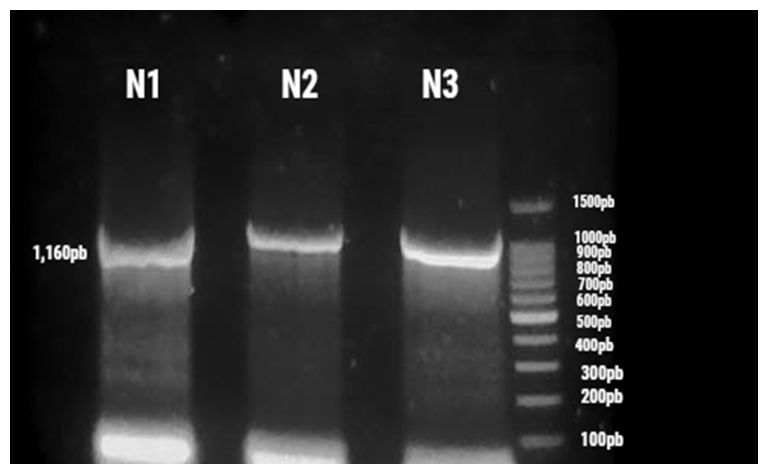
Figure 1 Amplification of fragments of the gene encoding the 16S ribosomal RNA of Candidatus Liberibacter spp. in different samples of sour orange (Citrus aurantium L.). Lanes N1-N2: Sour orange collected at the Río Bravo Experimental Field, Lane N3: Sour orange collected at Las Palomas ranch.
Furthermore, the sequences generated in this study show a similarity percentage greater than 98% with a CaLas sequence reported in the Gene Bank with accession number JQ867427.1 (Table 2).
|
Sample |
Oligonucleotide |
Base pairs |
% homology |
Gene Bank Access Number |
|
Orange 1A |
Oi1 and Oi2c |
1,140 |
99.02 |
|
|
Orange 2A |
Oi1 and Oi2c |
1,142 |
98.94 |
|
|
Orange 3A |
Oi1 and Oi2c |
1,147 |
99.11 |
Table 2 Percentage of homology between sequences obtained from sour orange samples collected in the municipality of Río Bravo, Tamaulipas, and a sequence reported in the Gene Bank
When comparing the sequences obtained in this study, it was confirmed that there is 100% similarity between them (Figure 2). Similarly, when analyzing the antisense sequences, it was found that they match those reported in the Gene Bank.
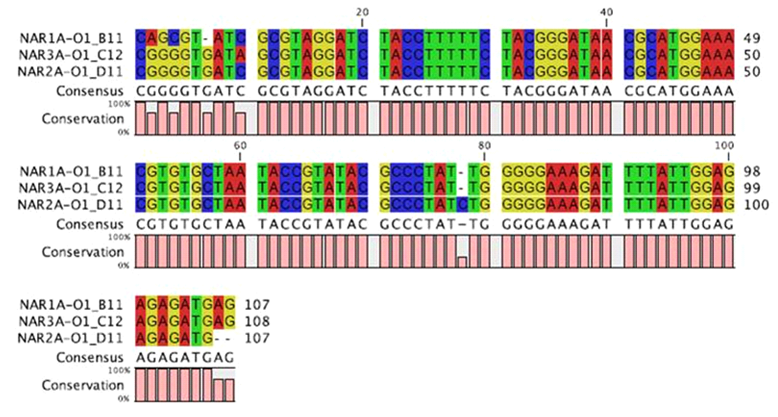
Figure 2 CaLas sequences obtained in this study, aligned with the Clustal X program, showing 100% similarity between them.
Based on the generated dendrogram (Figure 3), it was determined that the sequences obtained in this study (1, 4, and 6) are very similar to the CaLas sequence registered in the Gene Bank with accession number KX990288.1, and are grouped in the same node. The divergence in nucleotide sequences between copies of the 16S ribosomal genes of most bacteria is less than 1.0%, although in extreme cases it can be greater than 11.6%.18,19 In this study, analysis of the amplified fragment of approximately 1160 bp, corresponding to a region of the gene that codes for 16S ribosomal RNA, allowed two groups to be separated: the first consisting of sequences of approximately 100 bases and the second consisting of 950 bp. Comparison of the sequences obtained confirmed that the bacterium present in the sour orange tree collected in the municipality of Río Bravo, Tamaulipas, corresponds to Candidatus Liberibacter asiaticus, as it was corroborated that the three sequences generated have a 99.0% similarity with the sequences reported in the NCBI database for CaLas (KX990288.1), and are located in the same node according to the generated dendrogram (Figure 3).

Figure 3 Dendrogram generated from the comparison of the CaLas sequences generated in this study and some reported in the Gene Bank.
Furthermore, this study did not detect significant genetic variability in CaLas bacteria according to the sequences generated and analyzed. Similar results were obtained by Manzo et al.,20 who analyzed 100 samples from central Mexico using the SSR technique, demonstrating that locus 077 amplified four alleles, while locus 005 amplified three alleles and the rest of the loci amplified only one allele per locus, demonstrating that there is little genetic variability among CaLas species in our country, likely due to the recent presence of HLB in Mexico. When comparing the sequence generated in this study with the Gene Bank database, it was determined that there is a match with the sequence identified under the FASTA access number JQ867427.1. This match confirmed that the CaLas population infecting sour orange trees in the municipality of Río Bravo, Tamaulipas, Mexico, belongs to haplotype H34Y and is different from the haplotypes (HA, HB, and HC) reported by Ahumada et al.21 in 2022 in CaLas subpopulations detected in the western regions (Colima, Jalisco, Michoacán, and Nayarit), northwest (Sinaloa and Baja California Sur), central (State of Mexico and Morelos), and southeast (Oaxaca, Veracruz, Yucatán, and Quintana Roo) regions of Mexico. This difference in haplotypes may be determined by the origin of the bacteria, the time of arrival in the region, the variety of citrus colonized, and the prevailing climatic conditions in the study area.
The bacterium Candidatus Liberibacter asiaticus is the species associated with Huanglongbing, a disease that is affecting citrus trees in the municipality of Río Bravo, Tamaulipas, Mexico, and it was established that, currently, there is no genetic variability of this pathogen in the study region
None.
The authors have no conflicts of interest to declare.

©2025 Alvarez-Ojeda, et al. This is an open access article distributed under the terms of the, which permits unrestricted use, distribution, and build upon your work non-commercially.