Advances in
eISSN: 2377-4290


Mini Review Volume 16 Issue 2
 Carolina Valente,3 Gustavo Gameiro,4 Carlo Miguel Galang,1 Jose Lutzky2
1University of Miami Miller School of Medicine, Bascom Palmer Eye Institute, Miami, FL, USA
2Sylvester Comprehensive Cancer Center, University of Miami, Miami, FL, USA
3Instituto Suel Abujamra, São Paulo, SP, Brazil
4Department of Ophthalmology, Renaissance School of Medicine, Stony Brook University, Stony Brook, NY, USA
Correspondence: Zelia M Correa, MD, PhD, Bascom Palmer Eye Institute, 900 NW 17th St, suite 261, Miami, FL, USA
Received: July 20, 2026 | Published: August 5, 2026
Citation: Correa ZM, Valente C, Gameiro G, et al. The current management of conjunctival melanoma. Adv Ophthalmol Vis Syst. 2026;16(2):50-53. DOI: 10.15406/aovs.2026.16.00509
Conjunctival melanoma (CM) is a rare but potentially aggressive ocular surface malignancy. CM may carry mutations in genes like BRAF or NRAS as cutaneous melanomas but are unique because, although UV exposure is not thought to be the primary cause, UV exposure may contribute in some cases where the conjunctiva is exposed to sunlight. This manuscript reviews the current management of conjunctival melanoma from surgery to sentinel lymph node biopsy, checkpoint inhibitors, and impact of certain genetic in the future management of CM.
Keywords: conjunctival melanoma, surgical resection, topical chemotherapy, checkpoint inhibitors, BRAF, NRAS
Conjunctival melanoma is a rare but potentially aggressive ocular surface malignancy, accounting for approximately 2–5% of all ocular melanomas.1 Despite its rarity, the disease is associated with significant risks of local recurrence, regional lymph node metastasis, and melanoma-related mortality. Early diagnosis and meticulous surgical management are therefore critical for improving clinical outcomes.2,3
The description of conjunctival melanoma as a mucosal melanoma refers to where the melanoma arises, not that it behaves exactly like every other melanoma. It is biologically unique and often referred to as a “hybrid” because it shares characteristics with both mucosal and skin melanomas. It may display features such as mutations in genes like BRAF or NRAS as cutaneous melanomas but it is unique because UV exposure is not thought to be the primary cause and UV exposure may contribute in some cases where the conjunctiva is exposed to sunlight.4 This distinction can impact prognosis, genetic testing, and treatment decisions. Conjunctival melanoma tends to recur locally and can spread to nearby lymph nodes and distant organs. Its pattern of spread and prognosis differ somewhat from skin melanoma.5
Overview of management
Surgery remains the main treatment for conjunctival melanoma. It has the primary objective of complete excision while minimizing the risk of tumor dissemination.6 The current standard is the "no-touch" surgical excision technique, originally described by Shields et al., in which the lesion is excised without direct manipulation of the tumor tissue. Wide excision with 2–4 mm margins of clinically uninvolved conjunctiva is recommended whenever anatomically feasible. If the lesion appears adherent to the sclera or superficial scleral invasion is suspected, other eye-sparing options can be adopted. More extensive procedures, including orbital exenteration, are reserved for advanced tumors with orbital invasion and are now less frequently indicated because the demonstrated lack of improved survival and the improvement of eye-sparing treatment strategies.7–9
Complete surgical excision is frequently combined with adjuvant therapies to reduce the risk of local recurrence. Double freeze–thaw cryotherapy is routinely applied to the conjunctival margins following excision to destroy residual microscopic tumor cells. In patients with diffuse disease or conjunctival melanoma arising from primary acquired melanosis (PAM) with atypia, adjuvant topical chemotherapy may be used, although it is not considered adequate as monotherapy for invasive melanoma. Plaque brachytherapy, proton beam radiotherapy, or external beam radiotherapy may be considered in patients with positive surgical margins, scleral involvement, or recurrent disease.3,10,11
Conjunctival melanoma management can be guided by tumor thickness (Breslow depth), local invasiveness (AJCC T-stage), and margin status rather than a traditional histologic "grade". Higher T-stages and thicker lesions dictate wider surgical margins and aggressive multi-modal adjuvant therapies to prevent recurrence and metastasis.8
Influence on surgical management
Despite advances in surgical techniques and adjuvant therapies, local recurrence remains a major challenge that closely relates with tumor characteristics, treatment modality, and duration of follow-up. Important predictors of recurrence include positive surgical margins, non-limbal location, increased tumor thickness, multifocal disease, and association with extensive PAM. Recurrent tumors are associated with an increased risk of metastatic spread and poorer survival outcomes.1,8
Regional lymph node metastasis occurs in approximately 15–30% of patients during follow-up. Consequently, sentinel lymph node biopsy (SLNB) became an important staging procedure in patients with T3 and T4 tumors and other high-risk features, including tumor thickness over 2 mm, non-limbal location, and ulceration. Although SLNB has demonstrated utility in detecting occult nodal metastases, its impact on overall survival is yet to be determined.13,14
Recent advances emphasize a multidisciplinary treatment approach for the management of conjunctival melanoma. In patients with metastatic disease, immune checkpoint inhibitors targeting programmed cell death protein 1 (PD-1) and cytotoxic T-lymphocyte-associated protein 4 (CTLA-4) have demonstrated encouraging results, mirroring advances in cutaneous melanoma.15 Nevertheless, surgery combined with appropriate local adjuvant therapy continues to represent the foundation of management for localized conjunctival melanoma.3,12,16
Surgical and medical management of conjunctival melanoma are complementary rather than competing approaches. The following table described how these 2 approaches compare.
Surgery
Eye-sparing surgery has largely replaced more radical procedures such as orbital exenteration, which is now reserved for extensive orbital invasion when checkpoint inhibitors fail.15,17 When combined with appropriate adjuvant therapies, surgery achieves excellent local control while preserving vision in most patients. The advantages and disadvantages of surgical resection are listed in Table 1.7–9
|
Management |
Surgical |
Medical |
|
Purpose |
First-line treatment for localized tumors |
Adjuvant treatment or therapy for unrespectable, recurrent, or metastatic disease |
|
Main Goal |
Complete tumor removal with clear margins |
Eliminate microscopic disease, reduce recurrence, or control systemic disease |
|
Indications |
Localized conjunctival melanoma |
Residual disease, diffuse lesions, recurrence, metastatic disease |
|
Advantages |
Immediate tumor removal, histopathological diagnosis, accurate staging |
Preserves ocular tissue, treats microscopic disease, manages disseminated disease |
|
Limitations |
Risk of recurrence (20–50%), ocular surface scarring, limbal stem cell deficiency, positive margins |
Limited efficacy as monotherapy for invasive tumors, local toxicity, immune-related adverse effects |
Table 1 Comparing surgical versus medical management for conjunctival melanomas
Medical management
Medical therapy provides adjuvant alternatives for unresectable, recurrent, or metastatic disease. It includes three principal categories, topical chemotherapy, radiotherapy, and systemic therapy.
Topical chemotherapy (adjuvant)
Topical mitomycin C (MMC) is the most widely used agent, particularly for primary acquired melanosis (PAM) with atypia, multifocal disease, and residual intraepithelial melanoma after surgery.3,17–20
MMC is generally not recommended as sole therapy for invasive conjunctival melanoma because it penetrates poorly into deeper tissues and has known corneal and ocular surface toxicity.17
Other topical agents such as interferon α-2b and 5-fluorouracil have been widely used and investigated. Interferon α-2b is well tolerated and reportedly achieved 87.5% remission across primary and adjuvant application.19,21 Although 5-fluoracil has been reportedly used for conjunctival melanocytic lesions, there is substantially less evidence supporting their use in melanoma compared with ocular surface squamous neoplasia.3,20
Radiotherapy
As mentioned, adjuvant radiotherapy options include plaque brachytherapy for localized invasive disease, proton beam radiation, and external beam radiotherapy.3,11
Usually, radiotherapy is typically reserved for positive surgical margins, scleral invasion, recurrent disease, and for patients unsuitable for repeat surgery due to severe ocular sequelae.
While radiotherapy may improve local control, there are potential complications that include cataract formation, dry eye, scleral thinning, and/or radiation keratopathy.11
Systemic therapy
Although only patients with metastatic conjunctival melanoma historically would get systemic therapy, there is an increasingly interest in introducing systemic therapies similar for those with unresectable disease like what is used for cutaneous melanoma.12,14
Immune checkpoint inhibitors used to treat conjunctival melanoma include PD-1 inhibitors (e.g., pembrolizumab, nivolumab) and CTLA-4 inhibitor (ipilimumab).22 In addition, targeted therapy with BRAF and MEK inhibitors may be considered in patients whose tumors harbor BRAF V600 mutations, which are found in approximately 20–50% of conjunctival melanomas. The impact of genetics in the management of these tumors is subsequently discussed. Although evidence is based mainly on small series and case reports, immunotherapy has produced durable responses in some patients with metastatic disease.12,22
Which approach is better?
The consensus is that neither one of these modalities alone is sufficient for many patients.5 Figure 1 depicts the current step-wise approach for conjunctival melanoma. While surgery remains the treatment choice for localized disease, when combined with topical chemotherapy and/or cryotherapy, it provides improved local control for diffuse and multifocal disease.6,21 Adjuvant radiotherapy is often beneficial for cases with positive margins or recurrent disease.10,11 Systemic immunotherapy is now used as first-line treatment. Overall, targeted therapy is used for tumors with actionable mutations in patients with metastatic disease.12 This shift reflects a move from surgery alone to multimodal management, where each treatment addresses different aspects of the disease.
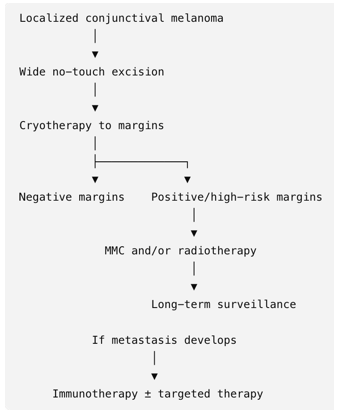
Figure 1 Current treatment paradigm for conjunctival melanomas.
Impact of genetics in the management of conjunctival melanoma
Genetics may be used to directly guide the treatment of conjunctival melanoma by identifying specific driver mutations like BRAF, NRAS, and NF1, which dictate the use of targeted therapy, immunotherapy, and prognostic surveillance.23 It is important to point out that genetic studies require tumor tissue. Before doing surgery, it is important to check how this tissue can be tested: fresh versus paraffin embedded histopathology block.
Tumors carrying a BRAF V600E mutation can be treated with specific molecular inhibitors.24,25 Lodde et al. stated that targeted therapy should be considered in BRAF mutated conjunctival melanoma.25 Combined BRAF and MEK inhibitors are sometimes used to shrink large, locally advanced tumors before surgery with positive results. In addition, alterations in signaling pathways like RAS and PI3K/AKT/mTOR influence tumor growth and point toward experimental or multi-drug approaches when standard local excision is insufficient.23
Immunotherapy options can be chosen based on tumor mutational burden. Because conjunctival melanoma often shares mutation patterns with cutaneous melanoma and features a high tumor mutational burden, medications targeting PD-1 and CTLA-4 help manage recurrence and metastatic spread.12
Certain genetic abnormalities (like TERT promoter mutations) signal a higher risk profile and poorer prognosis.26 Identifying these shifts helps physicians to decide whether to schedule more frequent, aggressive follow-ups for surveillance testing or lymph node assessments.
Modern management of conjunctival melanoma relies on multi-therapy and interdisciplinary strategies. Surgical excision offers the greatest chance of cure for localized tumors, whereas topical chemotherapy, radiotherapy, and systemic immunotherapy have expanded treatment options for recurrent, high-risk, and metastatic disease. This combined approach has improved eye preservation, reduced recurrence, and enhanced survival compared with surgery alone, although long-term follow-up remains essential because recurrence and metastasis can occur years after initial treatment.
None.
The authors declare no conflicts of interests and no funding was used for this work.
None.

©2026 Correa, et al. This is an open access article distributed under the terms of the, which permits unrestricted use, distribution, and build upon your work non-commercially.