Journal of
eISSN: 2378-3184


Review Article Volume 14 Issue 3
1Division of Post-Harvest Technology, Faculty of Fisheries, Shere-Kashmir University of Agricultural Sciences and Technology of Kashmir, Srinagar-190025, India
2Department of Animal and Aquacultural Sciences, Faculty of Biosciences, Norwegian University of Life Sciences, Ås- 1432, Akershus, Norway
Correspondence: Khandakar Zakir Hossain, Division of Post-Harvest Technology, Faculty of Fisheries, Sher-e-Kashmir University of Agricultural Sciences and Technology of Kashmir, Srinagar- 90025, India
Received: October 08, 2025 | Published: November 4, 2025
Citation: Hossain KZ. Infectious threats to salmon aquaculture: epidemiological insights, pathological impacts, and management measures. J Aquac Mar Biol. 2025;14(3):150-168. DOI: 10.15406/jamb.2025.14.00428
Global seafood security relies heavily on salmon aquaculture, a sector valued at over USD 20 billion annually, yet it faces mounting threats from infectious diseases that cause direct and indirect losses estimated at USD 1.5–2 billion each year. Bacterial pathogens such as Yersinia ruckeri (enteric redmouth disease), Aeromonas salmonicida (furunculosis), and Renibacterium salmoninarum (bacterial kidney disease) are responsible for high cumulative mortalities, with outbreaks reducing regional stock biomass by up to 30%. Viral agents, including infectious salmon anemia virus (ISAV), infectious pancreatic necrosis virus (IPNV), and piscine orthoreovirus (PRV), continue to drive trade restrictions and large-scale culling, while parasitic infestations by Lepeophtheirus salmonis (sea lice) alone incur treatment and production costs of USD 400–600 million annually. Emerging fungal pathogens, particularly Saprolegnia spp., exacerbate mortality during freshwater smoltification. Climate change, fluctuating salinity regimes, and intensive farming systems foster complex host–pathogen–environment interactions that enhance pathogen persistence, proliferation, and evolution. Despite advances in integrated pest management, vaccination, and antimicrobial stewardship, persistent challenges include antibiotic resistance, vaccine escape variants, and limited treatment options. Key research gaps involve insufficient integration of epidemiological forecasting with climate models, incomplete knowledge of pathogen life cycles and reservoirs, and limited understanding of host immune modulation. Future priorities should focus on next-generation vaccines, selective breeding for disease resistance, adoption of closed or semi-closed containment systems to reduce pathogen exchange with wild stocks, and multi-omics surveillance for early detection. Interdisciplinary research and ecosystem-based policy frameworks are critical to sustaining profitability, improving fish health, and maintaining ecological balance in salmon-producing regions.
Keywords: Disease management strategies; ecosystem based aquaculture; infectious diseases, pathogenesis; salmon aquaculture.
Aquaculture is now the fastest-growing sector of global animal food production, surpassing traditional capture fisheries. Indeed, in 2022, aquaculture accounted for nearly 51% of global aquatic animal output, underlining its critical role in meeting rising seafood demand.1 Salmonids (family Salmonidae) are extremely essential in aquaculture for both economic and nutritional purposes. This group comprises Atlantic Salmon Salmo salar, Pacific salmon species such as Chinook Salmon Oncorhynchus tshawytscha, Coho Salmon O. kisutch, and Rainbow Trout O. mykiss, all of which are commonly cultivated in temperate and higher latitude zones (Figure 1). Farmed Atlantic salmon production reached 2.8 million tonnes in 2023, with Norway, Chile, Scotland, and Canada accounting for more than 90% of global output.1 Rainbow trout yields are currently around 950,000 tonnes per year, with developing markets such as Australia, New Zealand, and Iceland increasing production even further.2 Salmonids' market dominance stems from their efficient feed conversion, rapid development, and nutrient-rich flesh—particularly high levels of long-chain omega-3 fatty acids—which make them essential components of the global fish business.
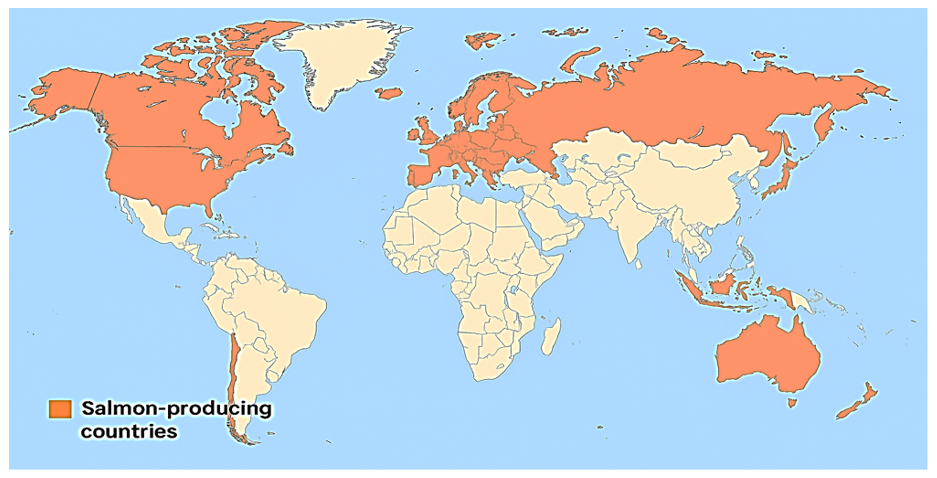
Figure 1 Salmon producing countries in world.
However, the fast expansion of salmonid aquaculture, supported by advances in selective breeding, superior diets, and technological innovation, has hastened the emergence and spread of a variety of diseases. Farmed salmonids are exposed to a wide range of pathogens throughout their lifespan, including bacterial, viral, fungal, and parasitic infections, as well as non-infectious issues like nutritional deficiencies and environmental stress-related disorders. These conditions are caused by a complex combination of host genetics, pathogen virulence, and agricultural stresses such as temperature swings, salinity fluctuations, dissolved oxygen oscillations, and high stocking densities.3 Climate change exacerbates the problem by creating new ecological niches for illnesses and disrupting current disease patterns.
The economic burden of disease in salmonid aquaculture is staggering. Direct losses, such as mortality, slower growth, and lower carcass quality, are amplified by indirect costs associated with extended grow-out periods, increased veterinary treatments, and market interruptions. In Norway, the world's largest salmon producer, disease-related losses exceed USD 2 billion per year, with sea lice control alone accounting for over USD 700 million per year.4 Viral infections such as infectious salmon anaemia (ISA) and pancreas disease (PD) have traditionally resulted in large-scale culling and farm fallowing, whilst bacterial pathogens such as Piscirickettsia salmonis and Aeromonas salmonicida remain a hazard in high-density production regions.5 These findings emphasize the critical necessity for comprehensive disease management strategies.
Vaccines, selective breeding, stringent biosecurity measures, and chemotherapeutic treatments have all contributed to great progress. These procedures have significantly reduced the spread of diseases such as furunculosis and vibriosis.6 However, the struggle is far from over: antibiotic resistance, vaccine escape variants, and treatment-resistant parasite strains are all on the rise. Parasitic infections, particularly sea lice and amoebic gill disease (AGD), are notoriously difficult to control because they spread quickly in open-net pen systems and acquire treatment resistance.7 Furthermore, many high-impact viruses, such as piscine orthoreovirus (PRV) and infectious haematopoietic necrosis virus (IHNV), have no effective vaccines,8 indicating major gaps in our disease-control arsenal.
Climate change and worldwide fish commerce are further complicating salmonid health landscapes. Rising sea temperatures and changing salinity regimes encourage pathogen survival and dissemination, increasing infection risk in both farmed and wild populations.5 Cross-border movement of live fish and eggs raises the danger of pathogen spread, affecting regional biosecurity and disease control efforts.9
Despite substantial research and surveillance efforts, our understanding of salmonid disorders is still limited. The understanding of subclinical and chronic infections, mucosal immune responses, microbiome-pathogen interactions, and genetic disease resistance remains fragmented. Simultaneously, there is an urgent need for the development of cost-effective immunizations, precision medicines, and farm-level biosecurity frameworks that are in line with evolving regulatory, sustainability, and animal welfare requirements.
In this context, this review offers a critical synthesis of current information on microbiological (bacterial, viral, and fungal) and parasite diseases that endanger both farmed and wild salmonids. Their epidemiology, clinical symptoms, and pathophysiology are all thoroughly reviewed, as well as the available preventive and control strategies, including immunizations, medications, and biosecurity measures. The major purpose of this analysis is to enhance aquaculture sustainability and evidence-based fish health management by gathering key information, emphasizing recurring issues, and directing future research and policy initiatives. By embracing these perspectives, the study hopes to aid in the development of resilient, environmentally responsible salmon production methods that maintain animal welfare while meeting the growing global demand for high-quality aquatic protein.
Infectious diseases significantly hinder salmon aquaculture's productivity, profitability, and ecological sustainability; recent reviews show direct and control costs for major diseases, such as parasites and viruses, reach hundreds of millions of USD–EUR annually and with indirect market effects, damaged ecosystem and supply chain costs reach to multi-billion USD annually.10,11 Annual control and production losses from parasitic sea lice (Lepeophtheirus and Caligus spp.) are estimated to be in the low hundreds of millions of euros (commonly quoted ≈€300M) due to repeated chemotherapeutant applications, mechanical delousing, lost growth and mortality, and the additional costs of managing evolving treatment resistance.12,13 Viral epizootics such as infectious salmon anemia (ISAV) are epidemiologically unpredictable, and the disease can cause immediate culling and fallowing, resulting in huge economic losses in farms and regional levels (i.e., rapid economic shocks followed by prolonged recovery costs in Maine, Canada, and Chile).14 Likewise, pancreatic disease (PD) and other viral/bacterial syndromes reduce harvest weight and increase mortality. Empirical cohort studies and economic case studies show outbreak-level direct cost penalties (e.g., ~US$1.29 per kg lost in a representative Norwegian cohort, equivalent to multi-million USD farm-level impacts), prompting managerial responses (early harvest, vaccination, altered stocking) that produce further cost-benefit trade-offs.15 Regionally concentrated gill diseases, such as amoebic gill disease (AGD) in Tasmania, can erode nearly a tenth (and in some assessments up to ~9-14% of gross value of production) of affected farm revenue through mortality, recurrent freshwater or chemotherapeutant baths, and impaired growth.16 Recent CSIRO and FRDC reporting indicate annualized local losses in the order of tens of millions USD/AUD and declining treatment efficacy under warming and hydrological stress.17 Beyond direct monetary losses, the ecological externalities are increasingly quantified: robust field and modelling studies demonstrate that elevated lice loads on high-density open-net farms increase infestation pressure on wild juvenile salmon, reduce marine survival, and depress returns in impacted river systems, while chronic therapeutant application and large mortality events alter benthic community structure, scavenger dynamics, and microbial processes in farm proximity. Taken together, these lines of data suggest that disease management in salmon farming is both an enterprise-level economic and ecosystem governance issue. Mitigating the combined burden needs harmonized economic accounting, integrated farm-wild surveillance, explicit inclusion of climate-driven risk forecasts in site planning, and faster deployment of non-chemical prophylactic and structural treatments (vaccines, selective breeding for resistance, closed or semi-closed confinement) whose costs and benefits must be balanced against private losses and public ecological externalities.18,1
|
Disease Name |
Causative Agent |
Type of Pathogen |
Most Affected Salmonid Species |
Transmission Pathways (Wild vs. Farmed Salmonids) |
|
Enteric Redmouth Disease (ERM) |
Yersinia ruckeri |
Bacterium (Gram-negative) |
Rainbow trout, Atlantic salmon |
Farmed: Horizontal via contaminated water, feces, and handling equipment. Wild: Spread through shedding from infected fish and contact in shared water bodies. |
|
Furunculosis |
Aeromonas salmonicida subsp. salmonicida |
Bacterium (Gram-negative) |
Atlantic salmon, Brown trout, Rainbow trout |
Farmed: Direct fish-to-fish and via contaminated equipment or water. Wild: Spread from escaped or carrier fish; outbreaks often linked to temperature stress. |
|
Coldwater Disease / Rainbow Trout Fry Syndrome |
Flavobacterium psychrophilum |
Bacterium (Gram-negative) |
Rainbow trout, Coho salmon |
Farmed: Waterborne, especially at low temperatures; vertical transmission via eggs. Wild: Occurs naturally in cold streams; spread by contact or contaminated sediment. |
|
Bacterial Kidney Disease (BKD) |
Renibacterium salmoninarum |
Bacterium (Gram-positive) |
Atlantic salmon, Chinook salmon, Coho salmon |
Farmed: Vertical via infected eggs; horizontal through feces and water. Wild: Chronic carriers can spread bacteria in spawning areas. |
|
Columnaris Disease |
Flavobacterium columnare |
Bacterium (Gram-negative) |
Rainbow trout, Brook trout |
Farmed: Waterborne in warm, low-oxygen conditions; contact transmission. Wild: Spread through stress and crowding in warm shallow waters. |
|
Infectious Salmon Anemia (ISA) |
Infectious salmon anemia virus (ISAV) |
Virus (Orthomyxovirus) |
Atlantic salmon |
Farmed: Waterborne, via blood, mucus, and contaminated equipment; can spread between farms through currents. Wild: Potential spillover from farms; limited evidence of sustained wild reservoirs. |
|
Infectious Hematopoietic Necrosis (IHN) |
Infectious hematopoietic necrosis virus (IHNV) |
Virus (Rhabdovirus) |
Rainbow trout, Sockeye salmon, Chinook salmon |
Farmed: Horizontal via water and contact; vertical via eggs. Wild: Spread during spawning or migration; wild fish act as reservoirs. |
|
Viral Hemorrhagic Septicemia (VHS) |
Viral hemorrhagic septicemia virus (VHSV) |
Virus (Rhabdovirus) |
Rainbow trout, Sea trout, Atlantic salmon |
Farmed: Horizontal via waterborne exposure and handling tools. Wild: Carried by wild fish species; spread through migration and mixed populations. |
|
Infectious Pancreatic Necrosis (IPN) |
Infectious pancreatic necrosis virus (IPNV) |
Virus (Birnavirus) |
Atlantic salmon, Brook trout, Rainbow trout |
Farmed: Vertical via eggs and horizontally via feces and water. Wild: Persistent in rivers and reservoirs; wild fish can act as carriers. |
|
Heart and Skeletal Muscle Inflammation (HSMI) |
Piscine orthoreovirus (PRV) |
Virus (Reovirus) |
Atlantic salmon, Rainbow trout |
Farmed: Waterborne and possibly via handling stress; persists in sea pens. Wild: Potential spillover via shared coastal water; evidence of subclinical infection. |
|
Saprolegniasis |
Saprolegnia spp. |
Fungus-like Oomycete |
All salmonids (eggs and adults) |
Farmed: Opportunistic infection via damaged skin or eggs; spreads rapidly in hatcheries. Wild: Common secondary infection in injured or spawning fish. |
|
Ichthyophthiriasis (“Ich”) |
Ichthyophthirius multifiliis |
Parasite (Protozoan) |
Rainbow trout, Brook trout |
Farmed: Direct contact and waterborne free-swimming stages. Wild: Occurs in slow-moving warm waters; spread through cysts and contact. |
|
Sea Lice Infestation |
Lepeophtheirus salmonis, Caligus clemensi |
Parasitic copepods |
Atlantic salmon, Sea trout |
Farmed: Larval stages spread through water currents; amplified in dense cages. Wild: Juvenile salmonids pick up larvae near farms during migration. |
|
Whirling Disease |
Myxobolus cerebralis |
Parasite (Myxozoan) |
Rainbow trout, Brook trout |
Farmed: Spread via contaminated water, sediment, or infected fish. Wild: Complex cycle involving tubificid worms in river sediments. |
|
Gyrodactylosis |
Gyrodactylus salaris |
Parasite (Monogenean flatworm) |
Atlantic salmon |
Farmed: Direct fish-to-fish contact; thrives in crowded tanks. Wild: Spread through direct contact among fish in rivers; invasive in new habitats. |
|
Proliferative Kidney Disease (PKD) |
Tetracapsuloides bryosalmonae |
Parasite (Myxozoan) |
Rainbow trout, Brown trout |
Farmed: Infection via waterborne spores from bryozoan hosts. Wild: Natural transmission cycle between fish and bryozoans in rivers. |
Enteric redmouth disease/ yersiniosis
Etiology and epidemiology: Enteric redmouth disease (ERM), also known as Yersiniosis, is caused by the gram-negative bacterium Yersinia ruckeri,20 which exists in both motile and nonmotile forms. Redmouth disease was first detected in Idaho rainbow trout in the 1950s (LSC).21 The illness mostly affects salmonids, notably Atlantic Salmon.
ERM is commonly associated with the freshwater and early marine stages of salmon aquaculture.22 Transmission occurs through water channels, horizontal dispersion via excrement or contaminated equipment, and carrier fish. Stress factors, including handling, temperature fluctuations (especially between 15-20°C), poor water quality, and high stocking densities, all contribute to breakouts.23 Y. ruckeri occurs in aquatic environments and infects fish via their gills, gastrointestinal tract, or skin lesions.
Clinical signs and pathogenesis: Clinical signs (Figure 2A) include anorexia, exophthalmia, lethargy, hemorrhage around the mouth (redmouth), gills, fins, eyes, and bloated abdomens due to ascites.24 Internally, petechial hemorrhages occur in the pyloric caeca, liver, and kidney. Histopathology reveals necrosis in hematopoietic tissues (spleen and kidney), enteritis, and liver deterioration. Septicemia is frequent in the late stages. Infected fish can discharge a significant amount of bacteria in their feces. The bacterium is also found in ovarian fluid and milt. Both acute and chronic cases led to high or moderate fatality rates.25
Prevention and control measures: ERM in Atlantic Salmon is mostly controlled through vaccination, biosecurity measures, and selective breeding.26,27 Vaccination with inactivated (bacterin) vaccines remains the most effective preventative approach, notably against Yersinia ruckeri serotype O1 strains, and is generally administered via immersion or injection. Furthermore, effective biosecurity measures—such as improved farm hygiene, water disinfection, and stress reduction—are essential for disease prevention. Finally, ongoing research into the selective breeding of genetically resistant salmon stocks indicates the potential for increased long-term resilience to ERM.26
Furunculosis
Etiology and epidemiology: Furunculosis is a serious bacterial disease of Atlantic Salmon caused by Aeromonas salmonicida subsp. salmonicida, a gram-negative, non-motile, facultative anaerobic rod-shaped bacterium.28 The disease has been identified in salmon farms in Scotland, Norway, Canada, the Broughton Archipelago in British Columbia, and Washington State.29 It was introduced into Norwegian fish farms in 1985.30 Researchers revealed that furunculosis had spread to over 74 natural streams in Norway.31 On the contrary, the disease destroyed 1.8 million Atlantic Salmon smolts at a single commercial hatchery on Vancouver Island in early 2005.32
Furunculosis has returned in recent years, most notably in Chile, where disease incidence in Atlantic Salmon farms—particularly in freshwater facilities with recirculation systems—has steadily increased since 2022, indicating a renewed epidemiological threat from A. salmonicida spp. Salmonicida.33 Meanwhile, in British Columbia, Canada, A. salmonicida, including both typical and atypical strains, is still endemic in both wild and farmed salmonids in areas like the Discovery Islands, despite current risk assessments indicating a low transmission risk to wild Fraser River Sockeye under current vaccination and biosecurity practices (2002-2017 data).29 Recent histological examination of Atlantic Salmon from 2022 to 2023 revealed active cases of atypical furunculosis, with clinical evaluations showing unique muscular furuncles, skin ulcers, hemorrhages, and multiorgan bacterial colonization in affected stocks.34 The disease is prevalent in both freshwater and marine salmon farming, and it is commonly associated with high water temperatures (over 14°C), high stocking densities, poor water quality, and handling stress.35 Transmission occurs horizontally via water, direct contact with infected fish, and contaminated equipment. Latently infected carrier fish have a critical role in disease persistence and outbreaks, particularly after stressful events or environmental changes.
Clinical signs and pathogenesis: Furunculosis is clinically defined as lethargy, inappetence, skin discoloration, and hemorrhages at the base of the fins and in the musculature.35 Furuncles, which are hemorrhagic boils or abscesses (Figure 2B-i) in muscular tissue, are one of the distinguishing characteristics. Internally, damaged fish may have swollen spleens, renal congestion, or peritonitis (Figure 2B-ii). Histopathological findings include necrosis in hematological tissues and inflammation in the liver, kidney, and muscle, which is frequently followed by septicemia in severe instances.36
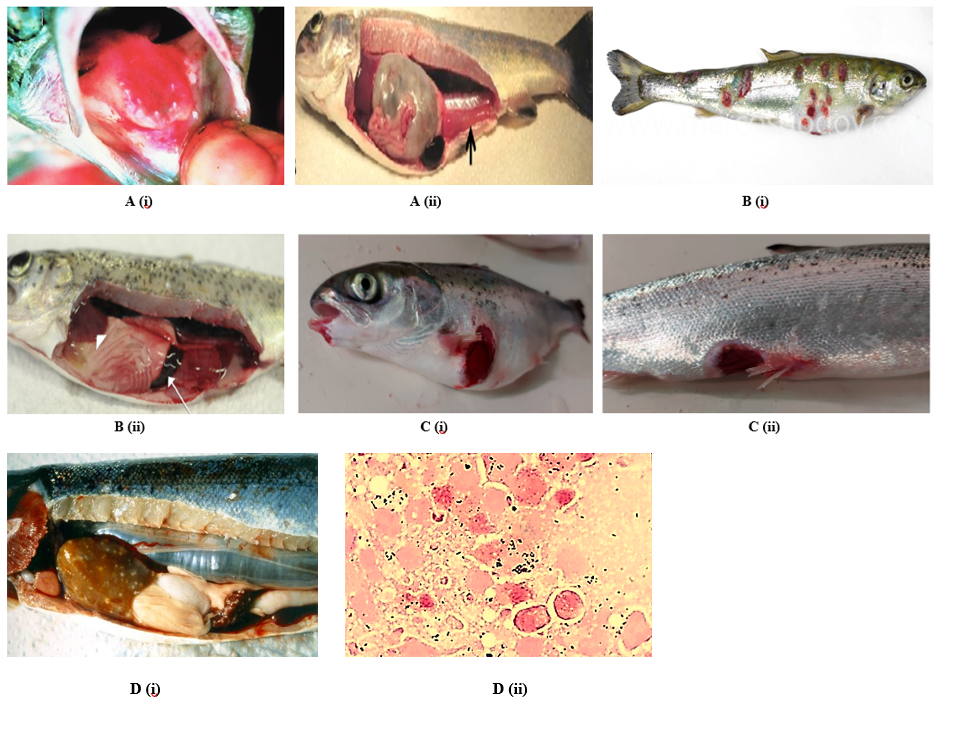
Figure 2 Pathological symptoms by bacterial diseases in salmon: A) Enteric Redmouth: i) Reddened mouth and tongue,200 ii) Enlarged spleen and reddened intestine (arrow);201 B) Furunculosis: i) Hemorrhagic boils in muscular tissue,202 ii) Enlarged spleen (arrow);203 C) Clod Water Vibriosis: i) Deep ulcerative lesion in abdomen area,204 ii) Ulcertaive lesion on base of a fin;204 D) Bacterial Kidney Disease: i) Swollen and discolofred kidney with granulomatous inflammation,205 ii) Histological image showing macrophages, lymphocytes, and tissue necrosis205
Prevention and control measures: Furunculosis is controlled by a mix of immunization and biosecurity policies.6 Inactivated whole-cell vaccinations, often paired with adjuvants, are commonly utilized and have dramatically reduced disease incidence in farmed salmon. Effective biosecurity, which includes tight hygiene measures, equipment cleaning, fish movement management, and fallowing practices, is crucial for disease prevention.
Cold water vibriosis
Etiology and epidemiology: Cold Water Vibriosis (CWV), also known as Hitra disease, is a systemic bacterial infection of Atlantic Salmon caused primarily by Aliivibrio salmonicida (formerly Vibrio salmonicida).37 The sickness posed a serious threat to Norwegian aquaculture in the mid-1980s, especially affecting salmon farms in Hitra and the northern coastal areas.38 Although CWV was common in the 1980s and early 1990s, causing hundreds of outbreaks across Norway, incidence has dropped significantly since the mid-1990s, when successful vaccination programs were launched. According to the,39 CWV is no longer among the most prevalent notifiable diseases, while rare occurrences are still documented, particularly during the winter when water temperatures drop below 9°C.40
CWV flourishes in low-temperature conditions, with outbreaks often occurring at seawater temperatures below 10°C, and most severely between 4 and 8°C.41 The bacterium is psychrophilic and halophilic, thrives in cold marine waters, and spreads horizontally by water or direct fish-to-fish contact. Infections are particularly common in post-smolt and adult salmon raised in open-net pens during the cold season. Susceptible hosts include Atlantic Salmon, Rainbow Trout, and Arctic Char. Outbreaks frequently occur after periods of handling stress or environmental changes, particularly during the early sea-phase of growth-out,42 found that host and feeding parameters influence the illness outcomes.
Clinical signs and pathogenesis: The clinical appearance of CWV is predominantly defined by systemic bacterial septicemia. Externally, infected fish frequently exhibit lethargy, inappetence, darker pigmentation, pale gills, exophthalmia (bulging eyes), deep ulcerative lesions and hemorrhages on the skin, fin bases or often on the flanks or near the head (Figure 2C). Internal pathology includes splenomegaly, ascites, petechial hemorrhaging on internal organs, and severe congestion and inflammation in the liver, spleen, and kidney.43 In severe cases, fibrinous peritonitis and significant organ necrosis may develop. Histological abnormalities include widespread cellular degradation, inflammatory cell infiltration, and tissue necrosis, particularly in the renal tubules and hepatic parenchyma.44 The pathogen quickly colonizes the bloodstream and internal organs, resulting in severe septicemia and significant mortality. Unvaccinated fish populations can experience mortality rates ranging from 30% to over 70%, depending on environmental factors and health state.45 Disease development is typically rapid, with mortality happening within days of symptom start, particularly in stressful situations such as crowding, handling, or unexpected temperature changes.
Prevention and control measures: CWV is primarily controlled and prevented through vaccination, which is backed by proper husbandry and biosecurity procedures. Commercial oil-adjuvanted vaccinations, both monovalent and multivalent, have proven to be quite effective, offering over 90% protection when provided to smolts before saltwater transfer, often in doses of 30-50 grams.46 Supportive management options include reducing stress through cautious handling, regulating stocking densities, ensuring steady water quality, and allowing infected sites to recover. Furthermore, comprehensive disinfection of equipment and transportation systems, together with regular health monitoring, is required to prevent disease recurrence.
Bacterial kidney disease (BKD)
Etiology and epidemiology
Renibacterium salmoninarum causes bacterial kidney disease, which is a chronic systemic infection that affects both wild and farmed salmonids worldwide.47 The first BKD outbreak in wild Atlantic Salmon occurred in Scotland's rivers Dee and Spey in 1933, and in farmed salmonids in Scotland in 1976.48 It has since been identified in salmon farms across the globe. Norway has had a revival in recent years, with the Norwegian Veterinary Institute reporting 12 outbreaks in 2023 and at least five more in 2024, mostly in agricultural areas between Nordmøre and Sør-Trøndelag.49
The disease can spread from fish to fish50 or from adults to their offspring through eggs.51,52 Infection can cause high mortality in both wild and farmed salmon.53 Almost all age groups of fish can be affected, although the sickness is uncommon in very young fish. Losses are typically chronic, occurring over an extended period.
Clinical signs and pathogenesis: Infected fish exhibit a variety of clinical indications; nevertheless, some are asymptomatic, showing no evidence of disease.54 Clinical manifestations include lethargy, darkening of the skin, bulging eyes (exophthalmia), anemia, enlarged abdomens, blood-filled blisters on the flanks, and bruising (haemorrhaging) around the vent. Internal indicators include fluid in the abdominal cavity, dilated kidneys with white/grey lesions (Figure 2D-i), and diffuse white membranes covering the internal organs.55 Microscopic bacteria are commonly found in granulomatous kidney lesions as well as white blood cells (macrophages), where they appear to live and multiply. Histopathology symptoms include granulomatous inflammation in kidney tissue, and numerous macrophages and necrotic debris (Figure 2D-ii).49 Mortality rates in Atlantic Salmon can exceed 40% through this disease if extensive epidemics occur.56
Prevention and control measures: There is presently no fully effective BKD vaccine, and antibiotic therapy (e.g., erythromycin) can lower bacterial load but cannot consistently clear illnesses in dense farm populations.57 The Renogen live Arthrobacter-based vaccination is the only somewhat effective preventive strategy, but its usage is limited and off-label.58 As a result, control techniques prioritize strong biosecurity: early identification with qPCR, ELISA, or IFAT diagnostics, and field detection via iPCR/LAMP because of their high sensitivity.59
Preventive approaches include culling sick broodstock, egg disinfection, lowering stocking density, site fallowing, and following tight disinfection rules for equipment and transport paths.60 Immunomodulatory dietary therapies, such as adjusting EPA/DHA and omega-3/omega-6 fatty acid levels, have shown promise in enhancing immune responses to R. salmoninarum antigens, perhaps leading to greater resistance.61
Infectious salmon anemia (ISA)
Etiology and epidemiology: Infectious salmon anemia (ISA) is a systemic, often deadly viral disease that affects farmed Atlantic Salmon. It is caused by the infectious salmon anemia Virus (ISAV), a negative-sense, single-stranded RNA virus from the Orthomyxoviridae family.62 ISA was first found in Norway in the 1980s and has subsequently spread to other major salmon-producing countries such as Chile, Canada, the United States, Scotland, and the Faroe Islands.63 The global epidemiology of ISA has changed dramatically during the last two decades. Data from 2022-2024 indicate that ISA continues enzootic in Norway and Chile, with developing hotspots in specific places (Møre og Romsdal, Nordland, and Troms).64 HPR0 ISAV is endemic in Canada's Atlantic provinces, while no notable deaths have occurred in recent years.65
ISAV spreads mostly horizontally, via saltwater, shared equipment, and direct contact between infected and vulnerable fish.66 Vertical transmission is not completely understood; however, it is thought to occur through surface-contaminated eggs or reproductive organs. High stocking density, stressful handling, immunosuppressive co-infections (e.g., with P. salmonis or IPNV), inadequate smolt transfer protocols, and changeable environmental conditions all increase the risk of an epidemic.
Clinical signs and pathogenesis: ISA is defined by several clinical and pathological characteristics. Infected fish exhibit lethargy, anemia (as evidenced by pale gills), ascites, and exophthalmia. Internally, the diseased fish exhibit hemorrhagic liver (Figure 3A-i), splenomegaly, pericardial effusion, and peritoneal fluid accumulation.67 Histologically, the kidney and spleen's hematopoietic tissues exhibit necrosis (Figure 3A-ii), endothelial cell death in the gills and heart, and significant vascular congestion. Thus, the disease can spread slowly in an infected farm, and in the worst-case scenario, mortality rates of up to 100% have been reported.68
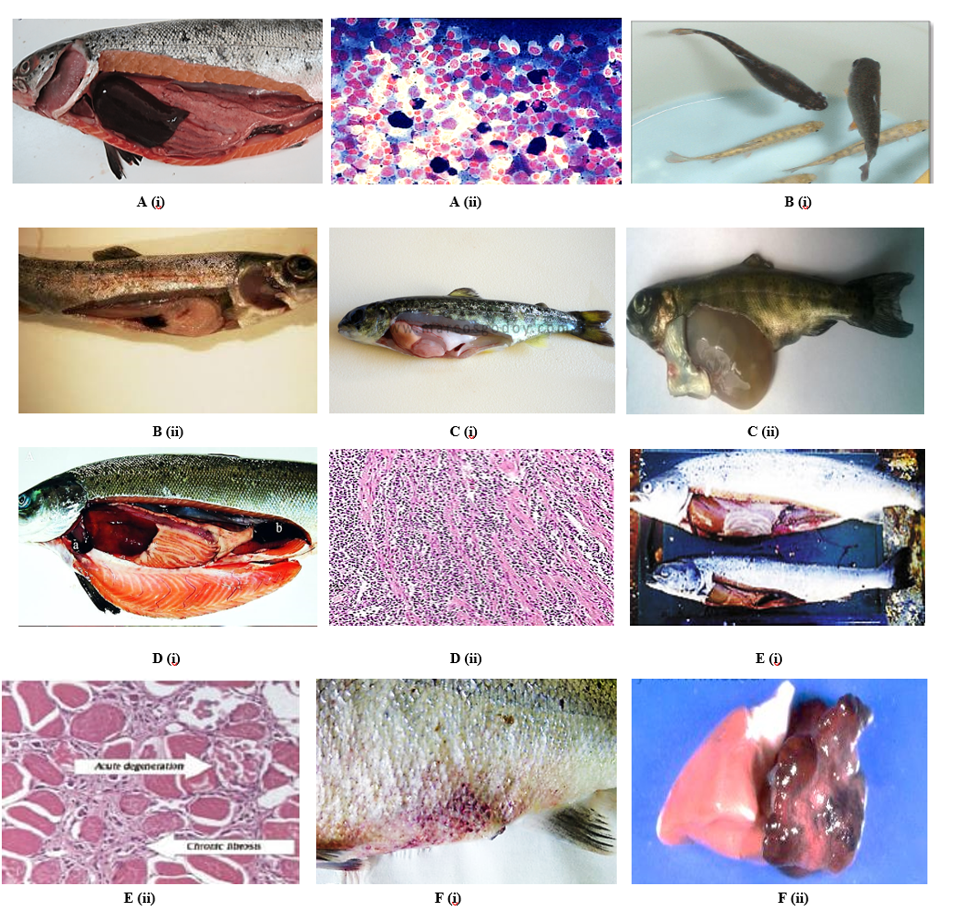
Figure 3 Pathological symptoms by viral diseases in salmon: A) Infectious Salmon Anemia: i) Petechial haemorrhages in peripiloric fat accompanied with dark haemorrhagic liver,206 ii) Indirect fluorescent antibody test (IFAT) showing the presence of ISA virus in the kidney cells of an Atlantic salmon;206 B) Infectious Hematopoietic Necrosis: i) Skin darkening of fish relative to lighter colored healthy fish,207 ii) Pale gills, exophthalmia, petechial haemorrhages, empty gut and ascitic fluid;208 C) Infectious pancreatic necrosis: i) Degeneration of acinar cells within the pancreas and necrotic lesions in the liver,209 ii) Pyloric caeca with apical hemorrhage;210 D) Heart and Skeletal Muscle Inflammation: i) Pale heart and haemopericardium,98 ii) Red skeletal muscle tissue, with moderate multifocal myositis;99 E) Pancreatic Disease: i) Post PD impact on the pancreas of fish,211 ii) White muscle lesions;212 F) Cardiomyopathy syndrome: i) Inflamed vent in salmon,112 ii) Necrosis occured ruptured atrium114
Prevention and control measures: There are currently no treatments for ISA, hence prevention is the major method of control. Formalin-inactivated and DNA-based vaccinations are available and widely used in endemic countries such as Norway and Chile.69 Instead of giving complete infection protection, these vaccines frequently reduce viral load and delay clinical development. Recent advancements in vaccination development, such as nanoparticle carriers and mucosal adjuvants, seek to improve immune protection and delivery efficiency. Selective breeding has shown promise, and genomic selection techniques now incorporate resistance loci to produce better salmon lines.70 Furthermore, effective biosecurity practices, including area-based management, fallowing, all-in/all-out stocking, and full cleaning of equipment and vessels, are essential for reducing virus transmission. Rapid detection and culling of diseased stocks, movement control, and real-time surveillance technologies have all helped to reduce outbreaks.
Infectious hematopoietic necrosis (IHN)
Etiology and epidemiology: Infectious hematopoietic necrosis (IHN) is a severe viral disease caused by infectious hematopoietic necrosis virus (IHNV), a bullet-shaped, enveloped, negative-sense single-stranded RNA virus from the Novirhabdovirus genus of the Rhabdoviridae family.71 It typically occurs in cooler waters (<15°C).71 The disease mostly affects juvenile salmonids, notably S. salar, resulting in significant mortality rates of more than 90% under intense aquaculture conditions.72 Between 2001 and 2003, a major outbreak occurred in British Columbia, Canada, affecting over 12 million farmed Atlantic salmon and resulting in an average mortality rate of 58% per farm; the virus was most likely introduced from wild fish and spread quickly between farms due to waterborne routes and inadequate biosecurity.73 More recently, in 2021, Denmark lost its IHN-free status following the detection of IHNV in various freshwater trout farms, raising concerns about the virus's survival and stealthy spread in European aquaculture.74 The virus is primarily transmitted horizontally through waterborne contact with contaminated feces, urine, mucus, or sexual fluids, but vertical transmission via infected gametes has also been described.75
Clinical signs and pathogenesis: Clinically, infected fish show black skin (Figure 3B-i), exophthalmia, abdominal distension, pale gills, trailing fecal casts, and peculiar swimming behavior as spiraling or darting, which progresses to lethargy and death.74 Petechial hemorrhages might arise near the fins, mouth, or vent. Internally, typical observations include ascites and pale or hemorrhagic internal organs (Figure 3B-ii). Histopathologically, the disease is characterized by necrosis of hematopoietic tissues in the kidney and spleen, as well as cellular degeneration, vascular injury, and tissue breakdown. These defects impede immunological and organ functions, resulting in significant mortality, particularly in fry and smolts.76
Prevention and control measures: There is currently no therapeutic therapy for IHN; thus, control measures rely on immunization, biosecurity, and surveillance. The DNA vaccine APEX-IHN® (Elanco), which has been approved in Canada since 2005, has shown high efficacy in lowering mortality and inhibiting horizontal transmission in Atlantic salmon, with vaccine-induced protection lasting at least 7 months.77 Strict biosecurity practices, including using pathogen-free water, disinfecting eggs with iodophor, sterilizing equipment, fallowing the site, and rapidly culling diseased stocks, are critical for reducing outbreaks.78 IHN must be reported to the World Organisation for Animal Health (WOAH), and most afflicted nations have active surveillance and eradication plans in place to combat outbreaks.74,79
Infectious pancreatic necrosis (IPN)
Etiology and epidemiology: Infectious pancreatic necrosis (IPN) is caused by an aquabirnavirus (IPNV) and is still a globally distributed disease of salmonid aquaculture, with the greatest economic impact on juvenile S. salar and S. gairdneri fry.80,81 Vertical transmission occurs through infected broodstock and eggs, while horizontal transmission occurs by watery exposure, fomites, and carrier fish.82 Outbreaks are most common during the freshwater hatchery period and early seawater transfer, where naïve fry and post-smolts experience high stocking densities and handling stress.83 Environmental stresses such as fast temperature fluctuations and poor water quality, together with concurrent infections, can worsen clinical manifestation and mortality.84 Over the last two decades, widespread vaccine use and genetic selection for IPN resistance have significantly reduced large-scale fatalities,85,86 but sporadic outbreaks continue where biosecurity is inadequate or when novel, highly virulent viral variants emerge.87 Persistent carriers and environmental reservoirs, such as sediments and biofilms, raise the possibility of reintroduction to hatcheries and sea sites.88
Clinical signs and pathogenesis: Clinically infected fry and post-smolts exhibit lethargy, anorexia, abdominal distention, darkening, and severe morbidity, with mortality rates varying depending on host age and strain virulence.89 The stomach and anterior intestine may be empty, distended, and filled with a thick, clear, or whitish mucous matter. The characteristic histology is sudden necrosis of pancreatic acinar cells, with lesions extending to the exocrine pancreas, mesenteric fat, and, in extreme cases, renal tubules and hematological organs exhibiting degeneration and bleeding (Figure 3C).90
Prevention and control measures: There is no specific antiviral therapy for IPN; thus, prevention is key. Vaccinating juveniles and broodstock with inactivated, recombinant subunit, or vectored vaccines targeting the VP2/VP3 capsid proteins lowers clinical illness and viral shedding.91 Genetic selection targeting important quantitative trait loci (QTLs) associated with resistance, particularly on chromosome 26, has significantly reduced susceptibility,85,86 and when combined with immunization, gives synergistic protection.85 Biosecurity procedures such as broodstock screening, egg disinfection, equipment sterilization, site fallowing, density control, and water quality optimization remain crucial.92 Operational techniques such as coordinated smolt transfer, proper adaptation to seawater, and quick epidemic containment all contribute to reducing spread. Molecular antivirals, RNA interference, and better adjuvants are all being researched; however, the majority of it is experimental.93 To limit the danger of IPN, current best practices incorporate genetic, vaccination, and biosecurity measures.
Heart and skeletal muscle inflammation (HSMI)
Etiology and epidemiology: Heart and skeletal muscle inflammation (HSMI) is a serious condition affecting farmed Atlantic Salmon that is reliably linked to piscine orthoreovirus genotype 1 (PRV-1).94 PRV-1 is common in salmon farming regions such as Norway, Scotland, Chile, and parts of North America,95 but the incidence of clinical HSMI varies geographically due to differences in viral subtype virulence (e.g., PRV-1a vs PRV-1b), host genetic resistance, and environmental or management stressors.96,97 Longitudinal surveillance demonstrates that PRV infection can be detected in freshwater smolts and persists throughout the production cycle; however, HSMI outbreaks typically occur 5-9 months after seawater transfer, when cumulative stress factors such as crowding, temperature fluctuations, and handling coincide with peak viral loads.97,98 Recent Norwegian monitoring reports demonstrate that, while overall PRV incidence remains high (more than 80% in some places), focused biosecurity and site management have reduced the frequency and severity of clinical outbreaks compared to a decade ago.64
Clinical signs and pathogenesis: Clinically, fish suffering from HSMI frequently exhibit lethargy, decreased feed intake, irregular swimming, pale gills, and ascites; mortality rates can range from zero to more than 20% depending on severity and co-infections.99 Salmon can withstand substantial injury to their heart musculature without presenting obvious signs, but outbreaks of disease with increased mortality occur when a significant section of the heart becomes inflamed. HSMI induces cardiac abnormalities in almost all affected fish.100 During this stage, inflammation and cell death spread to the red skeletal muscles, cell death to the liver, oedema (swelling), and interrupted blood circulation to the fish's various organs (Figure 3D-i). Histopathologically, the disease is distinguished by diffuse to multifocal lymphohistiocytic myocarditis and epicarditis encompassing both compact and spongy myocardium layers, as well as degeneration and necrosis of red skeletal muscle fibers (Figure 3D-ii).101 In situ hybridization and immunohistochemistry have revealed that the development of lesions coincides with the shift of PRV replication from blood cells to cardiomyocytes.101
Prevention and control measures: Currently, there is no licensed antiviral treatment for PRV or HSMI. Control techniques for reducing transmission risk include strict biosecurity, routine PRV surveillance of broodstock, smolts, and grow-out fish, fallowing between production cycles, and controlling the movement of equipment and workers.97 Disease manifestation can be reduced through husbandry improvements such as improving smolt quality, gradually transferring seawater, reducing handling, and maintaining optimal stocking densities. Selective breeding strategies have shown promise in lowering susceptibility to PRV-induced HSMI, with certain strains exhibiting much decreased lesion prevalence when challenged.97 Vaccination research continues, with experimental vaccines offering partial protection in laboratory trials, but no widely used commercial product is currently available.101 Future control will most likely be achieved through a mix of genetic selection, improved husbandry, and effective immunoprophylaxis integrated into regional health management systems.
Pancreatic disease (PD)
Etiology and epidemiology: Pancreas disease (PD) of Atlantic Salmon is caused by salmonid alphavirus (SAV), an enveloped single-stranded positive-sense RNA alphavirus with multiple genotypes (SAV1-SAV7) with distinct geographic and host associations;102 in recent years, SAV2 and SAV3 have dominated outbreaks in Norway, with SAV3 particularly associated with west-coast marine outbreaks.64 PD is enzootic in many European salmon production areas (especially Norway, Ireland, and Scotland), and the WOAH/OIE has identified it as a regulatory concern because of its economic implications on growth, mortality, and product quality.64
Epidemiological patterns are shaped by a combination of viral genotype, host genetics (breed/stock susceptibility) and farm management/connectivity: dense farm networks, timing of freshwater-to-seawater transfer, and site proximity increase transmission risk,103 whereas genomic and quantitative genetics studies published in 2024-2025 demonstrate heritable components of resistance and identify genomic regions associated with differential responses.104 Recent field and surveillance investigations (2022-2024)104 highlight that, while vaccination and management have reduced clinical outbreaks in some areas, subclinical infection and low-level SAV circulation are still common, demanding continuing vigilant surveillance.
Clinical signs and pathogenesis: Inappetence, sleepiness, limited growth, and occasional mortality are common symptoms of PD, which develops 1-4 months after seawater transfer mortality.105 Gross lesions include pancreatic pallor or atrophy (Figure 3E-i), pale skeletal muscle, and a flaccid heart. Histopathologically, PD exhibits a trio of lesions: severe necrosis and atrophy of pancreatic acinar cells, myocarditis, and skeletal myositis, which progresses from acute necrosis and inflammation to chronic fibrosis and tissue regeneration (Figure 3E-ii).105 SAV replicates in various tissues and generates robust local immunological responses, with recent in situ investigations revealing tissue-specific viral tropism and persistent B-cell activity in afflicted organs.105
Prevention and control measures: There is no specific antiviral medication for PD; rather, control is achieved by coordinated management. Vaccination with commercial inactivated oil-adjuvanted SAV vaccines decreases clinical illness, mortality, and viral shedding. Experimental DNA vaccines have shown reduced lesions and even prevented transmission in cohabitation studies.106 To prevent spread, biosecurity measures such as coordinated fallowing, fish movement restrictions, equipment disinfecting, and regional coordination must be used.107,108 report that resistance breeding based on QTLs is becoming more prevalent in control programs.
Cardiomyopathy syndrome (CMS)
Etiology and epidemiology: Cardiomyopathy syndrome (CMS) is a viral cardiac disease of farmed Atlantic Salmon caused by piscine myocarditis virus (PMCV), a non-enveloped double-stranded RNA virus from the Totiviridae family.109 PMCV has been recorded in Norway, the Faroe Islands, Scotland, Ireland, and Canada during the 1980s and 2000s.110 PMCV is prevalent in Norwegian production, with a median latency of ~6.5 months between first identification and clinical CMS in afflicted cohorts, indicating common subclinical circulation before outbreaks.111 Recent genetic and epidemiological research reveals PMCV sequence clusters by geography but low overall variety, and risk is raised by high farm density, site connection, and stressors (e.g., the late saltwater period), necessitating coordinated regional management.
Clinical signs and pathogenesis: CMS clinically manifests as either a rapid or gradual rise in mortality among market-sized fish with poor condition, activity intolerance, ascites, an inflamed vent (Figure 3F-i), and gross lesions centered on a flaccid, pale heart and, on occasion, pericardial effusion.112 CMS is diagnosed histopathologically with severe inflammation and degradation of the spongy component of the myocardium (ventricle), as well as comparable abnormalities in the atrium (Figure 3F-ii).113 Myocyte degeneration and inflammatory alterations are uncommon in the heart's compact layer and always occur after changes to the spongy sections.114 Circulatory disruption, including multifocal liver necrosis, may also occur.
Prevention and control measures: There is no specific antiviral medication for CMS; thus, control is both integrated and preventive. Diagnosis and surveillance rely on sensitive qPCR screening of cardiac tissue and histology to confirm clinical illness, allowing for early site-level containment.115 No commercial vaccine is currently in use; however, vaccine research (subunit/plant-produced VLPs and other platforms) and experimental challenge models have been constructed and show promise in lowering viral replication and cardiac lesions in trials.116 Examples of risk- and impact-reducing management measures include regional coordination (zoning and synchronized fallowing), reduced site density and farm connectivity, strict biosecurity and movement controls, targeted nutritional/functional-feed strategies during outbreaks, and selective breeding for reduced susceptibility where QTLs have been identified. These measures currently make up the realistic CMS control toolset.
Saprolegniasis
Etiology and epidemiology: Saprolegniosis, the most troublesome oomycete infection in salmon aquaculture, is mostly caused by Saprolegnia parasitica, a common freshwater fungus that infects wild and farmed fish, amphibians, and crustaceans.117 The organism is an oomycete (Kingdom Stramenopila), which reproduces asexually by biflagellate zoospores and sexually via thick-walled oospores, allowing it to persist in sediments and biofilms for long periods of time. Infections are frequently opportunistic, occurring when fish are stressed, injured, or immunocompromised, allowing hyphae to infiltrate damaged epidermis, fins, or gill tissues.118
s.parasitica is epidemiologically widespread, with reports from all major salmon-producing locations, including Norway, Scotland, Canada, Chile, and Tasmania, as well as wild salmonid populations in North America and Europe.118,119 The fungus is waterborne and spreads through direct contact with infected fish, motile zoospores in the water column, and adhesion to fomites such as nets, tanks, and processing equipment.119,120 Outbreaks are more common in low-temperature freshwater phases, particularly in hatcheries, egg incubation units, and broodstock storage facilities, when fish metabolic and immunological activity is reduced and zoospores are more environmentally stable.118 Environmental reservoirs include sediments, organic debris, and biofilms, whereas anthropogenic risk factors include poor water quality, overpopulation, frequent handling, and the presence of dead or decaying fish.120
Clinical signs and pathogenesis: Saprolegniosis is distinguished by cotton-wool-like hyphal development (Figure 4) on skin, fins, gills, and eggs, which causes epidermal necrosis, osmoregulatory disturbance, and severe mortality.121 Lesions might seem grayish or whitish and develop discoloration as a result of secondary microbial colonization.122 Histological tests demonstrate that wide, aseptate hyphae penetrate the epidermis and superficial dermal layers, causing localized inflammation and epithelial hyperplasia.123
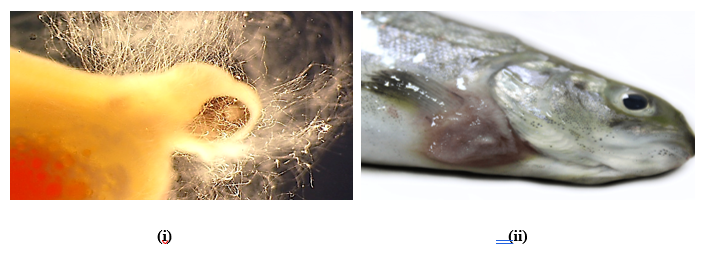
Prevention and control measures: Malachite green, an older yet effective therapy, was banned due to carcinogenic hazards.124 Despite regulatory and safety concerns, current hatchery protocols primarily use formalin baths (37% formaldehyde solutions), as well as alternatives such as hydrogen peroxide, bronopol, iodophors, salt, boric acid, and copper sulfate, which have varying efficacy depending on concentrations and exposure durations.123 UV treatment of the incubation water is also effective. Plant extracts having antifungal activities, such as garlic, onion, peppermint, chrysanthemum, Eryngium campestre, Cuminum cyminum, and Thymus linearis, are being investigated as eco-friendly treatments.125
Ichthyophoniasis
Etiology and epidemiology: Ichthyophoniasis is a systemic disease of salmonids caused by Ichthyophonus hoferi (Figure 5A-i), a fungal-like protist from the Mesomycetozoa class.126 It is regarded as one of the most serious chronic illnesses affecting both wild and farmed salmon populations globally, resulting in granulomatous lesions in numerous organs, reduced growth, and increased mortality.127
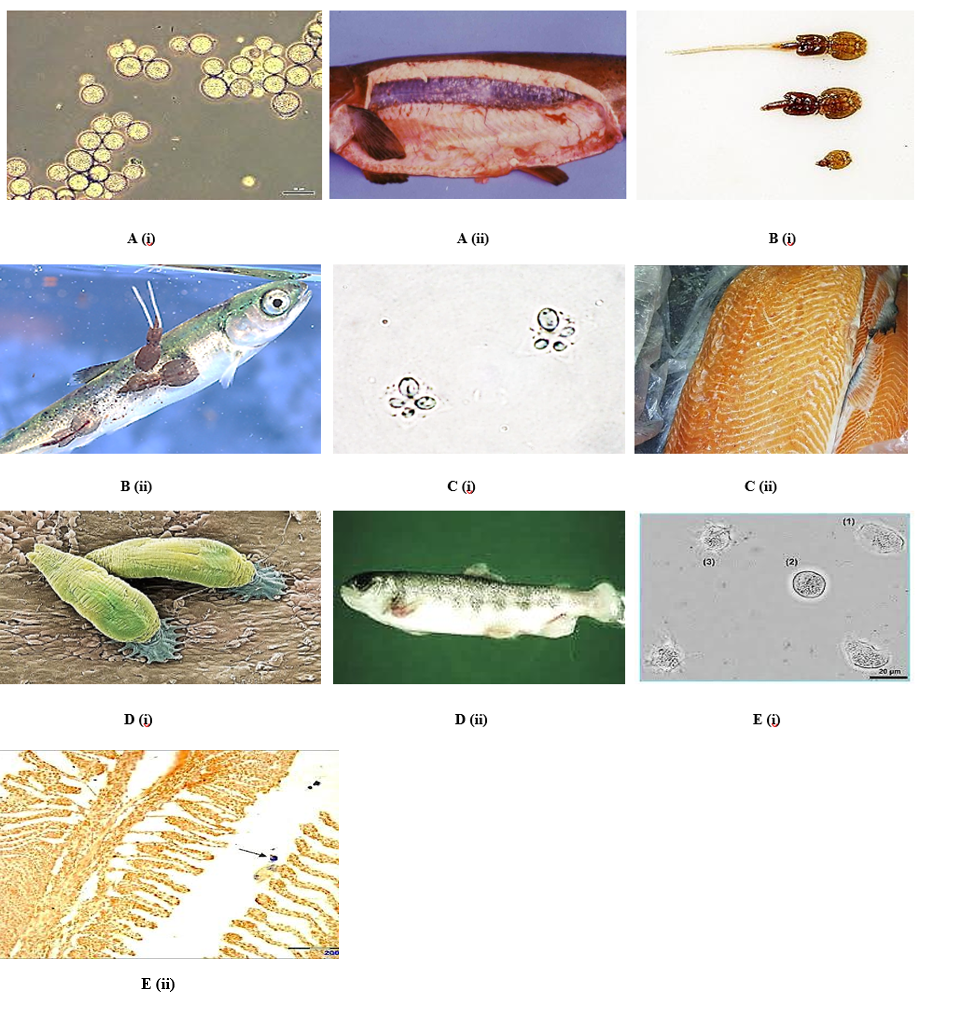
Figure 5 Pathological symptoms by parasites in salmon: A) Ichthyophoniasis: i) Ichthyophonus hoferi,214 ii) Nodules in the kidney;215 B) Sea Lice: i) Lepeophtheirus salmonis,216 ii) Juvenile wild salmon with sea lice;217 C) Post mortem myoliquefaction: i) Fresh spores of K. thyrsites,215 ii) Kudoa parasite caused soft and seperated flesh in a salmon fillets;218 D) Gyrodactylosis: i) Gyrodactylus salaris,219 ii) Infection on pectoral fin with Gyrodactylus;220 E) Amoebic gill disease: i) Amphizoic amoeba Neoparamoeba perurans,221 ii) Thickening and fusion of the secondary lamellae, epithelial hyperplasia, mucus cell proliferation, and lamellar clubbing.222
I. hoferi has a worldwide range, with recorded outbreaks in important salmon-producing regions such as the North Atlantic (Norway, Scotland, Canada), North Pacific (Alaska, British Columbia), and Chile.127 Infection prevalence varies greatly depending on geographic location and population, with wild populations frequently displaying higher prevalence than farmed fish, indicating complex transmission dynamics involving environmental reservoirs and interspecies vectors.128 Recent molecular epidemiology investigations using PCR and sequencing techniques have discovered genetic heterogeneity among I. hoferi isolates from various locales, which may affect virulence and host susceptibility.129 Transmission occurs through consumption of diseased tissues, direct contact with infected fish, or exposure to contaminated watery spores. The pathogen can live in fish populations asymptomatically, with clinical epidemics frequently caused by stresses including handling, poor water quality, or co-infection with other pathogens.128
Clinical signs and pathogenesis: Clinically, infected salmon show lethargy, darker skin, decreased eating, irregular swimming, and emaciation. Necropsy showed widespread granulomatous lesions (Figure 5A-ii) primarily in the heart, kidney, liver, and skeletal muscle.130 Histopathological examination reveals granulomas composed of dense clusters of macrophages and multinucleated giant cells surrounding thick-walled I. hoferi spherical bodies, which can be seen with specific stains such as gomori methenamine silver.131 These granulomas disrupt normal organ function, frequently leading to chronic disease progression and eventual death.
Prevention and control measures: Currently, there are no effective chemotherapeutic treatments or vaccines commercially available for Ichthyophoniasis. Control efforts focus primarily on prevention through good husbandry practices and biosecurity measures, including minimizing fish stress, avoiding overcrowding, and maintaining water quality.132
Diagnostic surveillance using sensitive PCR-based assays enables early detection and management of infected populations.133 Selective breeding for resistant strains has been proposed but requires further research. Experimental studies have explored the potential of immunostimulants and probiotics to enhance host resistance, though results remain preliminary.134
Sea lice
Etiology and epidemiology: Sea lice, notably Lepeophtheirus salmonis (Figure 5B-i) and Caligus species such as C. clemensi and C. rogercresseyi, can infest both farm-grown and wild salmon, causing fatal infestations.135,136 The parasite's life cycle is complex, including free-swimming nauplius and copepodid stages that can disperse via ocean currents, allowing transmission between various salmon populations.137 Sea lice are ectoparasites that feed on mucus, blood, and skin. They migrate and leach onto the skin of wild salmon during the free-swimming, planktonic nauplii and copepodid larval phases, which can last several days.135,138 These parasites can reproduce and multiply rapidly in densely packed salmon populations in net enclosures.139 They are most prevalent in the Northern Hemisphere, affecting Atlantic and Pacific salmon species. Operators have reported infestations, particularly in Canada, Norway, Scotland, and Ireland.140,141
Clinical signs and pathogenesis: As L. Salmonis attaches to salmon's exterior organs, physical damage such as lesions, inflammation, and erosion of the skin and underlying tissues occurs (Figure 5B-ii). Heavy infestations in Atlantic Salmon can produce serious sores on the head and dorsal areas, occasionally exposing the skull, and if sea lice populations become too large, a fish can die.142 In addition to causing direct tissue damage, sea lice infestations raise the risk of subsequent illnesses. For example, during ISA outbreaks in Scotland, locations with high sea lice density had greater connections with ISAv-positive sites and subsequent clinical illness epidemics.143
Prevention and control measures: Management of L. salmonis infestations is difficult due to the development of resistance to chemical treatments. Historically, common parasiticides like emamectin benzoate were effective, but resistance has reduced their long-term efficacy.144 Non-chemical solutions are increasingly used to reduce resistance and improve fish welfare. Mechanical removal (for example, brushing or freshwater baths), biological control with cleaner fish, and physical barriers like lice skirts are all options. A comparative research of non-medicinal delousing procedures found varying efficacy in parasite eradication and differing welfare impacts on Atlantic Salmon hosts.145 Innovative treatments, such as hyposaline water, have been tested on commercial farms to reduce sea lice populations and control amoebic gill diseases. These treatments show promise as effective non-chemical alternatives.146 Additionally, selective breeding programs aimed at genetic resistance to sea lice are underway. Studies on gene expression responses in Atlantic Salmon families show significant diversity, which can be used to drive breeding methods for improved parasite resistance.147 Furthermore, predictive modeling of sea lice outbreaks is being conducted to optimize management. For example, a study in the Bay of Fundy, New Brunswick, Canada, evaluated infestation pressure and treatment history from 2016 to 2021 to anticipate L. salmonis abundance. The inclusion of infestation pressures enhanced these models' forecast accuracy marginally.148
Post mortem myoliquefaction
Etiology and epidemiology: Kudoa thyrsites (Figure 5C-i) is a cosmopolitan myxosporean parasite infecting a wide range of salmonids, including Salmo salar and multiple Oncorhynchus spp. (chinook, coho, sockeye, chum, and pink salmon), where it is the principal etiological agent of post-mortem myoliquefaction—a “soft-flesh” syndrome causing severe quality downgrades and economic losses in aquaculture and wild fisheries.149 In Pacific salmon populations, particularly Oncorhynchus tshawytscha in British Columbia, the incidence frequently exceeds 50%, with some studies predicting infection rates of 80-100% in adults, indicating substantial endemicity in ocean-reared stocks.150 Sockeye Salmon, Coho Salmon, and Chum Salmon are still common in some locations, with histological surveys revealing widespread muscle plasmodia at commercial harvest levels.151 The parasite's life cycle is not fully understood, but it is thought to involve benthic or pelagic invertebrate hosts, and oceanographic factors have a strong influence on infection risk; salmon captured or reared in deeper offshore waters or migratory corridors have significantly higher parasite loads than fish from nearshore or surface environments.152 Age and size are important epidemiological determinants, with older, larger salmon consistently showing increased infection intensity, most likely reflecting cumulative exposure during ocean residency.153
Clinical signs and pathogenesis: Unlike infectious diseases with overt morbidity, PMM is clinically indiscernible in live fish, with lesions appearing only after death, affecting product quality and market value. The syndrome is distinguished by the rapid softening and liquefaction of skeletal muscle within 24-48 hours after harvest, with fillets appearing flaccid, pallid, and watery, and in severe cases, muscle fibers break down to a jelly-like consistency (Figure 5C-ii).154 Gross lesions include focal or diffuse white patches that correlate to parasite plasmodia, primarily in the dorsal muscle, and which frequently spread as the infection progresses.153 Histopathological examination reveals that K. thyrsites multiplies intracellularly within myocytes, forming large plasmodia containing thousands of tetravalvulid spores, causing myofibrillar degeneration, sarcolemmal rupture, vacuolation, and loss of cross-striations, with a minimal inflammatory response due to the infection's chronic nature.155 Postmortem, parasite-derived proteolytic enzymes degrade myofibrillar proteins, compromising tissue integrity and causing extensive myoliquefaction.156
Prevention and control measures: There are presently no authorized treatments or vaccinations for K. thyrsites, owing to its unclear lifecycle and lack of identified intermediate hosts.157 As a result, control focuses on preventive measures and post-harvest mitigation. Producers can categorize farm sites based on past infection risk to guide smolt deployment and reduce exposure; minimizing marine residence time and maximizing smolt health (nutrition, immunization) are also standard tactics.157 Experimental studies investigate post-harvest therapies, such as alkaline buffer or high hydrostatic pressure treatments, to reduce flesh degradation, although these are still in the research stage.158 The showing of acquired immunity in salmon provides a potential foundation for vaccine development, but practical use requires further exploration.159
Gyrodactylosis
Etiology and epidemiology: Gyrodactylosis, caused mostly by Gyrodactylus salaris (Figure 5D-i), is one of the most lethal parasite illnesses of Atlantic Salmon. The parasite is a viviparous monogenean that adheres to salmonids' skin, fins, and gills (Figure 5D-ii), quickly reproducing without the requirement for an intermediary host.160 The epidemiology of the parasite is directly related to water temperature, host density, and salmon life cycle. Warmer temperatures (12-18 °C) hasten parasite reproduction, causing epidemics in hatcheries and wild populations.161 In 1972, the parasite migrated from Norwegian hatcheries to wild salmon, affecting some populations.162 While historically limited to Scandinavia and portions of Russia, the parasite strains have migrated to other regions due to host species and geographical patterns.163 According to recent data, over 50 rivers in Norway have been confirmed as infected, resulting in catastrophic population losses in wild salmon, with juvenile mortality rates exceeding 90%.162 G. salaris' tenacity in hatchery systems and capacity to spread via fish translocation make it a constant biosecurity threat in aquaculture.
Clinical signs and pathogenesis: Gyrodactylosis causes both mechanical and immunological harm. G. salaris binds to the host epithelium via its opisthaptor and feeds on epidermal cells, resulting in epithelial hyperplasia, hemorrhages, and secondary bacterial and fungal infections.164 High parasite burdens cause severe epidermal erosion, osmoregulatory dysfunction, and increased mucus production, which eventually leads to stress and death.165 Epidermal weakening, necrosis, and inflammatory cell infiltration are among the histopathological alterations observed in extensively infested tissues. Juvenile salmon are especially vulnerable because they have little acquired immune response, resulting in uncontrolled parasite multiplication.166 In contrast, some salmonid hosts (O. mykiss) exhibit partial resistance, implying that the parasite modulates immune responses according to the species.167
Prevention and control measures: Control of G. salaris remains difficult due to the parasite's direct life cycle and rapid replication. Historically, chemical treatments such as rotenone and aluminum sulfate have been used to eliminate parasites from contaminated rivers, but these methods are environmentally hazardous and necessitate significant restocking operations.168 Hydrogen peroxide and formalin baths have been used in aquaculture, but their efficacy has been varied, raising concerns about fish welfare.169 Biological techniques, such as selective breeding for resistant salmon strains and immunological research, are gaining popularity.108 Research into host-parasite interactions has discovered candidate immune genes that could be used to build vaccines, while no commercial vaccines are currently available. Biosecurity remains the foundation of prevention, with rigorous regulations on fish movement and cleaning measures required to restrict transmission.170
Amoebic gill disease (AGD)
Etiology and epidemiology: Amoebic gill disease (AGD) is a major gill illness affecting marine-farmed S. salar caused by the amphizoic amoeba Neoparamoeba perurans (Figure 5E-i)..171 AGD was initially characterized in Tasmania in the mid-1980s and is now seen in most major Atlantic salmon-producing locations, including Ireland, Scotland, Norway, and Chile.172 It has become a recurring health and economic issue in Norway since its initial discovery in 2006, with major losses observed since 2012.173 Contemporary reviews in 2024 emphasize the parasite's global prevalence and aquaculture significance.174 Disease emergence and recurrence are seasonal and temperature-related, with outbreaks typically occurring within ~7-20°C during marine grow-out, and risk amplified by high biomass and net-pen husbandry.175,176
Clinical signs and pathogenesis
Symptoms often emerge two months after the fish are moved from freshwater hatcheries to open net sea cages.177 AGD appears as white, elevated mucoid patches on gill surfaces, indicating increased mucus and epithelial growth.176 Multifocal lamellar epithelial hyperplasia and hypertrophy, inter-lamellar cell mass formation, lamellar fusion (Figure 5E-ii), and variable inflammation characterize the histopathology; these changes impair gas exchange and ion regulation, predisposing to hypoxia and osmoregulatory failure.178,179 Molecular and morphometric investigations show that lesion burden and mucous-cell dynamics are associated with disease severity and may be regulated by some therapies (e.g., peracetic acid).180 Host size and condition also influence disease expression, with bigger cohorts exhibiting lower parasite loads and gross pathology in controlled exposure experiments.181
Prevention and control measures
Freshwater bathing (usually 2-3 hours in low-salinity water via wellboats or tarpaulins) remains the most effective commercial intervention, with lesions visibly regressing within days.182 Hydrogen peroxide (H₂O₂) baths are commonly used when freshwater access is limited. Proper dosing and temperature are crucial for efficacy and safety. H₂O₂ can affect hypoxia tolerance and mucosal responses, necessitating careful welfare management.183,184 Peracetic acid (PAA) is being actively investigated as an alternative/adjunct, with experimental and project data indicating immunomucosal effects that could improve management, while field standards are still evolving.185 Integrated management involves optimizing biomass and oxygenation, reducing net fouling, minimizing handling stress, scheduling freshwater/H₂O₂/PAA interventions based on early detection, and incorporating fallowing and site rotation when possible.173,176 There is no commercial vaccine available; current research focuses on host-parasite treatment immunology and microbiome interactions to improve prophylactic and treatment.180,186
Current disease management measures in salmonid aquaculture have made significant progress; however, they are only partially effective, depending on the disease and production system. Vaccination, biosecurity, selective breeding, and improved husbandry have significantly reduced the impact of several bacterial and viral diseases, particularly Aeromonas salmonicida (furunculosis) and Yersinia ruckeri (enteric redmouth disease), for which vaccines have proven highly effective.6,27 Similarly, selective breeding operations have produced salmon strains that are resistant to infectious pancreatic necrosis (IPN), resulting in much lower mortality rates.187 However, other infections, such as Renibacterium salmoninarum (bacterial kidney disease) and Flavobacterium psychrophilum (coldwater disease), are more difficult to control due to a lack of effective vaccines and their ability to survive in the environment or within human tissues.64 Parasitic infestations, notably sea lice (Lepeophtheirus salmonis), remain one of the most costly and chronic issues, as parasites have evolved resistance to many chemical treatments, and biological or mechanical approaches are inconsistently effective.145 Biosecurity and fallowing programs, particularly when coordinated across farms, have been shown to reduce the spread of viral diseases such as infectious salmon anemia (ISA) and infectious hematopoietic necrosis (IHN), but open-water systems still allow transmission between farms and wild populations.188 Furthermore, misuse of antibiotics has resulted in rising antimicrobial resistance in aquaculture environments.189 In general, current strategies work moderately to very well against a wide range of bacterial and viral infections. However, they don't work as well against chronic and parasitic diseases. This means that future management will need to use a combination of genomics, next-generation vaccines, environmental monitoring, and ecosystem-level collaboration.
Despite significant breakthroughs in diagnoses, treatments, and management, salmon aquaculture still faces ongoing disease issues as a result of changing pathogens, environmental stressors, and intensification, showing significant research gaps. Viral pathogens such as ISAV and SAV continue to be regionally significant, but there are still knowledge gaps in understanding host-pathogen genotype interactions, latency, and viral persistence in wild reservoirs, which limit predictive disease modeling and early detection.190,191 PRV is already common in many areas, but the mechanisms underpinning strain-specific pathogenicity and subclinical infections that cause HSMI remain unknown.96 Poor vaccination efficiency and dependency on antibiotics highlight critical gaps in understanding immune evasion, field-level vaccine performance, and genetic resistance in bacterial pathogens such as P. salmonis.192 Parasitic challenges, particularly sea lice (L. salmonis, Caligus spp.), have developed resistance to delousing chemicals, highlighting the need for genomic surveillance, resistance evolution modeling, and non-chemical strategies.193,194 Gill health syndromes, such as AGD, are increasingly involving multifactorial stressors such as harmful algal blooms, low oxygen, and co-infections, but the cumulative effects on growth, welfare, and treatment windows are difficult to quantify.186,195 Moreover, climate-driven changes in temperature, salinity, and hydrodynamics exacerbate disease dynamics, but mechanistic research on pathogen ecology under future scenarios is sparse.196 Therefore, research priorities include: (i) enhancing molecular epidemiology and biomarker identification for early pathogen detection; (ii) improving SRS vaccine design using systems immunology, phage therapy, and selective breeding. (iii) implementing genomic monitoring to track lice resistance alleles; (iv) creating precision health management systems that combine hydrodynamic and agent-based epidemiological models for farm zoning and fallowing methods;197-199 and (v) adding welfare and resilience measures to climate adaptation frameworks. To enable sustainable salmon aquaculture, these deficiencies must be addressed through interdisciplinary, ecosystem-based approaches that incorporate host genetics, microbiome science, oceanography, and regulatory harmonization.
Infectious diseases continue to be a defining constraint on the sustainability, profitability, and resilience of global salmon aquaculture, with impacts that extend beyond farm-level losses to encompass significant ecological and socio-economic dimensions. Epidemiological research underscores the complexity of pathogen dynamics in intensive farming systems, where high host densities, anthropogenic stressors, and environmental variability create conditions for pathogen amplification and emergence. Key viral, bacterial, and parasitic agents—such as ISAV, P. salmonis, and L. salmonis—continue to impose heavy burdens despite advances in diagnostics, vaccination, and biosecurity, highlighting persistent gaps in early detection, transmission modelling, and cross-species infection risks. Although pathological findings have improved our understanding of host-pathogen interactions, there is still a lack of knowledge about the complex effects of genetic diversity, microbial community alterations, and stress caused by climate change.
Effective biosecurity measures (pathogen-free stock, disinfecting eggs and equipment, controlling water sources, enforcing farm zoning and fallowing, monitoring fish health, and coordinating area-based management) must be followed properly to reduce disease transmission in salmonids. Besides, a paradigm change toward integrated disease management is necessary, integrating ecosystem-based methods, precision treatments, data-driven epidemiological modeling, enhanced surveillance systems, and selective breeding for disease resistance. To reduce the transmission of pathogens between production zones, stronger regulatory frameworks, standardized reporting requirements, and international collaboration are essential. In order to predict new risks and guide adaptive management techniques, it is also essential to invest in multidisciplinary research, such as host immunological investigations and omics-based pathogen profiling. In order to secure salmon aquaculture's future, proactive health management must replace reactive disease control. Innovation, environmental stewardship, and cooperative governance must be used to achieve sustainable growth while preserving ecosystem integrity and animal welfare.
This review is based exclusively on previously published literature, and all figures and information have been appropriately cited. The author gratefully acknowledges the contributions of the scientific community whose work (findings, data, and figures) informed this manuscript.
The author acknowledges to AI in language improving, and proofreading of the essay.
The authors declare no conflicts of interest.
No original data were created, generated, or analyzed for this review. All information discussed is available in the cited publications.
Ethical approval was not required for this review as it does not include any studies with human participants or animals conducted by the author.
No funding was received for this work.

©2025 Hossain. This is an open access article distributed under the terms of the, which permits unrestricted use, distribution, and build upon your work non-commercially.